Macrame Home Decor: 10 Ways to Use It Room by Room
Macrame has moved far beyond the craft room. Interior design searches for "macrame home decor" grew 68% on Pinterest between 2020 and 2024, according to Pinterest Trends data, and professional interior designers now specify fiber art in residential projects at a rate that would have seemed implausible a decade ago. The reason is simple: handknotted textiles add warmth, depth, and acoustic softness that no printed canvas or mass-produced print can match.
- Macrame suits every room, but cord weight and fiber type must match the application.
- Plant hangers and wall hangings are beginner-friendly; room dividers and stair wraps require intermediate skills.
- Cotton cord (3-5mm) handles most indoor projects; outdoor applications need UV-treated polyester.
- Pinterest Trends reports macrame home decor searches grew 68% between 2020 and 2024.
- Cord quantity ranges from 20m for a simple keychain-style accent to 600m for a large room divider.
The practical challenge is knowing which application fits which room, which cord type actually holds up over years of use, and how much material to buy before you start. This guide covers all ten of the most popular macrame home applications, with specific cord recommendations, approximate quantities, and honest skill-level assessments for each one.
For cord selection guidance across all project types, start with our macrame cord types guide.
Why Is Macrame Experiencing Such a Strong Design Moment?
The global home decor market reached $682 billion in 2023 and is projected to grow at 4.4% CAGR through 2030, according to Grand View Research. Within that market, handmade and artisan textiles are among the fastest-growing subcategories, driven by consumer preference for unique, tactile objects that mass production cannot replicate. Macrame sits directly at that intersection.
Social media has amplified the trend. craft marketplaces reported that macrame wall hangings consistently rank among the top-selling handmade home goods categories, with hundreds of thousands of active listings. But the trend is no longer limited to craft sellers. Design studios and hotel chains have started commissioning custom large-scale fiber installations.
Texture is the functional reason macrame works so well in interiors. Hard-surfaced modern rooms (concrete, glass, polished wood) need soft counterweights to feel habitable. A knotted cotton wall piece absorbs sound, adds visual complexity, and introduces natural color tones that age gracefully. These are qualities that a framed print simply cannot provide.
"Fiber art is the single most effective way to warm up a room that has been over-specified with hard materials." - Interior Design Magazine, 2024 Emerging Trends Report
1. Macrame Wall Hanging
Wall hangings are the most-searched macrame home decor item globally, accounting for roughly 40% of all macrame-related searches on Google according to Semrush keyword data from 2024. They work in living rooms, bedrooms, hallways, and dining areas, making them the most versatile starting point. A medium wall hanging measuring 60cm x 90cm typically requires 150-200m of 5mm single-strand cotton cord.
Room Suitability
Best rooms: living room (as focal wall art), bedroom (above bed or dresser), entryway (smaller accent pieces). Avoid humid bathrooms unless you use a coated or synthetic cord, because untreated cotton absorbs moisture and can develop mildew over several months.
Cord Type and Size Guide
Use 5mm single-strand (untwisted) cotton for maximum texture and the loosest, most sculptural fringe. For tighter, more graphic patterns, 3mm braided cotton gives cleaner edges. If the wall gets direct sunlight most of the day, consider a UV-stabilized cotton-poly blend to prevent yellowing.
| Piece Size | Cord Needed | Recommended Cord | Skill Level |
|---|---|---|---|
| Small (30x45cm) | 60-80m | 3mm single-strand | Beginner |
| Medium (60x90cm) | 150-200m | 5mm single-strand | Beginner |
| Large (100x150cm) | 350-450m | 5mm single-strand | Intermediate |
2. Macrame Plant Hanger
Plant hangers are the single most common first macrame project for beginners, and for good reason. A standard single-pot hanger uses only 4 basic knots and around 30-40m of 4mm cord. Plant-related crafts have driven a meaningful share of new macrame supply purchases.
Room Suitability
Kitchens, living rooms, and covered patios are the ideal locations. Bright indirect light suits both the plants and the cord. In bathrooms, steam and high humidity will cause natural cotton to sag and discolor within weeks, so polyester cord is strongly recommended for that environment.
Cord Type and Size Guide
4mm single-strand natural cotton is the standard. It knots smoothly, holds pot weight reliably, and has a clean, neutral tone. For outdoor or bathroom hangers, switch to 4mm or 5mm polyester, which resists moisture and UV exposure. Avoid 3-ply twisted cord for hangers because the knots loosen more easily under sustained weight over time.
| Pot Diameter | Cord Needed | Recommended Cord | Skill Level |
|---|---|---|---|
| 10cm (succulent) | 20-25m | 3mm single-strand | Beginner |
| 15cm (standard pot) | 30-40m | 4mm single-strand | Beginner |
| 25cm (large planter) | 55-70m | 5mm single-strand | Beginner |
3. Macrame Floating Shelf
Hanging macrame shelves combine knotted textile with a functional wooden board, and they've become a staple of the "organic modern" interior style that dominated design publications throughout 2023 and 2024. A standard single-tier shelf measuring 60cm x 15cm requires around 80-120m of 5mm three-strand twisted cotton, which provides the structural rigidity the knots need to hold board weight safely.
Room Suitability
Best used in living rooms, home offices, and bedrooms for displaying lightweight objects: books, small plants, candles, and ceramics. Do not exceed a weight load of 3-4kg per shelf unless you anchor into wall studs and use heavy-gauge hardware.
Cord Type and Size Guide
For shelves, three-strand twisted cotton at 5mm or 6mm is preferable to single-strand because the twist adds tensile strength and prevents stretching under load. The shelf board should be solid wood, 18-20mm thick, and the dowel above it should be 25-30mm diameter hardwood. Soft pine dowels flex too much under weight and can crack the knots.
For a full step-by-step build, see our macrame shelf DIY guide with exact cord amounts for all three shelf sizes.
4. Macrame Curtain or Window Panel
Macrame window panels create a filtered, dappled light effect that no woven fabric can replicate. They're particularly effective in rooms where privacy is needed but blocking daylight entirely would make the space feel dark. According to Houzz's 2024 US Houzz & Home Study, window treatments are among the top five most-frequently updated interior elements during home renovation projects.
Room Suitability
Best in living rooms, dining rooms, and bedrooms where partial privacy (rather than full blackout) is acceptable. A knotted curtain is not a substitute for a true blackout blind. Pair it with a roller blind behind it if full light control is required.
Cord Type and Size Guide
Use 3mm single-strand cotton for panels with fine, dense knotwork. For open, airy lattice designs, 5mm single-strand creates the right visual weight. A standard window panel (90cm wide x 120cm tall) requires 300-400m of 3mm cord or 200-280m of 5mm cord depending on pattern density.
| Window Width | 3mm Cord Needed | 5mm Cord Needed | Skill Level |
|---|---|---|---|
| 60cm | 180-220m | 130-160m | Intermediate |
| 90cm | 300-400m | 200-280m | Intermediate |
| 120cm | 450-550m | 320-400m | Advanced |
5. Macrame Room Divider
Room dividers made from macrame are one of the most dramatic applications in interior design, and one of the most material-intensive. A floor-to-ceiling divider for an open-plan living space (200cm wide x 240cm tall) can consume 500-700m of cord or more, depending on pattern density. The payoff is significant: a well-made fiber divider defines zones without blocking light or airflow, achieving what no solid wall partition can.
Room Suitability
Open-plan living rooms, studio apartments, loft offices, and restaurant interiors all benefit from macrame dividers. The key structural requirement is a solid ceiling-mounted curtain rod or a freestanding frame rated for the weight of a large knotted panel (typically 4-8kg for a full-size piece).
Cord Type and Size Guide
Three-strand twisted 5mm or 6mm cotton gives the cleanest appearance for large dividers because the twist creates uniform, dense knots that read well at distance. Single-strand cord in larger sizes (8mm or 10mm) suits modern or minimalist spaces where texture-forward, bold knotwork is the goal. Skill level is firmly intermediate to advanced.
6. Macrame Headboard
A macrame headboard is one of the highest-impact bedroom upgrades you can make without touching a wall. Textile headboards are rising in popularity: the global upholstered and textile headboard segment grew by an estimated 6.2% in 2023, per Mordor Intelligence market research. A handknotted version creates a bespoke result at a fraction of the cost of custom upholstered furniture.
Room Suitability
Primary and guest bedrooms. For a queen-size bed (160cm wide), a headboard panel should be at least 150-160cm wide and 80-100cm tall. For a king-size bed (180cm wide), plan for 170-190cm width. Attach to a wooden dowel or copper pipe and hang from wall-mounted hooks.
Cord Type and Size Guide
5mm single-strand cotton is the standard choice. It creates soft, voluminous fringe that falls naturally and looks proportional at the scale of a bed. Avoid 3mm cord for headboards; it tends to look thin and underwhelming at this scale. A queen headboard requires approximately 350-450m of 5mm cord. Skill level: intermediate.
For more bedroom macrame ideas at this scale, explore the full project list in our macrame for beginners guide.
7. Macrame Lampshade
Macrame lampshades are among the most technically specific applications in this guide because material selection is a genuine safety consideration. Natural cotton and linen are fire-resistant enough for low-heat LED bulbs (under 10W equivalent heat output), but synthetic materials, coated cords, and any cord treated with flammable finishes must be kept well away from any heat source. Never use a macrame shade with incandescent or halogen bulbs.
Room Suitability
Pendant lights in dining rooms and living rooms suit macrame shades well, provided the shade design allows adequate heat dissipation. The cord should never touch or sit within 5cm of the bulb. Bedside lamps with macrame shades work with small LED bulbs (5W or less) and open, airy designs that allow heat to rise freely away from the cord.
Cord Type and Size Guide
Use 2mm or 3mm single-strand cotton only. Thicker cord creates too much heat-trapping density around the bulb. A standard pendant shade frame (30cm diameter) requires 80-120m of 2mm cord. Skill level: intermediate, with specific attention to even tension to prevent lopsided shaping.
Safety note: Always use LED bulbs rated under 10W in any cord-covered lampshade. Check that cord does not contact the bulb, socket, or wiring. Cotton is naturally less flammable than synthetic alternatives, but it is not fireproof.
8. Macrame Table Runner
A macrame table runner is a fast project with immediate visual impact, and it's an excellent second project for beginners who've completed a plant hanger. A standard runner for a 6-seat dining table (measuring approximately 35cm x 150cm) requires 120-180m of 4mm single-strand cotton and can be completed in a weekend. The Craft Industry Alliance reports that table and kitchen textiles represent 18% of all fiber craft projects sold on handmade marketplaces.
Room Suitability
Dining rooms and kitchen tables primarily. For outdoor dining tables, use 4mm polyester cord in place of cotton because it resists staining, wipes clean, and won't absorb food oils or moisture from outdoor surfaces. Cotton table runners should be treated with a fabric protector spray if they'll see regular food and drink contact.
Cord Type and Size Guide
4mm single-strand cotton for indoor use. 4mm polyester for outdoor tables. A simple half-hitch lattice pattern works beautifully for beginners; a more complex diamond or chevron pattern is achievable at an intermediate level. Skill level: beginner to intermediate depending on pattern choice.
9. Macrame Mirror Frame
Framing a mirror with macrame cord transforms a standard hardware-store mirror into a statement piece. The technique involves knotting directly onto a metal or wooden ring glued or wired to the mirror's outer edge, or hanging fringe behind a round mirror on a backing board. Mirror frames account for a smaller but fast-growing segment of macrame decor; searches for "macrame mirror" online increased 34% between 2022 and 2024 according to craft marketplaces trend reporting.
Room Suitability
Bathrooms, entryways, bedrooms, and living room accent walls. For bathrooms, use polyester or a tightly sealed cotton cord because steam and humidity degrade untreated cotton fibers over time. A 50cm diameter round mirror with a 10-15cm knotted fringe border requires approximately 60-90m of 3mm single-strand cotton.
Cord Type and Size Guide
3mm single-strand cotton for fine fringe detail around smaller mirrors (up to 50cm). For larger statement mirrors (60-80cm), 4mm cord gives better proportion. The fringe should be at least 15-20cm deep to read as intentional rather than sparse. Skill level: beginner to intermediate.
For fringe finishing around mirror frames, our macrame finishing techniques guide covers fringe depth, brushing, and edge treatment.
10. Macrame Stair Handrail Wrap
Wrapping a stair handrail with macrame cord is the most architectural application on this list, and the least commonly seen, which is exactly why it makes such a strong impression. A single straight handrail run of 3 meters wrapped with a spiral half-hitch pattern requires approximately 400-500m of 5mm single-strand cotton. Interior designers have begun specifying handrail wraps in boutique hotels and high-end residential renovations as an alternative to expensive turned or carved bespoke balustrades.
Room Suitability
Interior staircases in residential homes, boutique hotels, and retail spaces. This is not appropriate for exterior staircases because weather exposure will degrade cotton rapidly. The handrail surface should be clean, dry, and lightly sanded if smooth (to give the cord something to grip) before starting.
Cord Type and Size Guide
5mm single-strand cotton for the wrapping cord. The wrap is essentially a sustained spiral half-hitch or simple wrapping technique repeated across the full rail length, making it more meditative than technically complex once you establish the tension. Skill level is actually beginner in terms of knot complexity, but requires patience and consistent tension across a long run. Allow 400-500m for a 3m straight rail.
| Application | Cord Type | Cord Needed | Skill Level |
|---|---|---|---|
| Wall Hanging (medium) | 5mm single-strand cotton | 150-200m | Beginner |
| Plant Hanger (standard) | 4mm single-strand cotton | 30-40m | Beginner |
| Floating Shelf (single) | 5mm 3-strand twisted | 80-120m | Intermediate |
| Window Panel (90cm) | 3mm single-strand cotton | 300-400m | Intermediate |
| Room Divider (large) | 5-6mm twisted cotton | 500-700m | Advanced |
| Headboard (queen) | 5mm single-strand cotton | 350-450m | Intermediate |
| Lampshade (pendant) | 2-3mm single-strand cotton | 80-120m | Intermediate |
| Table Runner | 4mm single-strand cotton | 120-180m | Beginner |
| Mirror Frame (50cm) | 3mm single-strand cotton | 60-90m | Beginner |
| Stair Rail Wrap (3m) | 5mm single-strand cotton | 400-500m | Beginner |
How Do You Choose the Right Cord for Each Application?
The primary factors are structural load, moisture exposure, and visual scale. Most beginners over-focus on color and under-focus on fiber construction. A twisted cord and a single-strand cord of the same diameter will produce completely different knot textures, fringe softness, and structural behavior under weight. Getting the construction right matters more than getting the color right.
For load-bearing applications (shelves, plant hangers, room dividers), three-strand twisted cotton performs better than single-strand because the twist distributes tension across multiple fibers rather than concentrating it in one. For decorative applications where fringe appearance is the priority (wall hangings, headboards, mirror frames), single-strand is the correct choice because the strands unravel into soft, brushable fringe that twisted cord simply won't produce.
For anything exposed to regular moisture (bathroom mirrors, outdoor hangers, kitchen table runners), the choice is polyester over cotton. Cotton can tolerate brief contact with water, but sustained humidity causes fiber breakdown over months. Makers who've tried to use natural cotton in steamy bathrooms consistently report sagging, discoloration, and a faint musty odor developing within 3-6 months. The visual appeal isn't worth the maintenance problem.
Cord diameter relates directly to visual scale. A 2mm cord in a large wall hanging looks undersized and fussy. A 8mm cord in a small mirror frame looks clunky and overwhelming. Use the size guide tables in each section as your starting point, then adjust based on your specific design's pattern density. Denser patterns (more knots per square centimeter) can tolerate slightly thinner cord without looking sparse. Open, airy patterns need the visual presence of a thicker cord to read properly.
What Are the Most Common Macrame Decor Mistakes to Avoid?
The most common error is buying too little cord. Based on patterns sold across major macrame platforms, buyers underestimate cord needs by an average of 30-40% on their first project. The standard rule of thumb is that each working cord should be cut to 4-5 times the finished length of the piece, and you'll have 4-8 working cords per mounting inch depending on pattern density.
The second common mistake is skipping the test swatch. Before committing 400m of cord to a large room divider, knot a 20cm test section to check tension, pattern appearance, and how the cord behaves when brushed out. A 30-minute swatch saves hours of frustration later.
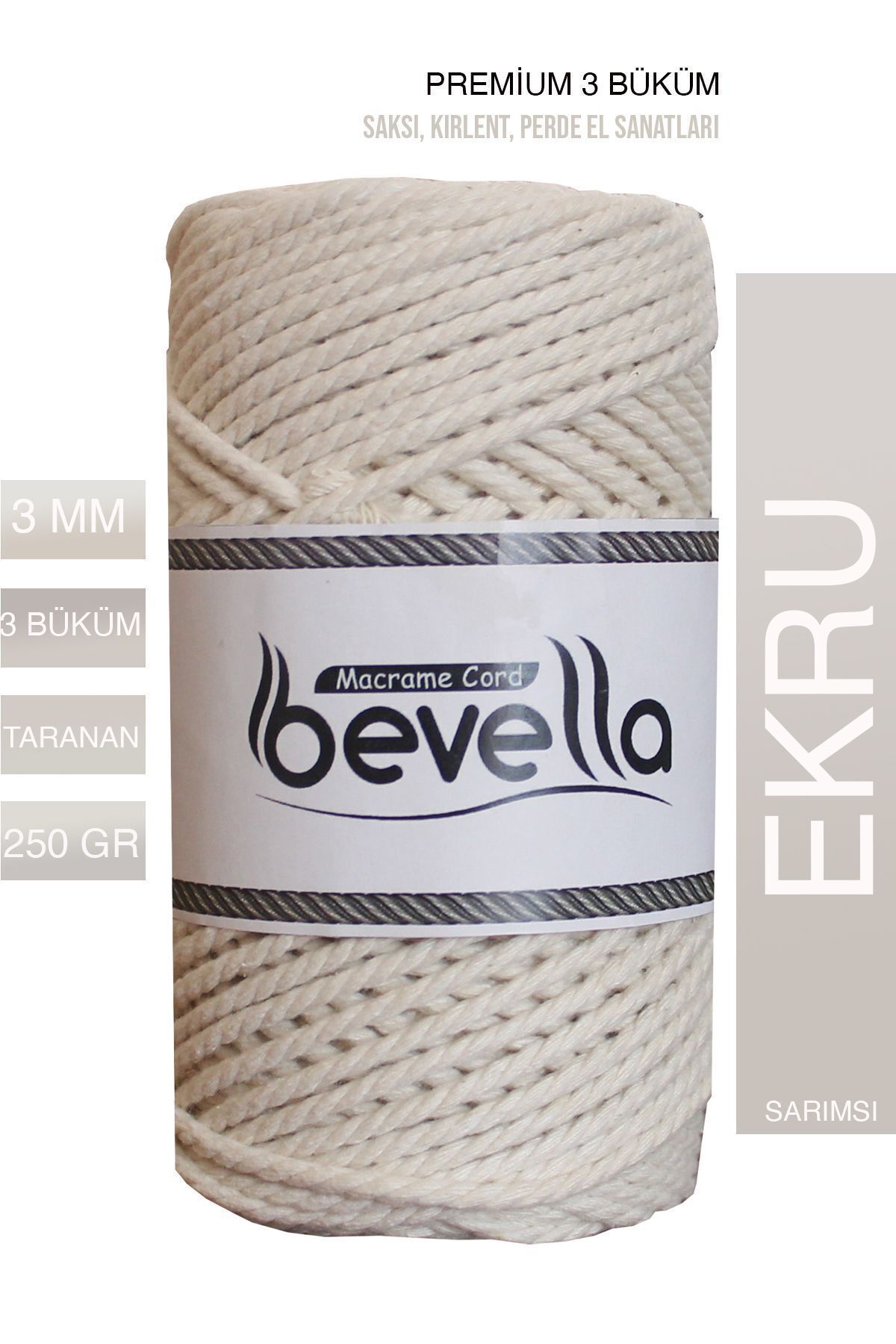
Third: mounting hardware that doesn't match the wall type. A macrame room divider can weigh 6-8kg fully knotted. A single drywall anchor rated for 5kg is not adequate. Use stud-mounted hardware or toggle bolts rated for at least double the expected piece weight. Bevella's cord technical team consistently advises customers to calculate finished piece weight before ordering hardware, using a simple estimate of 80-100g per 10m of 5mm cotton cord.
New to macrame? Our macrame for beginners guide covers the most common mistakes and how to avoid them.
Frequently Asked Questions
What is the best macrame cord for beginners making home decor?
4mm or 5mm single-strand (untwisted) natural cotton is the best starting cord for most home decor projects. It's soft enough to knot comfortably by hand, holds tension well, and produces the loose fringe that makes macrame wall hangings and plant hangers visually appealing. The Craft Industry Alliance recommends 4-5mm cotton as the standard beginner weight for all decorative applications.
How much macrame cord do I need for a medium wall hanging?
A medium wall hanging measuring approximately 60cm wide by 90cm long requires 150-200m of 5mm single-strand cotton cord. This accounts for the working length multiplier of 4-5 times the finished piece length, plus fringe. Always buy 20% extra to account for tension differences and pattern adjustments during the project.
Can macrame be used in bathrooms?
Yes, with the right cord. Natural cotton degrades in sustained humidity, developing sag and discoloration within months. For bathrooms, use 4mm polyester cord, which resists moisture, retains color, and won't develop mildew. Polyester also tolerates the cleaning sprays used in bathrooms far better than untreated cotton fiber does.
Is macrame home decor durable?
Indoors, a well-made cotton macrame piece can last 5-10 years without significant degradation when kept away from direct moisture and strong UV light. Natural cotton will yellow slightly in direct sun over 1-2 years. UV-stabilized cotton-polyester blends extend that lifespan considerably. Outdoor macrame made with polyester cord can last 3-5 years with basic maintenance.
How do I hang a heavy macrame room divider safely?
Use ceiling joists or wall studs, not drywall anchors alone. A finished macrame room divider can weigh 6-8kg. Toggle bolts rated for 15-20kg provide adequate safety margin. The mounting rod (copper pipe or wooden dowel) should span at least 3 anchor points to distribute the load evenly across the full width of the piece.
Does macrame work in modern or minimalist interiors?
Yes, when you choose the right cord weight and pattern. Open-weave geometric patterns in 8-10mm natural cotton work in minimalist spaces because the scale and simplicity match the design aesthetic. Dense, fringy bohemian designs in fine cord are more traditional. The minimalist approach is fewer knots, bolder scale, natural unbleached cotton, and simple geometric forms rather than flowing fringe-heavy compositions.