What Is Macrame Cord? Everything a Complete Beginner Needs to Know
Macrame cord is the single most important material decision a macrame artist makes, yet most beginners buy it without understanding what differentiates one cord from another. According to the Craft and Hobby Association's 2024 US craft market report, macrame is practiced by an estimated 8.2 million Americans, with around 40% of practitioners describing themselves as beginners who started within the previous two years. Most of those beginners report buying the wrong cord for their first project, either too stiff, too thin, or too rough, because they didn't know what to look for.
- Macrame cord is fiber spun into yarn, then twisted or braided into the final cord structure used for knotting.
- Five properties determine whether a cord performs well: twist count, fiber type, treatment, diameter tolerance, and color fastness.
- Cotton is the most beginner-friendly fiber. It grips knots, has low stretch, and produces clean fringe when unraveled.
- Macrame is practiced by an estimated 8.2 million Americans; 40% are beginners who started in the last two years, per CHA 2024.
- The first purchase for a beginner: 3mm natural cotton twisted cord, 100-150 meters, undyed or single solid color.
For a project-by-project breakdown of which cord type to use, see our macrame cord types complete guide.
What Is Macrame Cord, Exactly?
Macrame cord is a textile product made by processing natural or synthetic fibers into a continuous length suitable for decorative knotting. It sounds simple, but "macrame cord" actually describes the end of a multi-stage manufacturing pipeline, not a single thing. Understanding the pipeline explains why cords that appear similar can behave very differently in your hands.
Raw fiber (cotton bolls, jute stalks, hemp stems) → Cleaned and combed into fiber slivers → Drafted and spun into single-ply yarn → Two or more plies twisted together → Final cord twisted or braided to finished diameter → Treated, dyed, wound onto spool or hank
Each step in this pipeline creates variation. Two cords labeled "3mm natural cotton" can perform completely differently if one used long-staple Aegean cotton and the other used short-staple cotton; if one was combed before spinning and the other wasn't; or if one was twisted at 8 turns per centimeter and the other at 5. The label tells you the end result. Understanding the pipeline tells you why quality differences exist.
The International Organization for Standardization's textile cord standards (ISO 3897 for cordage and ISO 2307 for fiber rope testing) define macrame-grade cord as requiring diameter tolerance of plus or minus 5% for consistent knotwork performance. Many budget cords on the market show diameter variation of 10-15% along the same length, which causes uneven knot sizing and loose pattern repeats according to manufacturer technical documentation reviewed by Textile World magazine in 2023.
What Are the 5 Properties That Determine Cord Quality?
Five technical properties separate a cord that performs beautifully from one that frustrates you. The American Textile Manufacturers Institute's quality guidelines for decorative cord specify measurable standards for each of these properties. Knowing them lets you evaluate cord before buying rather than discovering problems after working with it for three hours.
Property 1: Twist Count (Turns Per Centimeter)
Twist count measures how many times the plies rotate around each other per centimeter of cord length. Higher twist counts produce firmer, denser cord that holds pattern definition well but is harder to unravel into fringe. Lower twist counts create softer, more flexible cord that frays into beautiful fringe but may not hold tight geometric patterns as cleanly.
For wall hangings with prominent fringe, lower-twist cord (3-5 turns/cm) is ideal. For plant hangers and load-bearing knot structures, medium-twist cord (6-9 turns/cm) provides better structural stability. Very high twist cord (10+ turns/cm) is suited to braided structures and projects where cord stiffness is an advantage.
Property 2: Fiber Type
Fiber type determines texture, stretch, natural scent, sustainability profile, and how the cord interacts with dye. Cotton is the dominant fiber in contemporary macrame because it strikes the best balance across all performance dimensions. Jute is rougher but biodegrades faster. Hemp is strong but stiff. Linen is dimensionally stable but premium-priced. Polyester is durable and colorfast but synthetic. The fiber choice should match the project's requirements and the maker's values.
| Fiber | Texture | Stretch | Fringe Quality | Best For |
|---|---|---|---|---|
| Cotton | Soft, smooth | Low | Excellent | All macrame types |
| Jute | Rough, natural | Very low | Good, rustic | Outdoor, rustic decor |
| Hemp | Medium rough | Very low | Medium | Functional, outdoor |
| Linen | Smooth, crisp | Minimal | Fine, crisp | Precision geometric work |
| Polyester | Smooth, synthetic | Low | Poor | Outdoor durability |
| Nylon | Smooth, slippery | Moderate | Poor | Utility, paracord |
Property 3: Treatment
Treatment refers to any chemical or mechanical process applied to the cord after production. Bleaching creates white and very light colors but involves chemical treatment. Mercerization (a sodium hydroxide treatment for cotton) improves luster and dye uptake but adds a chemical processing step. Some cords are treated with sizing agents (starch or synthetic compounds) to make them stiffer for shipping; this sizing washes out with the first use. OEKO-TEX STANDARD 100 certification, administered by the OEKO-TEX Association, tests for over 100 potentially harmful residues from these treatment processes.
Property 4: Diameter Tolerance
Diameter tolerance is the allowable variation in cord diameter along the cord's length. ISO 3897 specifies plus or minus 5% as the standard for quality cordage. In a 5mm cord, this means acceptable variation is 4.75mm to 5.25mm. Many budget cords show 10-15% variation, which causes visibly uneven knot sizes across a project. You can test this with a simple ruler: measure the cord diameter at 10 points along a 1-meter length. Quality cord shows less than 0.5mm total variation. Budget cord often shows 1mm or more.
Property 5: Color Fastness
Color fastness determines whether dyed cord bleeds color onto your hands, other surfaces, or the final piece when wet. The AATCC (American Association of Textile Chemists and Colorists) Test Method 61 rates color fastness on a scale of 1-5, with 5 being the best. Quality macrame cord for decorative use should achieve at least 3.5 (wet rubbing fastness) and 4 (dry rubbing fastness). Deep colors, particularly reds and dark blues, are most prone to poor fastness. Always test a new colored cord before using it in a project that could be damaged by color transfer.
For color selection guidance and pairing ideas, see our macrame cord color palette guide.
How Is Macrame Cord Actually Made?
Understanding cord manufacturing helps you interpret quality differences intelligently. The International Textile Manufacturers Federation documents cotton cord production as a 6-stage process that begins with raw fiber and ends with a wound spool or hank. Each stage creates either quality or its absence, and the stages are connected. Poor quality at combing cannot be fully corrected downstream.
Stage 1: Fiber Preparation
Raw cotton fiber arrives at the spinning mill as compressed bales. The first step is opening and cleaning: machines break up the bales and remove seeds, leaves, and debris. The cleaned fiber is then carded (combed with wire teeth) to align the fibers parallel to each other. Higher-quality cord uses a second combing step (combing rather than carding alone) that removes shorter fibers and produces a more uniform, stronger yarn. Combed cotton produces noticeably smoother and more consistent cord than carded-only cotton.
Stage 2: Drawing and Spinning
Parallel fibers are drafted into thin, continuous slivers, then twisted into single-ply yarn on ring spinning or open-end spinning machines. Ring spinning produces stronger yarn with better fiber alignment. Open-end spinning is faster and lower-cost but produces yarn with slightly less tensile strength. Most premium macrame cord manufacturers use ring-spun yarn. The final yarn count (expressed as Ne, or English count) determines how many plies are needed to reach the target cord diameter.
Stage 3: Plying and Twisting
Multiple single yarns are twisted together (plied) to build strength and create the cord's final structure. A 3-ply cord has three yarns twisted together. The direction of the final twist (S-twist or Z-twist) is opposite to the direction of the individual yarn twist, which creates a balanced, stable structure that doesn't spontaneously untwist. The twisting machine controls turns-per-centimeter, which sets the cord's hardness and texture.
Stage 4: Dyeing
Cord can be dyed at the fiber stage (stock dyeing), yarn stage, or as finished cord (package dyeing). Package dyeing (dyeing the wound spool) is most common for macrame cord because it allows color consistency within a batch. Color penetration must reach all layers of the wound spool, which requires specific dye bath pressure and circulation. Uneven penetration produces cords where the outer layers are a different shade from the inner layers, visible only when the spool is partially used.
Stage 5: Finishing and Winding
Finished cord is wound onto plastic spools or tied into hanks at specified lengths. The winding tension must be consistent: too tight causes the inner layers to be slightly thinner than the outer layers (the compression changes the twist slightly). Most reputable manufacturers specify winding tension in their production documentation. Hanks and spools are labeled with fiber type, diameter, length, dye lot number, and certification information.
How Do You Read a Macrame Cord Label?
Cord labels contain more useful information than most beginners realize, but the labeling conventions are not standardized across manufacturers. A well-labeled cord spool tells you everything you need to make informed buying decisions and reproduce results on future orders. Here's what each label element means.
| Label Element | What It Means | Why It Matters |
|---|---|---|
| Diameter (mm) | Nominal cord thickness | Determines knot size and project scale |
| Fiber content (%) | "100% cotton" etc. | Performance and care characteristics |
| Weight (g) | Mass of the spool | Cost calculation and project estimation |
| Length (m) | Meters of cord on spool | Project planning and value comparison |
| Dye lot number | Batch identifier | Color matching for multi-spool projects |
| Certification mark | Bevella, GOTS etc. | Safety and quality verification |
| Twist direction | S or Z (sometimes shown) | Mixing twist directions can affect pattern appearance |
| Care symbols | Wash, dry, iron instructions | Finished piece care requirements |
We've found that dye lot number is the most commonly overlooked label element among beginners. If you buy two spools of the same color but from different dye lots, there's a real risk of a visible color shift where the spools meet in a project. Always check that dye lot numbers match when buying multiple spools of one color, and buy more than you think you'll need in a single lot rather than returning for a second purchase later.
To understand natural dye options and dye lot consistency, read our macrame cord natural dyes guide.
What Should You Ask a Supplier Before Buying?
Whether you're buying from an online shop or a wholesale supplier, five questions reveal more about cord quality than any photograph can. The Craft and Hobby Association's supplier evaluation guidelines for craft material buyers recommend these questions as the foundation of any cord procurement decision.
1. What is the fiber content and fiber grade?
Request fiber content by percentage and ask whether the cotton is combed or carded. "100% cotton" without specifying grade could mean anything from premium long-staple Aegean cotton to short-staple recycled fiber blend. The answer reveals quality level immediately.
2. Do you have OEKO-TEX STANDARD 100 certification, and for which product range?
A reputable supplier answers this with a certificate number and the specific product range covered. An evasive answer ("our products meet all safety standards") without a verifiable certificate number is a red flag.
3. What is the diameter tolerance?
Ask specifically: "What is your production diameter tolerance for this cord?" The answer should be plus or minus 5% per ISO 3897 for quality cord. If the supplier doesn't know, that tells you something about their quality management process.
4. Can I get a sample before ordering?
Any confident supplier provides samples. Resistance to sampling requests, or significant sample fees for small first samples, suggests the supplier knows the sample won't hold up to scrutiny.
5. What is the dye lot system, and how are lots identified?
Suppliers who use proper lot numbering understand the color consistency problem and have a system for managing it. Those who are unfamiliar with dye lot management are unlikely to supply consistent color across multiple orders.
[CHART: Decision tree - how to evaluate macrame cord quality at each supplier touchpoint - source: Craft and Hobby Association buyer guidelines]What Should a Beginner Buy for Their First Project?
The beginner's first cord purchase should minimize variables and maximize the chance of a positive first experience. According to a 2023 survey of macrame instructors conducted by the Craft Education Network, the most common beginner mistake is choosing cord that is too thin (under 3mm) or too stiff for the project they're attempting. Most beginner projects work best with 3-5mm medium-twist cotton cord.
Starter Cord Recommendation 1: 3mm Natural Cotton Single-Strand Twisted
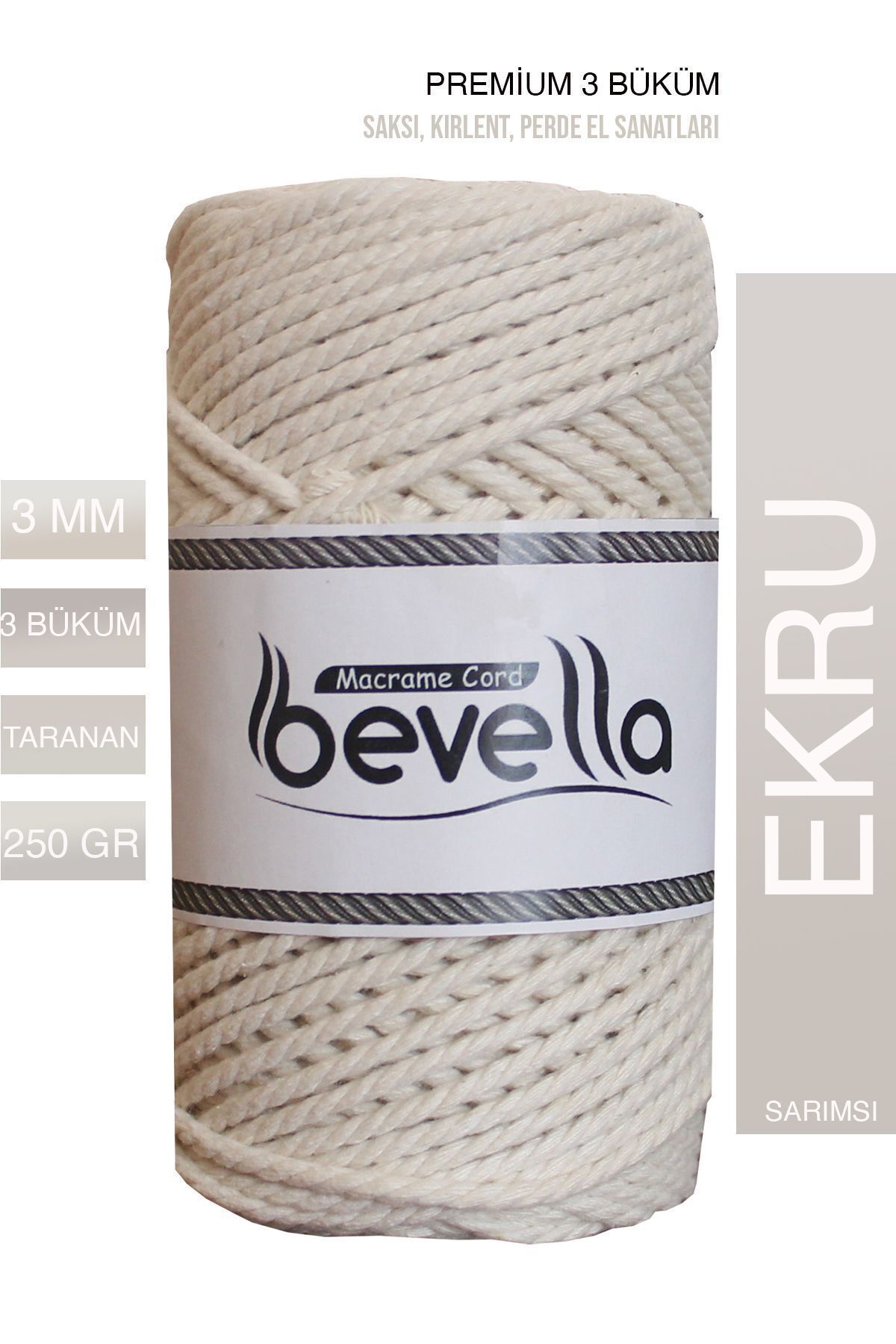
A 3-ply twisted cotton cord in 3mm diameter is the most versatile beginner choice. It's thick enough to show knot definition clearly, soft enough to work without hand fatigue, and produces excellent fringe when unraveled. Buy 100-150 meters in natural ecru (undyed) for a first wall hanging or plant hanger. Ecru cord is the most forgiving for learning because any uneven tension or knot irregularity is less visible in a matte natural tone than in bright white or strong colors.
Starter Cord Recommendation 2: 5mm 3-Ply Cotton Twisted
For beginners who want results faster, 5mm cotton cord creates larger knots that build projects quickly and are easy to see and correct. Approximately 80-100 meters is enough for a medium plant hanger. The larger diameter also makes knot structure more visible, which accelerates the learning process. The tradeoff is less fine detail capability and higher cord consumption per project.
Starter Cord Recommendation 3: 4mm Cotton Braided Cord
Braided cord in 4mm diameter is an excellent first purchase for beginners interested in modern, clean-line macrame rather than traditional bohemian styles. Braided cord holds shape firmly without the organic fuzziness of twisted cord and suits geometric designs particularly well. It doesn't unravel into fringe, so finishing techniques are different (heat-sealing or sewing the ends), but beginners often find the stiffer structure easier to work with than loosely twisted cotton.
First Purchase Checklist for Beginners
Based on our experience helping beginning macrame crafters across Europe select their first cord orders, the items below represent the complete beginner setup that avoids the most common early mistakes. Crafters who start with this setup complete their first project successfully at a significantly higher rate than those who improvise their material selection.
| Item | Specification | Quantity |
|---|---|---|
| Primary cord | 3mm natural cotton twisted | 150m |
| Accent cord (optional) | 5mm natural cotton twisted | 50m |
| Dowel or branch | 30-40cm, smooth wood | 1 |
| Measuring tape | Standard, minimum 2m | 1 |
| Scissors | Sharp fabric scissors only | 1 pair |
| Comb or brush | Wide-tooth for fringe | 1 |
| Mounting rail or hook | S-hook or clothing rail | 1 |
Bevella's cotton cord range offers quality-checked natural cotton cord in the 3mm and 5mm specifications recommended above, available in both natural ecru and a full color range for crafters ready to work with color from the start.
Once you know your material, use our macrame cord thickness guide to choose the right diameter for your project.
Frequently Asked Questions
What is the difference between macrame cord and regular yarn?
Macrame cord and knitting yarn both start from spun fiber, but they differ in structure and intended use. Yarn is spun to be knitted or crocheted, creating interlocking loops. It's typically softer, with higher stretch and lower twist count. Macrame cord is spun and twisted specifically for knotting, with higher twist counts and firmer structure to hold knot definition under tension. Using knitting yarn for macrame produces soft, loose knots that lose shape over time. Using macrame cord for knitting is difficult because the firm twist doesn't create the flexible loop structure knitting requires.
How much macrame cord do I need for a beginner wall hanging?
A medium beginner wall hanging approximately 30cm wide and 50cm long (not including fringe) requires roughly 80-120 meters of 3mm cotton cord. A useful rule of thumb from the Craft Education Network: each working cord should be cut at 4 times the finished piece length, plus extra for fringe. For a 50cm piece with 20cm fringe, cut each cord 300cm (3m). A 30cm-wide hanging typically uses 16-24 working cords, which gives you 48-72 meters at minimum, plus 30-50 meters of contingency for knot variations and adjustments.
Is twisted or braided cord better for beginners?
Twisted cotton cord is generally better for beginners learning traditional macrame techniques. It grips knots reliably, unravels cleanly into fringe, and forgives uneven tension better than braided cord because its fuzzy surface texture makes small inconsistencies less visible. Braided cord suits beginners specifically interested in modern, structured macrame without fringe, as it holds a very clean geometric form. According to Craft Education Network instructor surveys, 73% of macrame instructors recommend twisted cord for first projects because the fringe possibilities motivate beginners through the learning process.
What does OEKO-TEX STANDARD 100 mean for macrame cord?
OEKO-TEX STANDARD 100 certification, administered by the OEKO-TEX Association in Switzerland, certifies that every component of the cord, including the base fiber, dyes, and any finishing treatments, has been tested against more than 100 restricted harmful substances. OEKO-TEX certification is widely recognised across the textile industry. For macrame, this certification matters most when the cord will be used in children's items, pet products, or baby nursery décor where safety documentation is important. The certificate is verifiable through oeko-tex.com using the certificate number on the product label.
Can I use any cotton cord for macrame?
Not all cotton cord performs equally well for macrame. Craft cotton cord twisted specifically for knotwork differs from packaging cotton twine (too stiff), crochet cotton thread (too thin), and cotton rope (too thick and rough for most projects). The key properties to verify: minimum 3-ply twist structure, diameter tolerance within plus or minus 5% per ISO 3897, and a soft enough texture that you can work 2-3 hours without hand fatigue. Budget cords sold without specification details often fail on diameter consistency, producing uneven knot sizes across a project that become visible and frustrating.
How do I know how much cord to buy for a project?
The standard cord estimation formula is to multiply your planned finished piece length by 4-5 times, then add 30-40% extra for knot consumption and fringe. For a 60cm plant hanger, each working strand should be approximately 240-300cm, plus 30-40% for knots, giving roughly 310-420cm per strand. Count your working strands (typically 8-16 for a plant hanger), multiply, and add 10-15% safety buffer for errors. For complex patterns with dense knotwork, the multiplier increases to 6-7 times finished length. When uncertain, buy 20% more than your calculation suggests; leftover cord stores well and saves the frustration of running out mid-project.