Macrame Shelf DIY: How to Make a Macrame Wall Shelf Step by Step
Hanging macrame shelves are one of the fastest-growing DIY home decor projects, with Pinterest reporting a 54% increase in macrame shelf saves between 2022 and 2024. They combine functional storage with the textural warmth of fiber art, and they're genuinely achievable by makers with intermediate macrame skills. A standard single-tier shelf requires five knot types, solid wood, a correctly sized dowel, and proper wall mounting. Getting the details right is what separates a shelf that holds your books safely for years from one that sags or fails unexpectedly.
- A standard macrame shelf safely holds 3-4kg when mounted into studs or with rated toggle bolts.
- Three shelf sizes: small (40cm), medium (60cm), and large (80cm), with cord requirements from 80m to 200m.
- Use 5mm or 6mm three-strand twisted cotton for structural shelves; single-strand is too weak for load-bearing cord work.
- The five essential knots are: lark's head, square knot, double half hitch, gathering knot, and overhand knot.
- Wooden boards should be solid hardwood, 18-20mm thick; avoid MDF, plywood, and soft pine for load-bearing shelves.
This guide covers three shelf sizes with exact material specifications, a full step-by-step construction method using five knots, a level mounting guide with hardware recommendations, and four style variations you can build from the same basic technique. Whether this is your first shelf or your tenth, the construction principles here apply universally.
Looking for more home decor project ideas? See our 10 ways to use macrame in home decor guide.
What Materials and Hardware Do You Need for a Macrame Shelf?
The materials list for a macrame shelf breaks into three categories: cord, wood, and mounting hardware. Choosing correctly in each category determines the finished shelf's appearance, structural integrity, and safe working load. According to Houzz's 2024 DIY Home Improvement Report, hanging shelves are the most popular DIY home project among homeowners aged 25-44, with over 68% of respondents having installed at least one type of hanging shelf in their home in the past two years.
Cord Selection for Load-Bearing Shelves
Three-strand twisted cotton cord is the correct choice for structural macrame shelves. The twist construction distributes weight stress across all three fiber strands simultaneously, making it significantly stronger in sustained load situations than single-strand (untwisted) cord of the same diameter. Single-strand cotton is perfect for wall hangings and decorative fringe. But for a shelf that will hold books, plants, and ceramics, the twisted construction is non-negotiable.
Use 5mm twisted cotton for small and medium shelves. Use 6mm twisted cotton for large shelves and any shelf intended to hold heavy loads (ceramics, multiple books, heavier planters). Cord thinner than 5mm compresses under sustained load stress at knot points over time, which causes the knot structure to gradually loosen and the shelf to tilt.
Wood Selection for the Shelf Board
The shelf board must be solid hardwood or quality birch plywood at minimum 18mm thickness. Acceptable species: oak, walnut, ash, beech, and pine (though pine is the weakest acceptable option). Do not use MDF (medium-density fiberboard) because it is brittle at the cord holes and chips under the pressure of knotted cord, which will eventually cause the board to crack at the attachment points. Do not use particle board for the same reason.
Board width (depth from front to back) should be 12-15cm for a standard display shelf. Narrower than 12cm limits what you can place on it. Wider than 18cm creates a leverage imbalance: the board's weight combined with the weight of objects placed toward the front edge creates increasing stress on the rear attachment points over time.
Dowel Selection
The mounting dowel sits above the shelf board and is where all the cord attaches via lark's head knots. It's the highest-stress point in the entire structure. Use hardwood dowel (birch or oak) with a minimum 25mm diameter for all shelf sizes. Softwood dowels and bamboo at 25mm or less flex visibly under load and create uneven cord tension. The dowel length should exceed the shelf board width by 5-8cm on each side, giving a clean visual overhang and room for the outer hanging cords.
Complete Hardware List
| Item | Spec | Qty | Notes |
|---|---|---|---|
| Macrame cord (5mm) | 3-strand twisted cotton | Per size guide below | Natural or dyed cotton |
| Shelf board | Hardwood, 18-20mm thick | 1 per tier | Sanded and oiled or waxed |
| Mounting dowel | 25-30mm hardwood | 1 per shelf | 5-8cm longer than board width |
| Wall hooks or brackets | Rated 15-20kg minimum | 2 | Stud-mounted preferred |
| Picture wire or chain | Stainless or copper | 30-50cm | For attaching dowel to hooks |
| Drill + 8mm bit | For cord holes in board | 1 | Drill smoothly - sand holes after |
| Spirit level | 40-60cm | 1 | Essential for mounting correctly |
| Stud finder | Electronic preferred | 1 | Locates wall studs for secure mounting |
| Sandpaper | 180-grit + 240-grit | 1 sheet each | Smooth board edges and cord holes |
| Wood oil or beeswax | Natural finish | Small tin | Protects board and enhances grain |
For hardware used in humid or outdoor environments, see our macrame outdoor projects guide for corrosion-resistant hardware recommendations.
What Are the Three Shelf Sizes and Their Cord Requirements?
Three standard sizes cover the full range of typical macrame shelf applications, from a small accent shelf above a desk to a large living room statement piece. Cord quantity estimates below are based on the five-knot construction method described in this guide, using 5mm three-strand twisted cotton at standard working tension. Your cord consumption will vary by approximately 10-15% depending on your personal knot tension and whether you choose a fringe bottom finish.
Small Shelf: 40cm x 12cm
The small shelf is ideal for a bedroom nightstand area, bathroom counter display, or narrow hallway. At 40cm wide and 12cm deep, it holds 3-4 small items comfortably. The construction uses 16 working cords (8 folded cords mounted via lark's head onto the dowel). Cord requirement: approximately 80-100m of 5mm three-strand twisted cotton. Finished piece height (from dowel to bottom fringe): approximately 60-70cm. Safe working load: 2-3kg when properly wall-mounted. Board dimensions: 40cm long x 12cm deep x 18mm thick.
Medium Shelf: 60cm x 15cm
The medium shelf is the most versatile size and the standard for most living room, bedroom, and home office applications. At 60cm wide and 15cm deep, it accommodates books, plants, ceramics, and framed photos with room to arrange attractively. Construction uses 24 working cords (12 folded). Cord requirement: 130-160m of 5mm three-strand twisted cotton. Finished piece height: 70-80cm. Safe working load: 3-4kg with stud mounting. Board dimensions: 60cm long x 15cm deep x 18mm thick.
Large Shelf: 80cm x 18cm
The large shelf is a statement piece. At 80cm wide, it spans most of a typical wall section and creates significant visual presence. It requires a 6mm cord (rather than 5mm) for adequate structural strength at this scale. Construction uses 32 working cords (16 folded). Cord requirement: 170-200m of 6mm three-strand twisted cotton. Finished piece height: 80-90cm. Safe working load: 4-5kg with stud mounting and rated hardware. Board dimensions: 80cm long x 18cm deep x 20mm thick.
| Size | Board Dimensions | Cord Needed | Cord Size | Working Cords | Safe Load |
|---|---|---|---|---|---|
| Small | 40 x 12 x 1.8cm | 80-100m | 5mm 3-strand | 16 | 2-3kg |
| Medium | 60 x 15 x 1.8cm | 130-160m | 5mm 3-strand | 24 | 3-4kg |
| Large | 80 x 18 x 2.0cm | 170-200m | 6mm 3-strand | 32 | 4-5kg |
How Do You Build a Macrame Shelf? The 5-Knot Construction Method
The construction uses five knots in a specific sequence. Mastering these five in order gives you the complete skill set to build any shelf size. The most common construction error we observe is using the wrong cord direction in the double half hitch sections, which causes the diagonal pattern lines to run opposite to the intended angle. Always work through the first 10cm on a scrap setup before starting your final piece to confirm your knot direction is correct.
The Five Knots You Need
Knot 1 - Lark's Head Knot: Attaches each working cord to the mounting dowel. Fold a cord in half, place the loop over the top of the dowel, pull both cord tails down through the loop, and pull firm. Every cord in the project mounts this way. For a medium shelf (24 working cords), you'll make 12 lark's head mounts to produce 24 working tails.
Knot 2 - Square Knot: The primary decorative knot of the shelf body. Working in groups of 4 cords, use the outer two as the working cords and the inner two as the filler (anchor) cords. Tie a left-over-right half knot followed by a right-over-left half knot to complete one square knot. Alternating square knots (offset by 2 cords on each row) create the classic diamond lattice pattern most associated with macrame shelves.
Knot 3 - Double Half Hitch: Creates the diagonal lines that frame the alternating square knot sections. A double half hitch is made by looping one working cord twice around a diagonal carrier cord, pulling each hitch snug before adding the second. The direction you angle the carrier cord determines whether the line travels left-to-right or right-to-left. Use a T-pin or your finger to hold the carrier cord at the correct angle while you tie the hitches.
Knot 4 - Gathering (Wrapping) Knot: Bundles multiple cords together into a wrapped column. Essential for finishing the top section just below the dowel and for creating the vertical columns that hold the shelf board. Take one cord from outside the group, wrap it tightly around the remaining cords 8-10 times, and thread the tail end back through the wrap from bottom to top. Pull firm.
Knot 5 - Overhand Knot: Secures individual cord ends and prevents fraying. At the shelf base, knot individual cords or pairs with a simple overhand knot at your chosen fringe length, then trim consistently and brush for soft fringe (if using single-strand cotton) or leave cleanly cut (for twisted cord).
Step-by-Step Construction Sequence
1 Prepare the board: Sand all edges to smooth (no splinters). Drill cord holes: two holes per hanging cord pair, 2cm from each long edge of the board, spaced evenly at 10-12cm intervals. Sand holes smooth. Apply oil or beeswax finish, allow to dry fully before assembly.
2 Cut and mount cords: Cut cords to 10-12x the intended finished piece length. Mount all cords onto the dowel using lark's head knots, evenly spaced at approximately 2.5cm apart for 5mm cord.
3 Work the upper decorative section (above the board): Starting 5-8cm below the dowel, work 4-6 rows of alternating square knots. This section is purely decorative and creates the visual band between the dowel and the shelf board. Framing this section with double half hitches adds definition to the upper section.
4 Thread the shelf board: Pass cord pairs through the pre-drilled holes in the shelf board. The board sits on knots tied below the holes: knot a gathering knot or large square knot on each cord pair below each hole before threading the board up into position. The board rests on these knots. Knot above the holes as well to prevent the board from sliding up.
5 Work the lower decorative section (below the board): Continue the alternating square knot pattern below the board for 15-25cm (depending on style variation). This creates the hanging skirt below the shelf. Finish with a fringe section or a gathering knot base depending on your chosen style.
6 Finishing: Tie overhand knots at the cord ends at your chosen fringe length. Trim the fringe straight or at an angle with sharp scissors. For twisted cord, simply trim clean. For single-strand sections, unravel and brush the fiber for soft fringe texture. Hang the dowel from the wall hooks using picture wire looped around each dowel end.
How Do You Mount a Macrame Shelf Level and Securely?
Incorrect mounting is the most common cause of macrame shelf failure and the most preventable. A shelf that is not level looks bad. A shelf that is not anchored into studs or with adequately rated hardware is a safety hazard. The American Institute of Architects recommends that any wall-mounted shelf with expected loads over 2kg be anchored to structural framing rather than drywall alone. For macrame shelves, that recommendation is worth following precisely.
Finding and Using Wall Studs
Use an electronic stud finder to locate studs behind the drywall. In most residential construction, studs are spaced at 40cm (16 inches) or 60cm (24 inches) on center. Mark stud locations with a light pencil mark at the height where your hooks will be installed. Ideally, position your two mounting hooks so each falls over a stud. If your shelf width is 60-80cm, this is usually achievable within the standard stud spacing.
Using Toggle Bolts When Studs Aren't Available
If your desired mounting position doesn't align with studs, use snap-toggle bolts or butterfly toggles rated for at least 20kg each. These spread the load behind the drywall over a larger area than a standard drywall anchor. Do not use the small plastic expansion anchors that come packaged with shelf brackets: they are rated for 3-5kg and are completely inadequate for a loaded macrame shelf.
Achieving a Level Hang
Install your first hook. Hang a bubble level from that hook and find the matching horizontal position for the second hook. Mark with a pencil. Install the second hook. Test both hooks with a loaded bag or test weight before hanging the shelf. A 2mm height difference between hooks will create a visible tilt in the finished shelf, so take your time with the level measurement.
What Are the 4 Style Variations?
The basic five-knot construction method produces a classic macrame shelf. Four variations give you distinctly different aesthetic results using the same fundamental techniques. Each variation requires only a change in the lower section design and an adjustment to the cord quantity. The upper section (above the board) and the board mounting sequence remain identical across all four.
Variation 1: Single-Tier Classic
The standard shelf as described above. One wooden board, upper decorative section, lower skirt of 15-20cm with fringe finish. This is the best first macrame shelf project for intermediate makers. Estimated total time: 4-6 hours for a medium size shelf. Cord requirement: as per the size table above.
Variation 2: Double-Tier
Two shelf boards, one above the other, connected by a continuous cord structure. The lower board sits approximately 30-40cm below the upper board. The cord section between the two boards is worked in alternating square knots, creating a decorative panel. This variation requires approximately 60-70% more cord than the equivalent single-tier size and adds roughly 3-4 hours to the construction time. It is the most impressive in terms of storage capacity and visual presence. Skill level: intermediate to advanced.
Variation 3: Single Shelf With Plant Hanger Extension
A shelf with a plant hanger structure built directly into the lower cord section. Instead of finishing the lower cords as a simple fringe, bring groups of 4-8 cords together below the shelf fringe level and work a mini plant hanger (gathering knot, spiral half hitch, pot ring, and lower gathering knot) from those cords. The plant hanger hangs approximately 40-60cm below the shelf board. This variation adds 30-40m to the cord requirement for the hanger section. Skill level: intermediate, with basic plant hanger experience.
Variation 4: Single Shelf With Fringe Bottom Statement
The shelf uses identical upper and mid construction but the lower section extends to 40-50cm of dense fringe rather than the standard 15-20cm. For visual impact, combine full-length fringe cords with some trimmed at varying angles to create a shaped, graduated fringe bottom. This requires approximately 40-50m of additional cord beyond the standard single-tier amount. The long fringe suits bohemian and maximalist interiors particularly well. Finishing note: use single-strand cotton (rather than twisted) for at least the lower 30cm of fringe cords, so the fringe brushes out into the full, soft texture that makes this variation visually distinctive.
| Variation | Extra Cord | Extra Time | Skill Level | Best For |
|---|---|---|---|---|
| Single-Tier Classic | None (base) | 4-6 hrs | Intermediate | First shelf, all rooms |
| Double-Tier | +60-70% | +3-4 hrs | Int-Advanced | Living room, kitchen display |
| Plant Hanger Extension | +30-40m | +1.5-2 hrs | Intermediate | Bedroom, living room, patio |
| Statement Fringe Bottom | +40-50m | +1 hr | Intermediate | Boho/maximalist interiors |
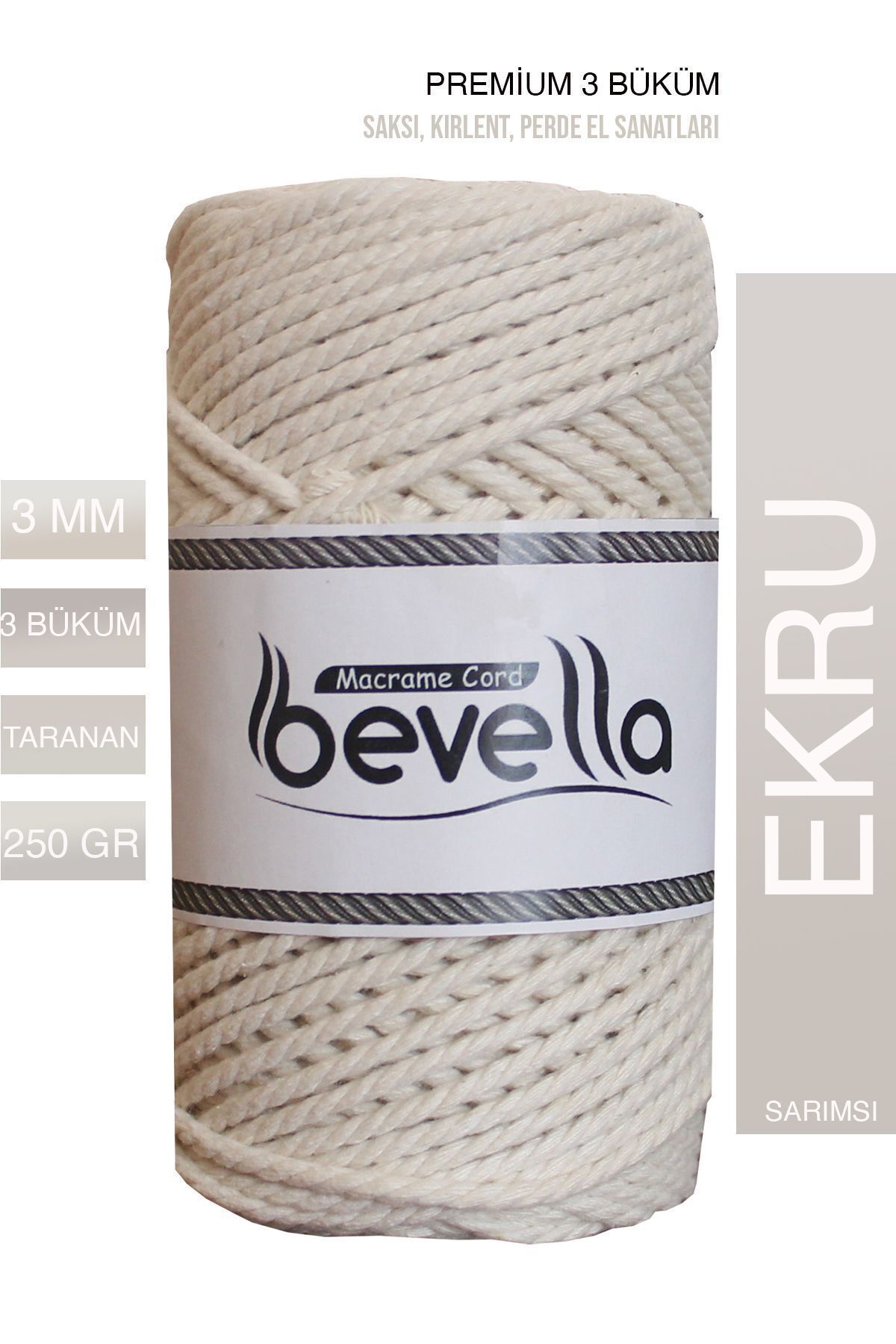
Bevella Macrame supplies 5mm and 6mm three-strand twisted cotton cord in both natural and bleached white on 100m and 500m rolls, designed to meet the cord quantities required for all shelf sizes and variations described in this guide.
For how shelf designs fit into a broader home scheme, see the shelf section in our 10 ways to use macrame in home decor guide.
How Do You Keep a Macrame Shelf Level Over Time?
A new macrame shelf is level when it's hung. Over time, it can develop a slight tilt if the cord structure settles unevenly, particularly in the first few months when the cord is adjusting to sustained load. Three factors cause post-installation tilting: uneven cord tension during construction (the most common cause), uneven load distribution (heavier objects placed consistently toward one side), and gradual elongation of the cord at heavy knot points under load.
The prevention is deliberate tension management during construction. Every gathering knot and every square knot at the board attachment points should be tied with consistent, firm final tension. Before hanging the shelf, hold the dowel level and load the shelf with objects at roughly the expected weight to check that the board sits horizontal. Adjust any cord pairs that have more slack than others by retying the attachment knots above the board with slightly tighter final tension.
If a shelf has developed a tilt after installation, the fix is usually simple: loosen the hanging cord at the lower side (the side that has dropped), re-tension it to raise the board back to level, and re-tie the fixing knot. Do this with the shelf unloaded.
Frequently Asked Questions
What is the maximum weight a macrame shelf can hold?
A properly constructed macrame shelf in 5mm three-strand twisted cotton, mounted into wall studs with hooks rated for 20kg, safely holds 3-4kg for a medium size shelf. The cord structure is not the limiting factor; the wall mounting hardware is. Always rate your hardware for at least 3-4 times the expected shelf load. A small shelf near the ceiling with poorly rated anchors is a genuine safety hazard. Never exceed 5kg on any standard macrame shelf regardless of cord diameter.
Can I use single-strand cotton cord for a macrame shelf?
Single-strand cotton is not recommended for load-bearing macrame shelves. Under sustained tension from the weight of objects on the shelf, single-strand cord at the knot attachment points gradually compresses and loosens over weeks and months. Three-strand twisted cord distributes stress across all three strands simultaneously, maintaining knot integrity under load. If you want the softer, brushable aesthetic of single-strand cord, use it only for the decorative fringe section below the board, not for the structural cord runs.
How do I finish the raw edge of the wooden shelf board?
Sand the board to 240-grit smoothness, paying attention to the board edges and the cord holes (rough hole edges cut cord fibers over time). Apply two coats of linseed oil, tung oil, or natural beeswax with a cloth, allowing full drying time between coats. This protects the wood from moisture, enhances the natural grain color, and creates a smooth surface that won't snag or discolor the cord. Avoid oil-based paints and varnishes on the cord-contact surfaces, as these can transfer to the cord and discolor it over time.
How far from the wall should the shelf sit?
The shelf naturally hangs against or very close to the wall (within 2-5cm) because the cord runs from the wall-mounted dowel downward, keeping the board against the wall surface. If you want the shelf to sit further from the wall for a 3D floating effect, add a spacer block between the wall and the dowel mounting hardware to project the dowel forward by 5-8cm. This works best with the double-tier variation where the projecting cord structure creates a visually interesting layered depth.
How long does a macrame shelf take to make?
A medium single-tier macrame shelf (60cm x 15cm) takes most intermediate makers 4-6 hours of working time, including cord cutting, mounting, knotwork, and finishing. The wood preparation (sanding, drilling, oiling) adds 1-2 hours. The first shelf always takes longer; the second typically takes 30-40% less time because the muscle memory for the knot sequence is established. Double-tier variations add 3-4 hours to the total.
Do I need to treat the macrame cord to prevent dust accumulation?
Natural cotton cord does accumulate dust in household environments, particularly in the fringe sections. A light spray of fabric protector (applied to the finished, dry cord from 30cm distance) reduces dust absorption and makes wiping easier. Lightly vacuum the shelf cord with a brush attachment every 4-6 weeks to prevent dust buildup from becoming embedded in the fiber. Avoid spraying any protector on the cord sections that contact the wooden board, as it can cause discoloration where cord and wood meet over time.