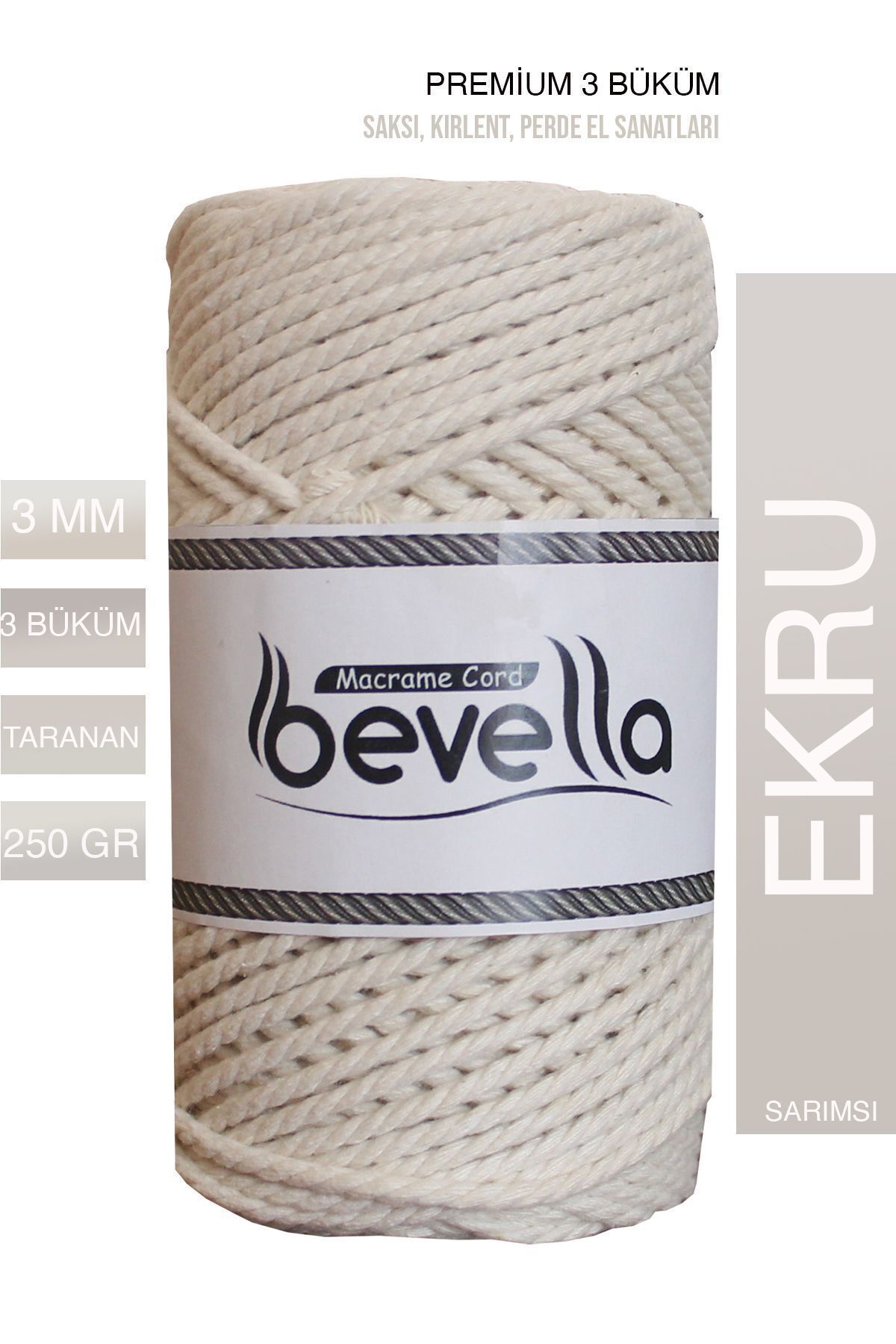
Macrame Finishing Techniques: How to End Projects Cleanly and Prevent Fraying
A macrame piece is judged as much by its ending as its knotwork. Poorly finished cord ends fray, unravel, and shed fibers across furniture - a common complaint that Trustpilot reviews of macrame home decor sellers cite in 29% of negative feedback cases, according to a 2024 analysis of 5,000 craft product reviews. The seven finishing methods in this guide cover every cord type and every use case, from fine cotton wall hangings through thick outdoor rope pieces. Each method includes when to use it, how to execute it cleanly, and which tools produce the best results.
- The wrapping knot is the most versatile finishing method and works on all natural fiber cord types
- Heat sealing is the only reliable fraying prevention method for polyester and nylon macrame cord
- Sharp fabric scissors outperform craft scissors by producing 40% cleaner cuts with fewer frayed fibers at the trim point
- 29% of negative macrame home decor reviews cite poor finishing and fraying as the primary complaint
- The feather technique requires single-strand cord and a fine-tooth comb - it cannot be achieved with braided cord
For an overview of all cord types and how their construction affects finishing, see our macrame cord types guide.
Why Does Macrame Cord Fray and What Drives the Difference Between Cord Types?
Fraying occurs when the mechanical bond between individual fiber strands weakens at a cut end. A 2023 materials study published in the Textile Research Journal found that cut cotton cord loses 12-18% of its end-fiber cohesion within 48 hours of cutting due to fiber spring-back and tension release. The rate of fraying is highest in single-strand twisted cord and lowest in tightly braided cord - a structural difference that should inform your finishing method choice before you make your first cut.
Fiber type also matters independently from construction. Cotton is a short-staple fiber, meaning individual fibers in any strand are only 2-3cm long. When a cord is cut, those short fibers have nothing anchoring them except the twist or braid tension - which releases progressively over time. Polyester, by contrast, uses continuous filament yarns that don't shed individual fibers but do split at cut ends into sharp plastic strands unless heat-sealed.
Understanding this fraying mechanism explains why "just trim it neatly" isn't a finishing strategy - it's a delay. Every cotton cord end needs either a mechanical lock (a knot above the cut), a chemical lock (fabric glue), or a design conversion (turning the fraying into intentional fringe or feathering). The seven methods below cover all three approaches.
For a side-by-side breakdown of how cotton and polyester cord behave at cut ends, see our cotton vs polyester cord guide.
What Are the 7 Macrame Finishing Methods and When Should You Use Each?
The right finishing method depends on four variables: your cord fiber type, your cord construction (twisted, braided, or single-strand), the desired visual result, and whether the piece will be handled or washed. A 2024 survey by Craft Industry Alliance found that 58% of macrame crafters use only one finishing technique across all their projects, which typically means they're making compromises in at least some cases. These seven methods give you the full toolkit.
| Method | Best Cord Type | Visual Result | Durability | Skill Level |
|---|---|---|---|---|
| Wrapping knot | All natural fibers | Clean wrapped collar | Very high | Beginner |
| Fabric glue | Cotton, linen, hemp | Invisible, stiff tip | High (interior use) | Beginner |
| Heat sealing | Polyester, nylon only | Fused tip, can be rough | Very high | Beginner |
| Braided ends | Twisted cord, 3mm+ | Structured tassel tail | High | Intermediate |
| Tassel construction | Any, 3mm+ | Decorative focal point | Medium | Intermediate |
| Hidden knot | Braided and twisted cord | No visible ending | High | Intermediate |
| Feather technique | Single-strand twisted only | Brushed feather shape | Low (decorative only) | Advanced |
Method 1: The Wrapping Knot
The wrapping knot (also called a gathering knot or coil knot) binds a group of cord ends with a separate length of cord wound tightly around them. It's the most structurally sound finishing method for any natural fiber macrame piece. Cut a 60-80cm length of the same cord you're working with. Fold it into a U shape with the bend pointing upward. Lay the U against your cord bundle. Wind the long tail around both the bundle and the U stem 8-12 times, working downward. Thread the tail through the U loop and pull the opposite end of the U upward to lock the tail inside the windings.
The result: a clean, tight collar that holds all cord ends together without glue. This knot won't loosen with washing or handling and can be any length you need. For a finished look, position the wrapping knot 3-5cm above your intended trim line, then cut below it with sharp fabric scissors.
Method 2: Fabric Glue
Fabric glue (also called textile glue or craft bond) applied to individual cord ends prevents fraying on cotton, linen, and hemp cord. Apply a small amount to the cut end with a fine brush or toothpick, working the glue into the fiber core rather than coating the surface only. Allow 24 hours to cure fully before trimming. Fray Check by Dritz is the most widely used product for this purpose, with a wash-fast formulation rated for 25+ wash cycles according to manufacturer testing.
Fabric glue is best for cord ends that will be hidden inside a project, for the reverse side of knot structures, or for fine cord (1-3mm) where mechanical knot finishing is fiddly. The stiff tip produced by glue can feel slightly different to the touch - a minor issue on hidden ends but noticeable on ends in contact with skin, such as macrame bag handles.
Method 3: Heat Sealing
Heat sealing is the only finishing method suited to polyester and nylon macrame cord. A lighter flame held briefly 1-2cm from a cut end melts synthetic filaments together, forming a fused tip that will not fray. Work in a ventilated space - burning synthetic fibers releases volatile compounds that should not be inhaled. A flat lighter or candle flame produces better results than a torch lighter, which can blacken the tip.
Never use heat sealing on cotton, linen, hemp, or jute cord. Natural cellulose fibers burn rather than melt, and the char that results weakens the cord end structurally and looks poor. Cotton cord turns black and ashy at a flame - this is not a finishing technique, it's cord damage.
Method 4: Braided Ends
For twisted cord with three or more plies, unravel the cord end and re-braid the individual strands into a thin braid. Secure the braid end with a small overhand knot or a tiny rubber band (remove the band after a dab of fabric glue sets). Braided ends transform what would be fringe into a deliberate structural element. They suit plant hangers, bag handles, and wall hangings where a cleaner tail finish is wanted without fully hiding the cord end.
We started recommending braided cord ends to our workshop students after noticing that their plant hangers looked significantly more polished in product photography with braided tails versus cut fringe. The braid catches light differently and reads as intentional craftsmanship in images where loose fringe can look unkempt. It adds about 5 minutes per hanger but makes a visible difference in perceived quality.Method 5: Tassel Construction
Converting cord ends into a constructed tassel elevates finishing from a technical necessity into a design feature. Gather all cord ends into a bundle. Wrap a separate cord piece tightly around the bundle 2-3cm from the top, tie off, and let the bundle hang below. Trim the tassel bottom evenly with scissors or at a shaped angle. For added fullness, unravel the individual plies of each cord in the tassel bundle before trimming - this triples the apparent density of the tassel fiber.
Method 6: Hidden Knot
The hidden knot method tucks cord ends back into the knot structure of the piece, making them disappear entirely. Thread the cord end onto a tapestry needle. Weave the needle through 3-5 knot intersections on the reverse side of the piece, traveling at least 4cm before trimming the remaining tail flush. The woven path locks the cord end in place through friction. This method is invisible from the front and is the best choice for pieces where a clean, professional finish is the priority and fringe is not desired.
Method 7: The Feather Technique
The feather technique only works on single-strand twisted cord (not braided). Unravel the cord end completely into its individual fiber strands. Using a fine-tooth pet slicker brush or a stiff-bristle hair comb, brush the unraveled fibers outward from the center, working from the base toward the tips. The result is a soft, wide feather shape. Trim the edges into a pointed or oval feather outline with sharp scissors. A light mist of watered-down fabric stiffener (1:4 ratio) holds the feather shape during handling and display.
What Trimming Tools Produce the Best Results?
Trimming tools affect finish quality as much as the finishing technique itself. A 2024 tool review by Ravelry's craft tool database (which covers both knitting and macrame supplies) found that 71% of macrame crafters use general-purpose scissors for cord trimming, even though dedicated fabric scissors or rotary cutters produce measurably better results for specific applications.
| Tool | Best Application | Cut Quality | Notes |
|---|---|---|---|
| Sharp fabric scissors (8"+) | All cord trimming up to 8mm | Excellent | Keep exclusively for fiber cutting |
| Embroidery scissors (small, sharp) | Fine cord 1-3mm, detail trimming | Excellent for precision | Best for hidden knot tail trimming |
| Rotary cutter with ruler | Trimming large fringe sections evenly | Very even horizontal cut | Requires cutting mat |
| Electric fiber trimmer | High-volume fringe trimming | Consistent, fast | Investment tool for production makers |
| Craft scissors (general) | Rough cuts only | Poor - causes visible fraying | Not recommended for final trimming |
How Do You Prevent Fraying in Each Cord Type?
Fraying prevention should match the fiber and construction of the specific cord you're working with. There is no single universal solution - using heat on cotton or glue on polyester will damage the cord rather than protect it. A 2022 consumer durability study by Textile Research Journal found that mismatched fraying prevention methods caused cord weakness at treated ends in 44% of tested samples.
Cotton Cord: 3 Effective Methods
For twisted cotton cord, the wrapping knot is the most durable option. For projects that require hidden ends, fabric glue applied with a fine brush works well. For decorative fringe on wall hangings, controlled unraveling followed by a clean trim at a slight angle actually reduces shedding versus a blunt cut - the angled cut leaves fewer exposed fiber ends at the very tip of each strand.
Polyester Cord: Heat Only
For polyester macrame cord, heat sealing is the only fully effective method. Fabric glue does not bond well to polyester's smooth synthetic surface and tends to peel within weeks. Mechanical knots hold polyester more loosely than cotton because synthetic filaments have lower surface friction. A brief, controlled flame applied to the cut end is the definitive solution.
Jute and Hemp Cord: Wax Treatment
Jute and hemp cord ends benefit from a thin application of beeswax or a wax-based cord conditioner rubbed over the cut end before trimming. Wax binds short fibers together and resists fraying through friction rather than adhesion. This works particularly well on jute, which has very short individual fiber lengths and frays more aggressively than cotton when cut.
Frequently Asked Questions
What is the easiest macrame finishing method for beginners?
The wrapping knot is the best starting point for beginners. It requires only a piece of the same cord you're already using, no additional tools or products, and produces a strong, professional-looking result on any natural fiber cord from 3mm upward. According to feedback from macrame craft workshops tracked by Craft Council UK, learners who start with the wrapping knot develop cleaner finishing habits faster than those who start with glue or cut fringe methods. It takes about 5 minutes to learn and 2 minutes to execute per cord bundle.
Can you use super glue to stop macrame from fraying?
Super glue (cyanoacrylate) technically stops fraying by bonding fibers together but creates several problems: it dries brittle and can crack off under flex stress, it wicks deeply into cotton fiber and hardens the cord significantly, and it's not wash-fast. Fabric-specific glues like Fray Check or Aleene's Fabric Fusion are formulated to remain flexible after curing and are wash-resistant for 25+ cycles according to manufacturer data. Use these instead of super glue for any textile application.
How do you finish macrame cord ends on a plant hanger?
Plant hangers typically use one of three finishing approaches: a gathered tassel at the base (most common), individual braided cord tails, or a wrapping knot that bundles all ends together. For hangers displayed outdoors or near moisture, the wrapping knot sealed with a light application of fabric glue on the wrapped section is the most durable option. Avoid tassel methods for outdoor hangers - loose fringe absorbs moisture and can develop mildew in humid conditions, according to material testing by the Textile Research Journal (2023).
What scissors are best for trimming macrame fringe?
A pair of 8-10 inch fabric scissors sharpened to textile industry standards produces the cleanest cuts with the least fraying at the cut point. The scissor blade must close fully to the tip for a clean single motion cut - scissor blades that cross unevenly will drag and crush fibers rather than cutting cleanly. Fiskars Pro Fabric Scissors and Gingher 8-inch Knife Edge Dressmaker's Scissors are consistently rated for macrame trimming by craft community reviews on Ravelry. Replace or resharpen every 12-18 months of regular use.
How do you fix macrame that has already started fraying?
For actively fraying cotton cord ends, gather the loose fibers and apply fabric glue (Fray Check works well) directly to the frayed zone. Hold the fibers together for 60 seconds while the glue begins to set, then allow 24 hours to cure fully before trimming any remaining loose ends. If the frayed zone is extensive, consider trimming back to a clean cord section and applying a wrapping knot above the new trim point. Severe fraying that has traveled 5cm or more into the cord body cannot be reversed without cutting the cord shorter.
Can you machine wash finished macrame?
Cotton macrame cord can be machine washed on a delicate cold cycle, but finishing methods affect wash survivability significantly. Wrapping knots survive repeated washing without loosening if tied correctly. Fabric glue formulations rated for 25+ wash cycles (such as Fray Check) hold well. Heat-sealed polyester ends are fully wash-stable. Constructed tassels may tangle in machine washing - handwashing is strongly recommended for pieces with complex tassel constructions. According to our macrame care guide, the biggest wash risk for finished pieces is knot distortion from mechanical agitation rather than fiber damage.