Macrame Fashion and Accessories: Bags, Belts, Jewelry, and Wearable Projects
The global fashion accessories market was valued at $506.6 billion in 2023 and is growing at a CAGR of 5.8% through 2030, according to Grand View Research. Within that, handmade and artisan accessories are growing faster than the mass-market segment. Macrame accessories occupy a unique position: they are entirely handmade, use natural materials, and carry no factory overhead, which makes them both commercially competitive for independent makers and increasingly visible on major fashion runways.
- Only natural cotton cord should touch skin directly: synthetics cause irritation in wearable applications.
- The macrame bag market online grew 41% in search volume between 2021 and 2024, per craft marketplaces Trend Reports.
- 8 wearable project types covered here: tote bag, clutch, belt, necklace, bracelet, headband, earrings, and sandals.
- Wearable macrame requires finer cord (1-3mm) than decor macrame (4-8mm), with a tighter knot structure.
- Hand-wash in cool water only; never machine-wash cotton macrame accessories.
Fashion macrame requires different thinking than home decor macrame. The cord must feel comfortable against skin, withstand movement and friction, survive contact with sweat and occasional rain, and hold its shape through repeated wear. None of those considerations apply when your piece hangs on a wall. This guide covers all eight major wearable macrame categories, the cord requirements for each, and the washing and care knowledge you need to make pieces that last.
For a foundation on cord materials before you start, see our macrame cord types guide.
How Did Macrame Become a Fashion Staple, and Where Is It Now?
Macrame entered fashion in the 1970s as part of a broader bohemian movement that valued handcraft, natural materials, and visible making. Vests, bags, belts, and bikinis made from knotted jute and rope appeared in mainstream fashion catalogs by the mid-1970s. The first revival faded by the early 1980s as fashion shifted to synthetic materials and mass production. The contemporary revival began around 2016-2017 when the bohemian interior trend expanded into fashion via Instagram.
The 2020s version of macrame fashion is more sophisticated than its 1970s predecessor. Luxury brands have incorporated macrame panels into ready-to-wear collections. Bottega Veneta, Missoni, and Etro have all featured knotted textile elements in runway shows. That mainstream visibility has created broader consumer acceptance of macrame as a fashion material, not just a craft hobby.
For independent makers, the commercial opportunity is real. craft marketplaces reported that macrame bags experienced a 41% increase in search volume between 2021 and 2024, making it one of the platform's fastest-growing handmade accessory subcategories. Handmade macrame bags in natural cotton retail for $60-250 depending on size and complexity, with material costs typically running $8-25 per piece at retail cord prices. That margin structure is what makes fashion macrame commercially viable for independent makers.
"Artisan and handcraft accessories are among the strongest-performing segments in the broader accessories market, driven by consumer preference for unique, traceable, and sustainably made items." - Grand View Research, Fashion Accessories Market Report 2024
What Cord Is Safe for Skin Contact in Wearable Macrame?
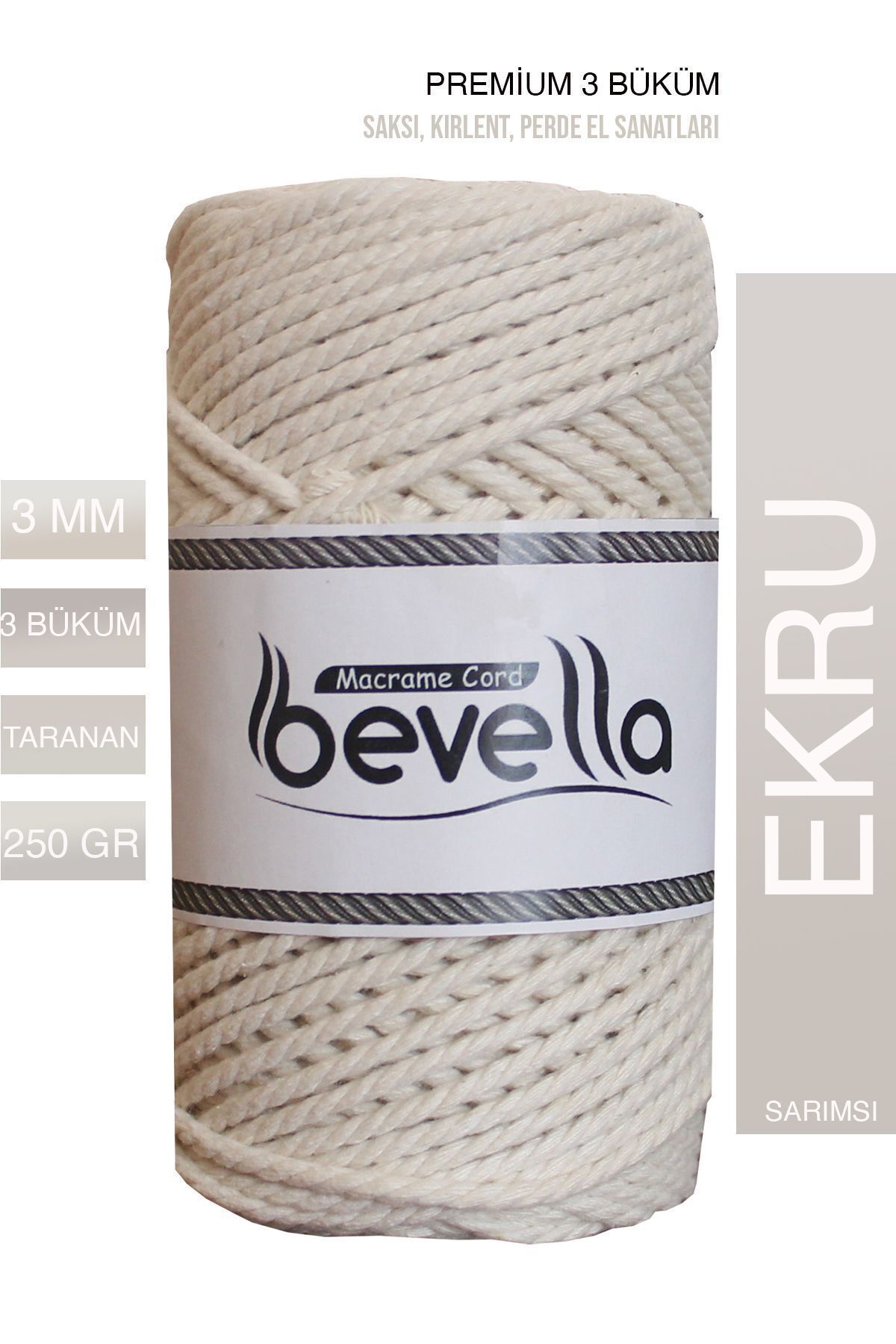
The rule for wearable macrame is unambiguous: use only untreated natural fiber cord for any item that will contact skin directly. Cotton is the standard choice, accounting for the vast majority of all wearable macrame production. Textile Exchange's 2023 Preferred Fiber and Materials Market Report found that cotton remains the dominant natural fiber in handmade accessories, chosen by 78% of artisan accessory makers surveyed, specifically because of its softness, breathability, and hypoallergenic profile.
Why Synthetics Don't Work for Wearables
Polyester cord is smooth, strong, and moisture-resistant. Those are excellent properties for outdoor decor. For wearables, those same properties become problems. Polyester has low breathability, which means it traps sweat against skin and creates discomfort during warm wear. It also has a slightly rough, plasticky surface at the micro level that causes friction against skin over time, particularly at wrist, waist, and neck contact points.
Nylon cord shares polyester's breathability problems and adds another issue: it can cause contact dermatitis in people with sensitivity to synthetic fibers. This reaction is dose-dependent, meaning brief contact is fine but sustained wear (a bracelet worn for 8+ hours, a belt worn against the waist all day) can trigger redness and irritation. The risk is not theoretical. It appears in maker communities frequently enough that natural-only cord selection for wearables is standard professional practice.
What "Untreated" Means and Why It Matters
Cotton cord is sometimes treated with starch, silicone, or chemical softeners to improve handling during production. These treatments are harmless for decor purposes but can irritate sensitive skin when worn. Look for cord described as "natural," "undyed," or "OEKO-TEX certified" for wearable applications. OEKO-TEX STANDARD 100 certification means the cord has been tested for over 100 harmful substances including formaldehyde, heavy metals, and allergenic dyes, making it the safest choice for any item worn against skin.
For a detailed breakdown of fiber safety properties, see our cotton macrame cord guide alongside the polyester cord guide.
The 8 Wearable Macrame Project Types: A Complete Guide
These eight categories cover the full range of wearable macrame, from beginner-accessible (bracelets, earrings) to technically demanding (structured tote bags, sandals). Each section includes cord type, approximate cord quantity, sizing guidance, and skill level. The projects are ordered from simplest to most complex based on the knot complexity, cord handling, and finishing precision each one requires.
1. Macrame Tote Bag
The macrame tote bag is the most commercially popular wearable macrame project, consistently appearing as a bestseller in handmade markets worldwide. A standard tote (approximately 35cm wide x 40cm tall, plus handles) requires 250-350m of 3mm single-strand cotton cord and handles made from the same cord or reinforced with a cotton webbing insert for extra strength.
Cord selection is critical for bags because the structure must hold load. Single-strand 3mm cotton creates a dense, beautiful knotwork that holds shape well. Using cord thinner than 2.5mm produces a floppy bag that can't hold weight without sagging. Using cord thicker than 4mm creates a stiff, heavy bag that loses the drape quality that makes macrame bags appealing.
Size guide: a standard tote is approximately 35cm wide x 40cm tall. A beach tote (larger, looser weave) is typically 40-45cm wide x 45-50cm tall and requires 350-450m of 3.5-4mm cord. Handle length should be approximately 55-60cm per pair for shoulder carry or 25-30cm for hand carry.
| Bag Type | Dimensions | Cord Needed | Cord Size | Skill Level |
|---|---|---|---|---|
| Mini tote | 25x30cm | 150-200m | 3mm single-strand | Intermediate |
| Standard tote | 35x40cm | 250-350m | 3mm single-strand | Intermediate |
| Beach tote | 42x48cm | 350-450m | 3.5-4mm single-strand | Intermediate |
| Market bag | 38x50cm | 300-400m | 3mm single-strand | Intermediate |
2. Macrame Clutch
A macrame clutch is structurally a flat bag with a zipper or button closure, typically 25-30cm wide and 15-20cm tall. Because a clutch needs more structural rigidity than a tote, most patterns incorporate a stiff lining (canvas or thick interfacing) sewn inside the knotted shell. Cord requirement: 120-180m of 2mm or 3mm single-strand cotton. Skill level: intermediate to advanced because of the precision required in seaming and the neat interior finishing.
3. Macrame Belt
A macrame belt is one of the most beginner-accessible fashion items because it's essentially a long, narrow wall hanging mounted on a belt ring or buckle. A standard women's belt (waist size 70-80cm, with extra length for adjustment) requires 60-90m of 2mm single-strand cotton. The pattern typically uses alternating square knots in a single row, creating a flat, flexible band approximately 3-4cm wide. Skill level: beginner.
Sizing: cut working cords to approximately 5 times the desired finished belt length (not including fringe or the knot section at each end). For a 90cm belt, cut your working cords to 450-500cm each. You'll typically mount 8-12 cords (4-6 doubled over a ring) for a 3-4cm wide band.
4. Macrame Necklace
Macrame necklaces range from simple knotted pendant holders (beginner) to complex, collar-style statement pieces covering much of the chest (advanced). The simplest version is a single pendant holder made from 1-2m of 1mm waxed cotton or 1.5mm single-strand cotton, with a few decorative knots around a stone or bead. Complex collar necklaces require 15-30m of 1-2mm cord and significant precision in tension control to produce symmetric, even results. Skill level: beginner (pendants) to advanced (collar designs).
5. Macrame Bracelet
Bracelets are among the most beginner-accessible wearable projects. A single-band square knot bracelet uses 2-3m of 1.5-2mm single-strand cotton and takes 30-45 minutes. The adjustable sliding closure (using a simple lark's head and overhand knot combination) makes sizing easy without requiring precise measurement. Multiple bands stacked and braided together create more complex designs. For any bracelet worn against wrist skin for long periods, 1.5mm or 2mm unbleached, undyed cotton is the comfortable choice. Skill level: beginner.
6. Macrame Headband
A macrame headband typically incorporates a section of knotted macrame (8-15cm wide) connecting to either an elastic band or braided cotton ties. The macrame section requires 20-40m of 2mm single-strand cotton. The critical design consideration is flexibility: the knotted section must be dense enough to hold shape but supple enough to follow the curve of the head without creating uncomfortable pressure. Avoid pattern sections wider than 18-20cm in a headband; they don't flex adequately over the ear curve. Skill level: beginner to intermediate.
7. Macrame Earrings
Macrame earrings are perhaps the most technically intricate wearable project per square centimeter of material, because all the knotwork must be executed in miniature on a scale of 3-8cm. They require 1mm or 1.5mm cord (thicker cord is too stiff to create fine detail at earring scale) and small metal findings (hooks, hoops, or studs). A pair of drop earrings uses 4-8m of 1mm cord per earring. The challenge is achieving bilateral symmetry: both earrings must look identical, which means counting knots, not measuring length. Skill level: intermediate to advanced.
8. Macrame Sandals
Macrame sandals are the most technically demanding item on this list. The upper straps must be knotted tightly enough to hold structural form, flexibly enough to move with the foot, and softly enough that they don't cause friction sores on the top of the foot or between the toes. Use 2mm or 3mm tightly knotted single-strand cotton for the straps, combined with a rubber or leather sole with pre-drilled attachment points. Each sandal upper requires approximately 30-50m of 2mm cord. Skill level: advanced. Finish all knots completely flat on the interior (foot-contact) side to prevent pressure points.
| Item | Cord Type | Cord per Item | Skill Level |
|---|---|---|---|
| Tote bag | 3mm single-strand cotton | 250-350m | Intermediate |
| Clutch | 2-3mm single-strand cotton | 120-180m | Intermediate-Advanced |
| Belt | 2mm single-strand cotton | 60-90m | Beginner |
| Necklace (pendant) | 1-1.5mm cotton | 1-3m | Beginner |
| Bracelet | 1.5-2mm cotton | 2-3m | Beginner |
| Headband | 2mm single-strand cotton | 20-40m | Beginner-Intermediate |
| Earrings (pair) | 1mm cotton | 8-16m | Intermediate-Advanced |
| Sandals (pair) | 2-3mm single-strand cotton | 60-100m | Advanced |
For the full cord specifications behind each project type, see our macrame cord types complete guide.
How Do You Wash and Care for Wearable Macrame?
Wearable macrame requires more frequent cleaning than decor macrame, and incorrect washing is one of the main reasons handmade accessories deteriorate quickly. Natural cotton is washable but requires cool water and gentle handling. According to Textile Exchange's fiber care guidelines, cotton fiber begins to lose structural integrity when machine-washed at temperatures above 30°C repeatedly. For handmade knotted items, agitation in a washing machine adds mechanical stress that loosens knots over time.
Washing Natural Cotton Macrame Accessories
Hand-washing is the correct method for all natural cotton wearable macrame. Fill a basin with cool water (under 30°C) and a small amount of gentle, pH-neutral detergent. Submerge the piece and squeeze gently without wringing or twisting. Rinse thoroughly in cool water until no detergent remains. Gently press out excess water between clean towels without wringing. Reshape the piece while damp and air-dry flat or hanging freely. Never use a tumble dryer on natural cotton macrame - heat causes shrinkage and fiber brittleness.
Spot-Cleaning Bags and Belts
For bags and belts that aren't heavily soiled, spot-cleaning with a damp cloth and a drop of mild detergent is usually sufficient. Work from the outside of the stain inward to prevent spreading. Allow to air-dry completely before wearing again. Regular spot-cleaning extends the time between full washes and reduces the cumulative mechanical stress on the knots.
Can You Use a Fabric Protector Spray?
Yes, and for bags it's recommended. A water-repellent fabric protector spray (like Scotchgard or equivalent) applied to a finished cotton macrame bag significantly reduces the absorbency of the cord surface, making it easier to wipe off surface dirt before it soaks in. Spray only on bags and belts, not on jewelry or skin-contact wearables, as the spray residue can cause skin irritation. Reapply after every 2-3 washes.
How Does Macrame Fashion Sizing Work?
The biggest sizing mistake in macrame fashion projects is applying the same length-multiplier rules from decor macrame to wearables. Decor pieces hang statically and can tolerate slightly imprecise dimensions. Wearables must fit a specific body measurement, and the knotted fabric structure behaves differently from woven fabric when it comes to sizing. Macrame knits tighter as more cords are worked together, and the finished width of a piece is significantly narrower than the mounted width of the working cords.
Belt Sizing Reference
Measure the waist or hip circumference (wherever the belt will sit). Add 15cm for the extension tail and closure area. That total length is your target finished belt length. Mounted working cord width should be 120-130% of the target finished width, because alternating square knot patterns consistently pull inward by 15-20% from the mounted width as you work downward.
Bag Sizing Reference
Macrame bags lose approximately 20-25% of their mounted width once the full knotwork structure is completed, because the knots contract the fabric horizontally. A bag that should finish at 35cm wide needs to be started at a mounting width of 42-44cm. Account for this contraction in every bag pattern you work from. If the pattern was created by an experienced maker, this contraction is already factored in. If you're writing your own pattern, add 20% to your target width when calculating your mounting setup.
Frequently Asked Questions
Is macrame cord safe to wear against skin?
Natural, undyed cotton cord is safe for direct skin contact. Look for OEKO-TEX STANDARD 100 certified cord for the highest safety assurance. Synthetic cords (polyester, nylon) can cause friction irritation during long wear and are not recommended for wearables. Avoid any cord with chemical finishes, stiffeners, or synthetic dyes in pieces that will contact skin continuously for hours.
How long does a macrame bag last with regular use?
A well-made macrame tote bag in 3mm cotton cord, with tight consistent knots and reinforced handle attachment points, typically lasts 2-4 years of regular use. The most common failure points are handle attachment junctions (where stress concentrates during load) and bottom corners (where friction with surfaces wears the cord). Reinforcing these points with extra wrapping knots during construction significantly extends the bag's lifespan.
Can I make macrame jewelry without any previous macrame experience?
Simple macrame jewelry (pendant necklaces, basic bracelets) is genuinely beginner-accessible and requires only square knots and lark's head mounts. The challenges are scale (everything is smaller, so precision matters more) and working with fine cord (1-2mm), which requires more fingertip sensitivity than the 4-5mm cord used in home decor projects. Most makers find their first bracelet takes about 45 minutes and their second takes 20.
What's the best macrame bag size to sell at craft markets?
A standard tote (35cm x 40cm) with shoulder-length handles sells most consistently at craft markets, according to independent designers community surveys. It fits comfortably over a shoulder, holds a full day's worth of belongings, and photographs well. Mini totes (25x30cm) sell well as gift items. Avoid very large market bags as first commercial offerings because they take significantly more time to make and are harder to price competitively at market stalls.
How do I stop macrame bracelets from getting stiff after washing?
Stiffness after washing usually means the cord absorbed minerals from hard tap water. Rinse macrame jewelry in filtered or softened water as the final rinse step. While the piece is still damp, work it gently with your fingers to restore flexibility, then wear it while it dries on your wrist to ensure it retains the right shape and suppleness. Avoid leaving it to dry in a compressed or folded position.
Are macrame bags sustainable compared to leather bags?
Cotton macrame bags have a significantly lower carbon footprint than conventional leather bags. Textile Exchange's 2023 Life Cycle Analysis data shows that a knotted cotton accessory uses approximately 10-15 times less water in production than an equivalent-sized leather item when comparing the full supply chain. Organic cotton cord (certified GOTS or OCS) reduces the environmental footprint further by eliminating pesticide use from the cotton farming stage.