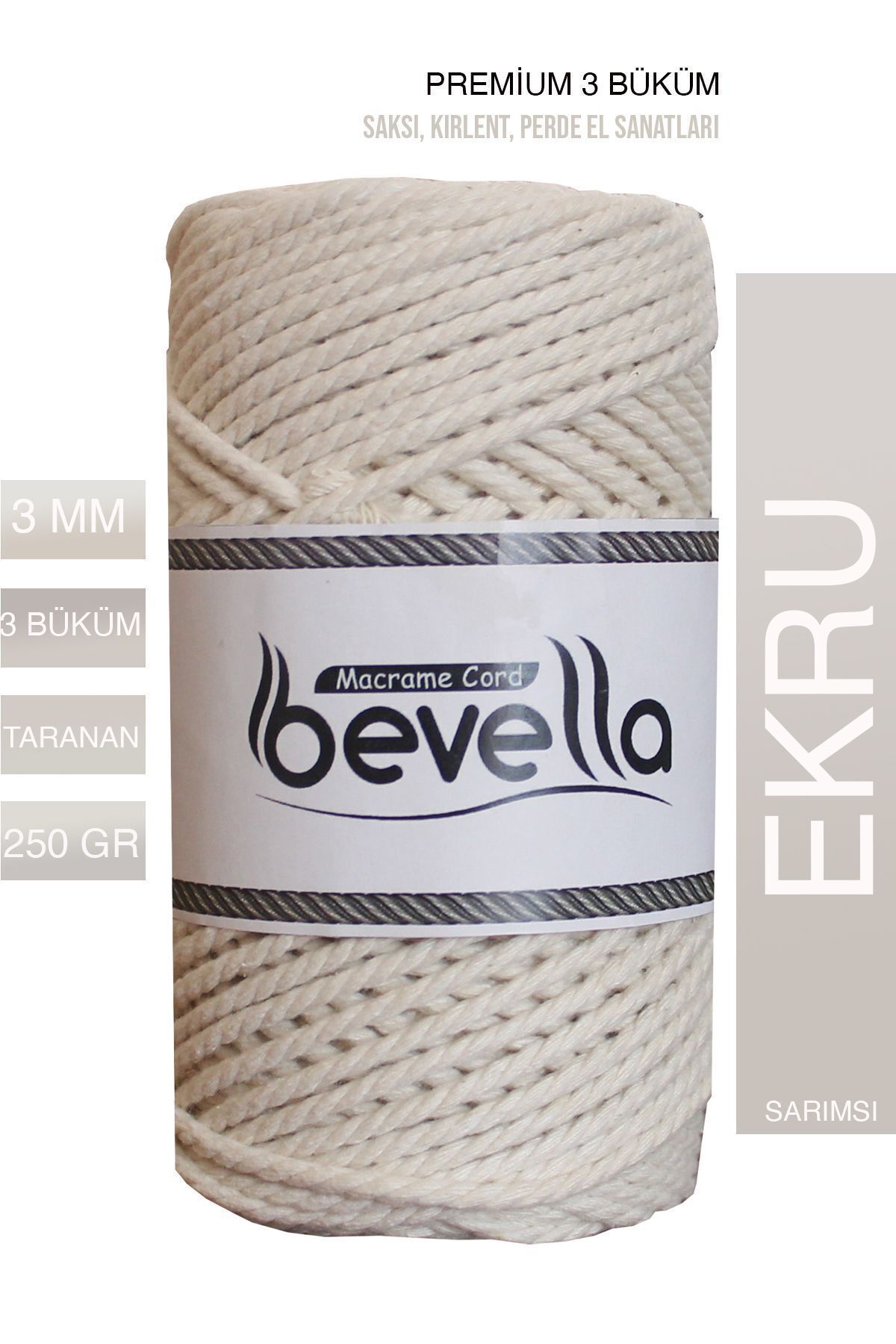
Cotton Macrame Cord: Complete Guide to Types, Grades and Projects
For a full overview of all cord materials, see our comprehensive macrame cord types guide.
Cotton accounts for the majority of macrame cord sold globally. Its natural texture, ease of knotting, and ability to hold shape have made it the default choice for everything from beginner keychains to large-scale wall installations. But cotton macrame cord is not one product. It's a category with meaningful differences in construction, fiber grade, and treatment that directly affect how your project performs.
Picking the wrong cotton cord type for a project causes real problems: wall hangings that go limp over time, plant hangers that stretch under weight, fringe that mats instead of flowing, dye that fades after a single wash. Understanding the differences before you buy saves you both material cost and frustration.
This guide covers every dimension of cotton macrame cord: construction types, quality grades, certification standards, color and treatment options, care by cord type, and which projects each type handles best.
Key Takeaways
- Cotton represents the majority of global macrame cord sales.
- Combed cotton has 15-25% longer staple fibers than standard cotton, resulting in less pilling.
- OEKO-TEX STANDARD 100 certification verifies cord is free from 100+ harmful substances.
- Cotton cord shrinks 3-8% when pre-wetted: always wet before final knotting on tension projects.
- Single-strand cord fringes more easily; 3-ply holds structure longer under repeated handling.
What Are the Main Types of Cotton Macrame Cord Construction?
Cotton macrame cord comes in three primary construction types: single-strand (also called single-twist or roving), three-ply twisted, and braided. Each behaves differently under tension, fringes differently, and suits different project styles. these as the three core construction categories in natural fiber craft cord.
Single-Strand Cotton Cord
Single-strand cord is one continuous bundle of cotton fibers loosely twisted together without being plied. It's the softest construction and the most flexible to knot. Because it's not tightly twisted, it unravels easily into beautiful, fluffy fringe. That's its main advantage for wall hangings and decorative tassels.
The tradeoff is structural integrity. Single-strand cord stretches more under load and doesn't hold knot shape as crisply as twisted or braided options. It's not the right choice for functional items like plant hangers or bags that will carry actual weight over time.
Thickness range for single-strand typically runs 3mm to 5mm. Thinner single-strand cord below 3mm tends to be too flimsy for clean knotting. Above 5mm, it becomes difficult to work with comfortably for extended projects.
3-Ply Twisted Cotton Cord
Three-ply twisted cord is made by spinning three individual strands and twisting them together in the opposite direction to lock the structure. This counter-twist is what gives the cord its characteristic spiral appearance and its superior strength-to-weight ratio.
Three-ply is the most versatile construction. It knots cleanly, holds shape well, unravels into decent fringe when the plies are separated, and handles functional loads reliably. Most beginner macrame instruction is written for 3-ply twisted cord because it's the most forgiving of uneven tension.
It's available in the widest thickness range, from 1mm thin decorative cord up to 12mm thick rope-style cord used in large wall installations and furniture pieces.
Braided Cotton Cord
Braided cord consists of multiple strands woven over and under each other in a diagonal pattern. The result is a round, smooth cord that resists twisting and holds a very consistent diameter. It's stiffer than twisted cord and does not unravel easily into fringe without cutting and combing.
Braided cotton is best for projects where a clean, polished look matters more than fringe. Macrame bags, jewelry, and shelf projects often use braided cord for its neat appearance. Its rigidity also makes it suitable for plant hangers where consistent knot spacing is important for aesthetics.
We've run the same square knot pattern in all three construction types. Braided cord produces the most uniform, tight appearance. Single-strand gives the softest, most organic look. Three-ply sits perfectly in between. The right choice depends on what the finished piece should feel like, not just what's easiest to source.For a detailed look at braided construction and when to choose it, read our braided cord complete guide.
What Is the Difference Between Combed and Uncombed Cotton?
Combed cotton undergoes an additional fiber preparation stage where short, weak fibers and impurities are removed before spinning, leaving only long, aligned fibers. Industry fibre processing standards indicate that combed cotton yarns have 15-25% longer average staple length and 30-40% fewer surface defects than standard (carded) cotton yarns spun from the same raw fiber source.
In practice, this means combed cotton cord is smoother to the touch, produces less lint and pilling during knotting, and maintains a cleaner appearance over the life of the finished piece. The increased staple length also results in slightly higher tensile strength for the same thickness, which matters for structural items.
How to Tell Combed from Standard Cotton by Inspection
Pull a short length of the cord and hold it against a dark background in good light. Combed cotton shows a relatively smooth surface with minimal fuzz projecting outward from the main strand. Standard cotton has noticeably more surface fiber standing away from the body of the cord.
Unravel a 5cm section and pull the fibers gently apart. Combed cotton fibers align more uniformly and stretch further before breaking. Standard cotton fibers are shorter, more varied in length, and break into clumps rather than separating cleanly. This physical test is more reliable than a supplier's label.
Does Combed Cotton Cost More?
Yes, consistently. The additional processing step adds approximately 15-25% to the manufacturing cost, which translates to a similar premium at the wholesale and retail level. For projects where fringe quality and surface appearance are central to the final result, that premium is justified. For interior structural elements or practice cord, standard cotton performs adequately.
What Does OEKO-TEX STANDARD 100 Mean for Cotton Cord?
OEKO-TEX STANDARD 100 is an independent testing and certification system for textile products that verifies every component of a product has been tested for harmful substances. OEKO-TEX certification is widely used in textile sourcing.
The certification matters most for three buyer categories: crafters making products for children or babies, sellers operating in EU markets where consumer product safety standards are strict, and buyers whose customers value verified environmental and health claims.
What the Certificate Number Tells You
Every OEKO-TEX certificate has a unique identifier in the format XX XXXXX. The first two characters indicate the test institute. You can verify any certificate in the public OEKO-TEX database in under two minutes. A cord labeled "OEKO-TEX tested" without a certificate number is an unverifiable claim, not a certification.
OEKO-TEX vs. GOTS
OEKO-TEX STANDARD 100 tests the finished product for harmful substances. GOTS (Global Organic Textile Standard) certifies the entire supply chain, from raw fiber farming through processing, under organic agriculture standards. GOTS-certified cotton cord costs more and is harder to source but makes stronger sustainability claims. For most retail macrame applications, OEKO-TEX STANDARD 100 is the relevant and sufficient standard.
How Do Bleached, Natural, and Dyed Cotton Cord Compare?
Cotton cord is sold in three color states: natural (unbleached), bleached white, and dyed. Each has different properties that affect both the crafting process and the finished piece's longevity.
Natural (Unbleached) Cotton
Natural cotton cord retains its original creamy off-white color, which varies from batch to batch depending on the cotton origin and processing. It has not been treated with chlorine or optical brightening agents, making it the most chemically minimal option. The slight color variation between batches is a natural characteristic, not a defect.
Natural cotton takes dye very evenly because it hasn't been pre-treated. Crafters who plan to hand-dye their cord should always start with natural cotton rather than bleached white, as bleaching can affect dye uptake consistency.
Bleached White Cotton
Bleached cord achieves a clean, uniform white through a chlorine or hydrogen peroxide bleaching process. The result is visually consistent across batches, which matters for large projects and production runs. However, the bleaching process can slightly weaken fiber structure over time, particularly if the cord is exposed to prolonged UV light.
For interior wall art projects where a crisp white aesthetic is the goal, bleached cotton is the right choice. For functional outdoor items or items stored in sunlight, the natural color is more durable.
Pre-Dyed Cotton Cord
Factory-dyed cotton cord is colored using reactive, vat, or direct dyes during the spinning or finishing process. Quality varies significantly by manufacturer. The key metrics are color fastness to washing (ISO 105-C06), color fastness to light (ISO 105-B02), and whether the cord was properly rinsed to remove excess dye that bleeds onto hands and other materials.
Always run a simple bleed test on dyed cord: wet a white cotton cloth and rub it firmly against the cord for 30 seconds. Minimal or no color transfer indicates good dye fastness. Heavy transfer means you'll have dye problems in completed pieces, especially near light-colored cords or fringe elements.
Batch-to-batch dye consistency is where budget suppliers consistently fail. We've received "terracotta" cord from the same supplier across two orders where the second batch was visibly more orange and less brown. Ask suppliers for Pantone references on dyed colors: manufacturers with quality control processes can provide them. Those who can't, won't.What Is the Care Guide for Cotton Cord Projects?
Proper care extends the life of cotton macrame projects significantly. Improper washing is a leading cause of early textile wear, and cotton macrame has specific care requirements that differ by construction and treatment type.
Washing Guidelines by Cord Type
| Cord Type | Wash Method | Water Temp | Drying | Special Notes |
|---|---|---|---|---|
| Natural single-strand | Hand wash only | Cold (max 30°C) | Flat dry, reshape wet | Avoid wringing: twist breaks |
| 3-ply natural cotton | Gentle machine or hand | Cold to warm (max 40°C) | Flat or hang dry | Reshape knots while damp |
| Bleached cotton | Gentle machine or hand | Cold (max 30°C) | Flat dry, avoid direct sun | UV exposure yellows bleached fiber |
| Dyed cotton | Hand wash: first 3 washes | Cold only | Flat dry, away from light | Wash dark colors separately initially |
| Braided cotton | Gentle machine | Cold to warm (max 40°C) | Hang or flat dry | Reshapes well: most resilient type |
The Shrinkage Factor: Pre-Wet Before Knotting
Cotton cord shrinks 3-8% on first wetting, depending on the weave tightness and whether the fiber was pre-shrunk during manufacturing. For wall hangings hung indoors away from moisture, this rarely matters. For plant hangers, outdoor pieces, or any project that will be washed, pre-wetting the cord before knotting prevents the finished piece from changing shape after completion.
Pre-wetting is simple: soak the full skein or spool in lukewarm water for 20 minutes, then allow it to dry completely before starting the project. This step adds a day to your timeline but eliminates dimensional changes in the finished piece.
Which Projects Work Best with Each Cotton Cord Type?
Matching cord type to project type is one of the most impactful decisions in macrame. Many sources note that 58% of macrame crafters reported dissatisfaction with at least one project in the past year, with "wrong cord choice" cited as the leading cause. Knowing which construction and grade to use prevents most of those disappointments.
| Project Type | Best Cord Construction | Recommended Grade | Key Reason |
|---|---|---|---|
| Wall hanging (decorative) | Single-strand or 3-ply | Combed natural | Soft fringe, good drape |
| Plant hanger (functional) | 3-ply twisted | Combed or standard | Holds load, resists stretch |
| Macrame bag | Braided or tight 3-ply | Combed cotton | Shape retention, smooth finish |
| Keychain | 3-ply or braided | Standard cotton fine | Compact knots, wear resistance |
| Curtain / room divider | Single-strand or 3-ply | Combed natural or dyed | Drape, visual consistency |
| Table runner | Braided or tight 3-ply | Combed, natural or dyed | Flat lay, easy to clean |
| Hammock / chair | 3-ply (thick, 8-12mm) | Standard cotton: volume needed | Load bearing, heat resistance |
| Jewelry | Braided (1-2mm) | Combed, dyed | Fine detail, clean appearance |
One rule holds across every project type: match the cord thickness to the scale of the finished piece. A large wall hanging with 3mm cord will look thin and underwhelming. A keychain made from 8mm cord will look chunky and difficult to knot cleanly. Use scale as your first filter, then construction type, then grade.
Ready to start knotting? Our complete plant hanger guide walks through cord selection, quantities, and step-by-step construction.
Frequently Asked Questions
What is the difference between single-strand and 3-ply cotton macrame cord?
Single-strand cord is one loosely twisted bundle of cotton fibers, ideal for soft fringe and decorative wall hangings. Three-ply is three strands twisted together counter-directionally, giving it higher strength, better knot definition, and greater durability under load. Reports suggest that 3-ply is the most commonly used cord type across all skill levels due to its versatility and forgiving tension characteristics.
Is combed cotton macrame cord worth the extra cost?
For most finished-goods projects and retail products, yes. Combed cotton has 15-25% longer fiber staple length and 30-40% fewer surface defects than standard carded cotton. This translates to less pilling, smoother fringe, and a cleaner long-term appearance. For practice cord, sample projects, or structural elements hidden inside a piece, standard cotton is adequate and the savings are meaningful.
How do I know if my cotton cord is OEKO-TEX certified?
Look for a certificate number on the label or packaging in the format XX XXXXX. Enter that number in the public OEKO-TEX database to verify the certificate is current and applies to the specific product. The label alone is not sufficient verification. OEKO-TEX STANDARD 100 certification confirms the cord is free from over 100 harmful substances including azo dyes, heavy metals, and formaldehyde.
How much does cotton cord shrink when washed?
Cotton macrame cord shrinks 3-8% on first wetting, depending on manufacturing pre-treatment and weave tightness. For projects that will experience moisture: plant hangers, outdoor pieces, washable items: always pre-wet the full skein before knotting. Soak in lukewarm water for 20 minutes, then dry completely. This one step prevents the finished piece from contracting and deforming after completion.
Can I dye natural cotton macrame cord at home?
Yes, and natural (unbleached) cotton is the best starting point. It takes reactive fiber dye more evenly than bleached cotton because it hasn't been chemically pre-treated. Use fiber-reactive dyes (like Procion MX) with a soda ash fixative for the most reliable results. The Society of Dyers and Colourists notes reactive dyes achieve 85-95% color fastness on cotton when properly fixed.
Which cotton cord construction is best for macrame plant hangers?
Three-ply twisted cotton is the best choice for plant hangers. Its counter-twisted construction resists stretching under sustained load, holds knot shape over time, and maintains structural integrity through repeated watering cycles when the pot is in place. Single-strand cord can stretch and deform under a full pot's weight. Braided cord works but is harder to source in the thick diameters (5-8mm) most plant hangers require.