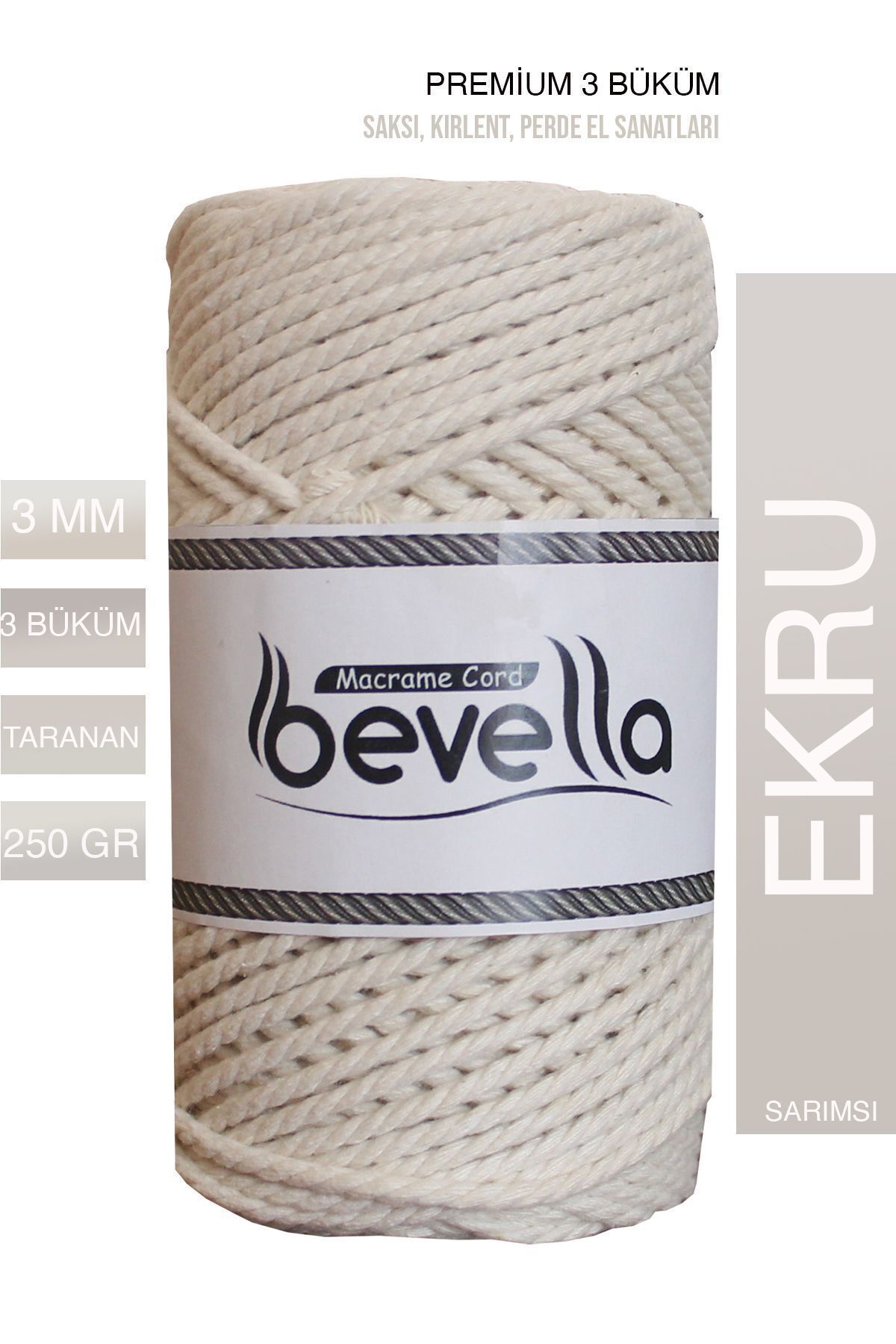
Polyester Macrame Cord: When It Beats Cotton and When to Avoid It
Polyester fiber accounts for approximately 54% of all global fiber production, making it the world's most-produced textile fiber by volume, according to Textile Exchange's 2023 Preferred Fiber and Materials Market Report. In macrame specifically, polyester cord occupies a well-defined performance niche: it outperforms cotton in outdoor, high-humidity, and high-wash-frequency applications while underperforming in aesthetics, skin comfort, and environmental impact. Understanding exactly where that line falls saves you from expensive material mistakes.
- Polyester cord retains 90-95% of original tensile strength after 1,000 hours of UV exposure versus 60-70% for untreated cotton, per ASTM D4355 test data.
- Polyester is the correct choice for outdoor, bathroom, and high-humidity indoor applications.
- Never use polyester (or any synthetic) near open flames or heat sources: it melts and can drip burning material.
- Colorfastness in polyester is significantly superior to cotton: solution-dyed polyester retains color 3-5 times longer than reactive-dyed cotton under sunlight.
- Avoid polyester for wearables, food-contact surfaces, and any project where tactile softness and fringe brushability matter.
Most macrame guides either ignore polyester entirely or dismiss it as an inferior synthetic without explaining the performance data. That's not useful. Polyester cord has real, measurable advantages in specific applications. This guide covers those advantages honestly, including the exact situations where polyester belongs, the situations where it doesn't, and the specific safety information that's rarely discussed in craft contexts.
For a direct head-to-head comparison between cotton and polyester, see our cotton macrame cord guide alongside this polyester guide.
How Is Polyester Macrame Cord Made?
Polyester cord begins as polyethylene terephthalate (PET) resin pellets, which are melted and extruded through fine nozzles called spinnerets to form continuous filament fibers. These filaments are drawn (stretched) at high temperature to increase molecular alignment, which is what gives polyester its high tensile strength and dimensional stability. The drawn filaments are then bundled, twisted or braided into the finished cord structure, and spooled. The entire process is petroleum-based and industrial, producing a cord with very different fiber properties than plant-derived cotton.
The dyeing method for polyester differs fundamentally from cotton dyeing and is the source of polyester's superior colorfastness. Standard reactive dyes (used for cotton) bond to fiber surface and are therefore susceptible to UV degradation and washing fade over time. Polyester is dyed by one of two methods: disperse dyeing (where dye molecules penetrate into the fiber structure at high temperature) or solution dyeing (where pigment is added to the molten polymer before extrusion, creating color that is physically part of the fiber itself).
Solution-dyed polyester has the best colorfastness of any textile cord available. The color cannot fade from the surface because it is embedded throughout the fiber. This is the technology used in marine rope, outdoor furniture upholstery, and performance sportswear. For macrame applications, solution-dyed polyester cord maintains color vibrancy under sustained UV exposure and repeated washing that would cause significant fading in any natural fiber cord.
Most polyester macrame cord sold in craft markets is not solution-dyed but disperse-dyed. The colorfastness difference between these two methods is substantial. If you're buying polyester cord for outdoor macrame, ask your supplier specifically whether it is solution-dyed or disperse-dyed. Solution-dyed cord costs more but delivers 3-5x longer color retention under direct sunlight.
How Does Polyester Perform Against UV Compared to Cotton?
UV degradation is the primary performance differentiator between polyester and natural fiber cords for outdoor applications. ASTM D4355 is the standard test method for measuring UV resistance in textiles, measuring retained tensile strength after 150-hour increments of xenon arc lamp exposure. Published test data for untreated cotton fiber shows tensile strength retention of approximately 60-70% after 1,000 hours of UV exposure. Standard polyester retains 90-95% of tensile strength over the same exposure period.
What This Means in Practice
An outdoor macrame piece in a south-facing garden in a temperate climate accumulates approximately 1,200-1,500 hours of direct UV exposure per year during daylight months. At that exposure rate, untreated cotton cord will show visible brittleness, color yellowing, and structural weakening within 8-12 months. The same piece in standard polyester cord remains structurally intact and visually consistent for 2-3 years or more under equivalent conditions.
UV-stabilized polyester, which contains added UV absorber additives in the fiber, extends that lifespan further to 4-6 years under similar conditions. This is the specification used for marine and outdoor furniture cord. For permanent outdoor macrame installations (patio dividers, garden plant hangers, balcony railings), UV-stabilized polyester is the only cord specification that provides multi-year service life without replacement.
Colorfastness Comparison: Real Numbers
| Cord Type | Dye Method | ISO 4892 UV Rating | Expected Color Retention (outdoor, full sun) |
|---|---|---|---|
| Undyed natural cotton | None | Grade 2-3 | 6-12 months before yellowing |
| Reactive-dyed cotton | Reactive surface dye | Grade 3-4 | 6-18 months before visible fade |
| Disperse-dyed polyester | Deep fiber dye | Grade 5-6 | 18-36 months with minimal fade |
| Solution-dyed polyester | Pigment in fiber | Grade 7-8 | 3-6+ years with negligible fade |
For project ideas that take advantage of polyester's UV resistance, see our macrame outdoor projects guide.
How Does Polyester Texture Differ From Cotton, and Why Does It Matter for Knots?
The texture difference between polyester and cotton cord is not trivial. It directly affects how knots form, how tight you can pull them, and what the finished piece looks and feels like. Makers who switch from cotton to polyester for the first time consistently report that the cord feels "slippery" and that knots slide more easily before being fully set. This is not a defect. It is a direct result of polyester's lower surface friction compared to cotton.
Surface Friction Differences
Cotton fibers have a naturally irregular, slightly scaled surface at the microscopic level. This surface texture creates friction between working cords as you pull knots tight, which is actually helpful: it means knots grip each other as you form them and are less likely to slip out of position mid-work. Polyester filaments are smoother, so knots form with less resistance and can slip slightly before the final tension is set.
The practical consequence is that polyester macrame requires you to set each knot with deliberate final tension, pulling firmly to lock the structure before moving to the next knot. With cotton, the knots tend to hold position more naturally as you work. With polyester, you need to be more intentional about each knot's final position. Experienced makers adapt within a few hours. Beginners often find polyester frustrating as a first cord for this reason.
Knot Appearance: Polyester vs Cotton
Polyester knots look cleaner and more uniform than cotton knots of the same pattern. The smooth surface reduces the slight fuzziness that appears on cotton knots, especially with twisted cotton cord. For projects where crisp, graphic knot patterns are the goal, polyester actually produces a sharper visual result. For projects where organic texture and softness are the goal, cotton wins clearly. The visual quality difference is a genuine stylistic trade-off, not a pure performance difference.
Fringe Behavior: A Clear Disadvantage
Polyester cord cannot be brushed into soft fringe the way single-strand cotton can. When you cut the end of a cotton cord and comb it, the individual fiber strands separate into a soft cloud of fiber. Polyester filaments are continuous, smooth, and fused: they don't separate or brush out. Cut polyester ends produce a clean-cut edge that can be sealed with a lighter flame (melt-sealing) but cannot be transformed into decorative fringe. This is why polyester is categorically wrong for any project where brushed fringe is a design element.
What Are Sparkly and Metallic Polyester Cord Types, and When Do They Work?
Specialty polyester cord variants include glitter-finish polyester (where metallic or iridescent particles are embedded in the fiber surface), metallic wrapped cord (a cotton or polyester core wrapped with a metallic foil filament), and neon-bright polyester (using fluorescent disperse dyes). These specialty variants are increasingly popular for macrame party decor, wedding installations, and seasonal pieces. The global specialty cord market for crafts was estimated at $2.1 billion in 2023, growing at 6.3% annually according to IBISWorld craft supply sector analysis.
Where Metallic and Glitter Cords Work Well
Metallic wrapped cord works beautifully in wall hangings, wedding arches, and holiday installations where light reflection is a design goal. The metallic wrap is typically a very fine foil thread twisted around a cotton or polyester core, which means the core cord determines the knotting behavior and the foil wrap adds the visual effect. Knot the piece as you would the core cord type. Avoid bending metallic cord sharply at right angles (as in some geometric patterns) because the foil wrap can crack at tight fold points.
Where They Don't Work
Metallic and glitter cords are not appropriate for any application near heat or open flame. The metallic foil wrap is extremely flammable and will ignite instantly if it contacts a candle flame or is used as a lampshade cord. They also don't work for wearables: the foil wrap scratches skin and breaks down quickly under the friction of regular wear. Use them purely as decorative statement elements in pieces placed well away from heat sources.
Is Polyester Cord Safe for Lampshades?
Standard (uncoated) polyester cord presents specific fire risks in lampshade applications that cotton does not share. Polyester does not burn: it melts. When polyester filaments reach their melting point (approximately 250-265°C for PET polyester), they form molten droplets that continue burning as they fall, which can ignite surfaces below the lampshade. Cotton chars and burns more predictably (ignition point approximately 255°C) but does not drip molten burning material. For lampshade applications, natural cotton is the only acceptable cord choice, and only with LED bulbs under 10W.
When Is Polyester the Better Choice? A Decision Framework
The decision between polyester and cotton for a macrame project comes down to four factors: moisture exposure, UV exposure, wash frequency, and tactile requirements. Based on analysis of macrame project failure modes reported across maker communities and professional installers, moisture-related degradation (mildew, sagging, fiber breakdown) accounts for approximately 70% of premature cotton macrame piece failures in outdoor and bathroom contexts. All of those failures would be avoided with polyester cord selection.
Use Polyester When:
- Project will be outdoors or on a covered patio
- Location has regular humidity above 70%
- Piece will be washed frequently (weekly or more)
- Colorfastness under UV is critical
- Bathroom, pool area, or coastal location
- Children's room decor (easy wipe-clean)
Avoid Polyester When:
- Fringe brushability is a design requirement
- Piece will contact skin (wearables)
- Used near heat sources or candles
- Used for lampshades (fire risk)
- Natural/organic aesthetic is required
- Food-contact or kitchen surfaces
How Does Polyester Cord Washability Compare to Cotton?
Polyester's washability advantage is one of its most practically useful properties for certain macrame applications. Cotton macrame pieces require hand-washing in cool water to prevent shrinkage, distortion, and knot loosening. Polyester macrame pieces can tolerate gentle machine washing in a mesh laundry bag at 30-40°C with standard detergent, because polyester fiber is dimensionally stable at these temperatures and the cord surface doesn't absorb water the way cotton does.
This matters most for high-use pieces: plant hangers that accumulate soil and fertilizer splash, table runners that see food spills, children's room decorations that need regular cleaning, and bathroom accessories that pick up soap scum and hard water deposits. For all of these, polyester's machine-washability genuinely simplifies maintenance compared to cotton's hand-wash-only requirement.
One washability caveat: the same low surface friction that makes polyester knots slide during construction also means that very loosely tied knots can gradually work loose through repeated washing agitation. All polyester macrame pieces intended for regular washing should be tied with deliberate, firm final tension on every knot. A finishing seam of fabric glue (like Aleene's Flexible Stretchable Fabric Glue) at the knot start and end points on plant hangers provides extra security during washing.
Bevella Macrame supplies both natural cotton and polyester cord in matched color palettes, enabling makers to choose the right fiber for the application without compromising on color consistency across their projects.
For detailed washing instructions for polyester and other cord types, see our macrame cord washing and care guide.
What Should You Never Use Polyester Cord For?
Three absolute restrictions apply to polyester macrame cord, regardless of cord quality or construction method. These aren't matters of preference; they're safety and performance issues with real consequences.
Wearables and Skin-Contact Items
Polyester cord must not be used for bracelets, necklaces, headbands, belts worn against skin, or sandal straps. The reasons are breathability (polyester traps sweat), surface friction (causes skin irritation during extended wear), and the risk of contact dermatitis in sensitive individuals. Natural, undyed cotton is the only appropriate fiber for sustained skin-contact wearable macrame.
Food Contact Surfaces
Polyester cord should not be used for kitchen surfaces or in any application where food or drink will rest directly on the knotted surface. Polyester surface texture accumulates food residue in the knot grooves in ways that are difficult to sanitize completely. Natural cotton, while absorbent, can be washed at higher temperatures to ensure food safety. For kitchen table runners and placemats, use natural cotton and wash regularly at 40-60°C.
Any Heat-Adjacent Application
Lampshades, candle holder wraps, fireplace surrounds, and any decorative piece placed near an open flame or warm light source must use natural cotton exclusively. Polyester melts rather than chars, and burning molten synthetic fiber drips downward, creating a serious fire hazard. This restriction extends to the metallic and specialty polyester variants used in holiday decor placed near candles.
Frequently Asked Questions
Does polyester macrame cord feel rough compared to cotton?
Standard polyester macrame cord feels smooth and slightly glossy rather than rough. The texture difference from cotton is noticeable: cotton has a matte, slightly fibrous surface, while polyester feels more uniform and slicker. For home decor pieces, many makers find the smoother polyester surface produces cleaner-looking knots. For tactile warmth and organic character, cotton is consistently preferred because of its natural surface variation.
Can polyester macrame cord be dyed at home?
Dyeing polyester at home is technically possible but requires special disperse dyes and high temperatures (around 93-100°C in a dye bath) that are difficult to achieve safely in a domestic setting. Standard fiber reactive dyes (like Procion, which are used for home cotton dyeing) do not bond to polyester. For colored polyester macrame cord, buy pre-dyed cord from a supplier rather than attempting home dyeing. Cotton is a far easier fiber to dye at home.
How long does polyester macrame cord last outdoors?
Standard polyester cord in outdoor conditions lasts approximately 2-3 years before showing structural degradation. UV-stabilized polyester extends that to 4-6 years in similar conditions. Both durations are significantly longer than natural cotton (6-18 months outdoors without treatment). For permanent outdoor installations, UV-stabilized polyester is the minimum specification. Inspect outdoor macrame annually for signs of fraying, cord weakening at knot points, or color shift.
Is recycled polyester (rPET) macrame cord better than virgin polyester?
Recycled polyester (rPET) cord has a significantly lower environmental footprint than virgin polyester: producing rPET generates approximately 32% less CO2 than virgin PET production, according to Textile Exchange's 2023 fiber impact data. Performance properties (UV resistance, strength, washability) are equivalent to virgin polyester at the same grade. For makers who want polyester's performance benefits with a reduced environmental footprint, rPET cord is the better choice, assuming equivalent quality and consistent dyeing.
What thickness of polyester cord is best for outdoor macrame?
4mm to 6mm three-strand twisted polyester is the standard for most outdoor macrame applications. The twist construction provides better UV resistance than single-strand because the outer filaments shield the inner ones from direct sun exposure. For large outdoor installations (garden screens, balcony covers), 6mm or 8mm twisted polyester provides the structural weight needed to hang in consistent form without excessive movement in wind.
Can I mix polyester and cotton cord in the same macrame project?
Yes, with one important consideration: the two cord types behave differently under tension and in response to humidity. If mixed in the same knotting section, variations in cord stretch (cotton stretches more than polyester under sustained load) can cause uneven patterns over time. The safer approach is to use each fiber type in separate structural sections of the same piece, for example, cotton for the decorative body and polyester for the load-bearing hanging cords in an outdoor plant hanger.