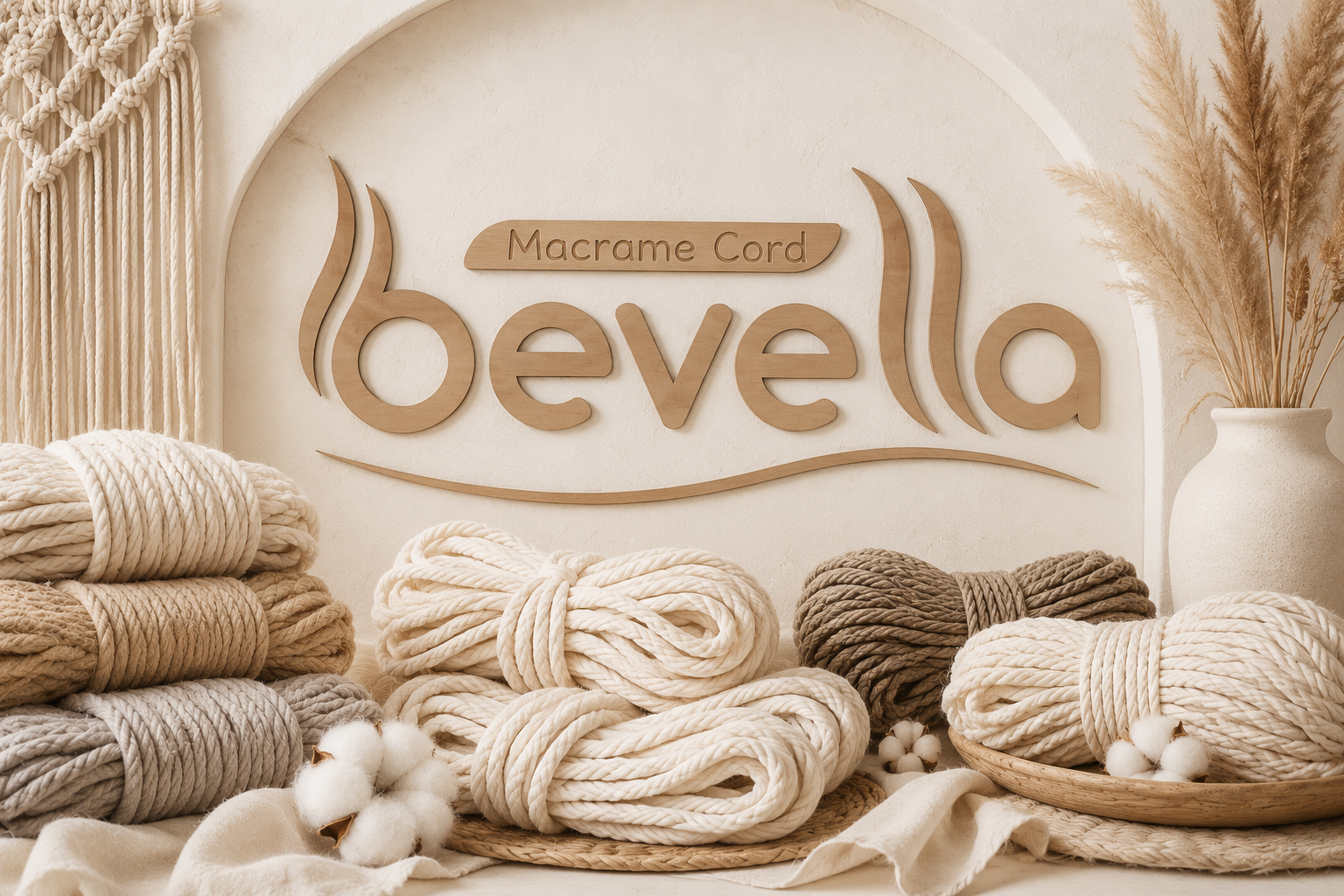
High-quality macrame cord has consistent diameter (±0.2mm tolerance), even twist per metre, and colour stability across dye batches. These three factors determine whether a handmade product looks professional and whether repeat orders produce matching results.
How to Choose High-Quality Macrame Cord for Handmade Products, Interior Decor, and Wholesale Projects
Macrame has moved far beyond a small craft trend. Today, it appears in modern homes, boutique hotels, event styling, handmade product collections, lifestyle stores, creative workshops, and independent craft businesses around the world. Behind every clean knot, soft fringe, structured wall hanging, durable plant hanger, or decorative textile piece is one essential material: the cord.
Choosing the right macrame cord affects the entire result. It changes the way knots sit, how the fringe opens, how strong the finished piece feels, how colors appear in a room, and how professionally a handmade product can be presented to customers. For individual makers, the right cord makes the process easier and more enjoyable. For small businesses and wholesale buyers, it also supports consistency, repeat production, and brand quality.
This guide from Bevella explains how to choose high-quality macrame cord for different projects, materials, thicknesses, finishes, and buying needs. Whether you are making one wall hanging for your home, sourcing materials for a workshop, designing a handmade product line, or planning bulk orders for your business, the goal is the same: choose cord that looks good, performs reliably, and suits the final use.
Why Macrame Cord Quality Matters
Macrame is a tactile craft. People notice the way the material feels, hangs, knots, and ages. A low-quality cord can make even a beautiful design look uneven, rough, or unfinished. A high-quality macrame cord, on the other hand, helps the maker work with confidence and gives the finished product a cleaner, more refined appearance.
- Diameter consistency: high-quality cord maintains ±0.2mm tolerance along its full length
- Twist evenness: machine-twisted cord has consistent turns-per-metre; hand-wound may vary
- Colour stability: batch-matched dyeing ensures colour consistency across repeat orders
- Tensile strength check: quality 5mm cotton cord supports 8–12kg before break point
- Surface finish: combed cotton should have no loose fibres visible from 30cm distance
Quality matters because macrame cord affects:
- Knot definition
- Fringe softness
- Strength and durability
- Color consistency
- Texture and visual depth
- Ease of use
- Product presentation
- Long-term customer satisfaction
For handmade business owners, consistency is especially important. If you sell wall hangings, plant hangers, bags, accessories, home decor items, or DIY kits, customers expect every product to match the same standard. For interior decorators and brands, the cord must also support a professional visual identity across multiple pieces, rooms, displays, or collections.
A good macrame cord is not just a supply item. It is part of the design language of the final product.
The Main Types of Macrame Cord
Different cord structures create different results. Before choosing color or thickness, it helps to understand the most common macrame cord types and where each one works best.
1. Single Twist Macrame Cord
Single twist macrame cord is soft, flexible, and easy to comb into fringe. It is often chosen for wall hangings, feathers, leaves, soft decorative pieces, and projects where texture is important.
It is a good option for:
- Wall hangings
- Macrame feathers
- Boho-style decor
- Soft fringe details
- Beginner-friendly projects
- Decorative textile pieces
Single twist cord gives a natural, relaxed look. It is loved by makers who want softness, movement, and a handcrafted finish. However, because it opens easily, it may not be the best choice for projects that need firm structure or heavy load support.
2. Twisted Macrame Cord
Twisted macrame cord is made with multiple strands twisted together. It provides stronger knot definition than single twist cord and is suitable for medium to large projects. It can still be opened for fringe, but it generally feels more structured.
It is a good option for:
- Plant hangers
- Wall decor
- Curtain details
- Table runners
- Medium-sized home accessories
- Workshop projects
Twisted cord is a versatile choice for makers and small businesses because it balances softness, strength, and decorative detail. It is often a practical option when one cord type needs to serve multiple project categories.
3. Braided Macrame Cord
Braided macrame cord has a firm, stable structure. It does not open into fringe as easily as single twist or twisted cord, but it is excellent for durability and shape retention.
It is a good option for:
- Bags
- Belts
- Baskets
- Pet accessories
- Heavier plant hangers
- Functional decor
- Products that need stronger structure
Braided cord is especially useful for brands, designers, and makers who produce items that must hold shape, carry weight, or withstand frequent use. It creates a clean and modern finish with less loose fiber movement.
4. Polyester Macrame Cord
Polyester macrame cord is often selected for projects that require durability, color stability, or a smoother technical finish. It can be useful for accessories, bags, outdoor-inspired decor, and products where a firmer or more resistant material is preferred.
It is a good option for:
- Fashion accessories
- Bags and handles
- Decorative items with frequent handling
- Projects requiring strong color options
- Structured handmade products
- Commercial craft collections
Polyester cord offers a different feel from cotton. It may be preferred when the design requires strength, smoothness, or a more contemporary look.
Cotton or Polyester: Which Macrame Cord Should You Choose?
There is no single best macrame cord for every project. The right choice depends on what you are making, how the item will be used, and what kind of texture you want.
Cotton macrame cord is usually preferred for soft, natural-looking projects. It works beautifully for wall hangings, nursery decor, plant hangers, bohemian interiors, table decor, and handmade gifts. It is comfortable to work with and gives a warm, tactile finish.
Polyester macrame cord is often preferred for stronger, smoother, or more structured products. It can be useful for bags, accessories, functional items, and designs that need a more durable surface.
For many makers and businesses, both materials have a place in the product range. Cotton can support natural home decor lines, while polyester can expand the collection into accessories and high-use items.
How to Choose the Right Macrame Cord Thickness
Cord thickness changes the look, scale, strength, and production time of a macrame project. A thin cord creates detailed patterns, while a thicker cord creates bold texture and faster coverage.
Here is a practical guide:
| Project Type | Suggested Cord Thickness |
|---|---|
| Micro-macrame and jewelry | 1 mm - 2 mm |
| Small accessories | 2 mm - 3 mm |
| Plant hangers | 3 mm - 4 mm |
| Wall hangings | 4 mm - 5 mm |
| Table runners and decorative panels | 3 mm - 5 mm |
| Bags and baskets | 4 mm - 6 mm |
| Rugs, hammocks, and heavy decor | 5 mm - 6 mm+ |
For beginners, 3 mm and 4 mm cords are often the easiest starting point because they are visible, manageable, and suitable for many common projects. For professional production, it is useful to test a sample before ordering in bulk, especially if the project requires a specific knot size, fringe effect, or load capacity.
How Much Macrame Cord Do You Need?
A common starting formula is:
Required cord length = finished project length x 4 to 6
This is only a general guide. The actual amount depends on the pattern, knot density, cord thickness, and fringe length. A design with many square knots, spiral knots, or layered sections will need more cord than a simple open pattern.
For product development, workshops, and wholesale planning, it is wise to create a test piece first and record the exact cord consumption. This helps you calculate material cost, reduce waste, and keep future production consistent.
For example:
- Simple plant hanger: usually less cord than a dense wall hanging
- Large wall hanging: more cord because of length, layers, and fringe
- Bag or basket: more structure may require thicker or braided cord
- Workshop kit: cord length should include a safe margin for beginners
This kind of planning is especially important for handmade businesses. Accurate cord calculation protects your pricing, improves production planning, and helps avoid shortages during repeat orders.
What Makes a Macrame Cord Suitable for Wholesale and Bulk Orders?
Wholesale buyers usually need more than attractive color and texture. They need reliability. A cord used for business production must perform the same way across multiple units and orders.
When choosing macrame cord for wholesale or bulk use, consider:
- Consistent thickness
- Reliable color matching
- Strong knot performance
- Suitable packaging
- Repeat order availability
- Clear product information
- Material options for different project types
- Custom production possibilities
- Communication with the manufacturer
A maker buying one spool may focus mainly on color and feel. A business buying in bulk must also consider supply continuity, production timelines, product categories, and customer expectations. This is where working with a macrame cord manufacturer can make a real difference.
Bevella supports different types of buyers, from individual makers to larger wholesale and custom production needs.
Macrame Cord for Interior Designers and Decor Projects
Interior designers and decorators often look at macrame cord differently from hobby makers. They need materials that support a visual concept, color palette, and finished space. A cord used in a hotel lobby installation, retail display, event backdrop, studio wall, or home styling project must look intentional and refined.
For interior decor projects, consider:
- Color harmony with the room
- Texture under natural and artificial light
- Scale of the wall or space
- Weight and hanging method
- Fringe movement
- Long-distance visual impact
- Durability in high-touch areas
Thicker cords create stronger texture and visibility from a distance. Softer cotton cords create warmth and a natural handmade feeling. Braided cords can support cleaner, more structured decor pieces.
Macrame can soften modern interiors, add craft detail to minimalist spaces, and bring texture to walls that would otherwise feel flat. The cord choice determines whether the final piece feels rustic, refined, playful, neutral, bold, or architectural.
Macrame Cord for Handmade Businesses and Craft Brands
For small businesses and craft brands, macrame cord is not only a material. It affects pricing, photography, packaging, customer reviews, and repeat sales.
A good cord helps handmade products look better in photos, feel better in the customer's hands, and remain more consistent across a collection. This matters for product lines such as:
- Wall hangings
- Plant hangers
- DIY macrame kits
- Wedding decor
- Table decor
- Keychains and accessories
- Bags and baskets
- Seasonal collections
- Workshop materials
- Branded craft boxes
If you sell finished products, choose cord that matches your brand style. If your brand is soft and natural, cotton cord may be the core of your collection. If your products are modern, structured, or frequently handled, braided or polyester options may be useful.
The best approach is to build a small material library. Keep samples of different thicknesses, colors, and cord structures. This makes future product planning faster and helps you respond more confidently to custom orders.
Color Selection: Natural, Neutral, or Bold?
Color is one of the first things customers notice. Natural and neutral tones work well for home decor because they blend easily with many interior styles. Warm beige, cream, ivory, taupe, brown, gray, and earthy tones often suit wall hangings, nursery decor, wedding pieces, and minimalist interiors.
Bold colors can be useful for seasonal collections, children's rooms, statement accessories, workshops, and brand-specific product lines. For wholesale buyers, color consistency is important because even small differences can affect product photography and repeat orders.
When choosing colors, think about:
- Your target customer
- Interior trends in your market
- Product photography
- Seasonal demand
- Matching sets and collections
- Custom production possibilities
- Repeat order requirements
A beautiful color is useful only if it supports the final product. For businesses, the best colors are not always the most dramatic. They are the ones customers can easily imagine in their homes, stores, events, or collections.
Safety, Use, and Product Suitability
Macrame cords can be used in many decorative and functional projects, but the right material should always be selected for the intended use. A cord for a wall hanging does not need the same performance as a cord for a bag handle, pet accessory, hammock, or children's room decoration.
For baby-related items, pet products, load-bearing projects, and high-contact accessories, buyers should check material details, finishing, strength, and care guidance before production. Businesses should also consider the safety standards and labeling requirements of their own markets.
Practical points to check include:
- Fiber type
- Thickness
- Strength
- Colorfastness
- Surface finish
- Care instructions
- Suitability for the final use
- Any required market-specific documentation
Responsible material selection protects both the maker and the customer. It also helps businesses build trust through clear product information.
Practical Troubleshooting for Macrame Makers
Even experienced makers face small technical issues. The right cord and technique can solve most of them.
Why does my cord fray too much?
Some fraying is normal, especially with soft cotton and single twist cords. Use sharp scissors for clean cuts and choose a cord structure that matches the project. If you need less fringe movement, twisted or braided cord may be a better choice.
Why do my knots look uneven?
Uneven knots usually come from inconsistent tension. Pull each knot with the same pressure and check alignment after each row. A cord with consistent thickness also helps create cleaner results.
Why does my wall hanging look smaller than expected?
Dense knotting uses more cord and shortens the final length. Always test a small section before cutting all cords for a large project.
Which knots should beginners learn first?
The lark's head knot and square knot are excellent starting points. Once these feel comfortable, makers can move on to spiral knots, half hitch patterns, and more detailed designs.
Why does my fringe not look full?
Fringe depends on cord type, fiber softness, and combing technique. Single twist cotton cord is often easier to brush into soft fringe, while braided cord is better for structure than fringe.
Questions Wholesale Buyers Should Ask Before Ordering Macrame Cord
For wholesale and bulk purchasing, a few clear questions can prevent costly mistakes:
- Which cord types are available?
- What thicknesses can be supplied?
- Are colors repeatable across orders?
- Is custom production possible?
- What are the minimum order quantities?
- What packaging options are available?
- Can samples be provided?
- What is the estimated production time?
- Which cord is best for my product category?
- Can the manufacturer support long-term supply?
These questions are useful for importers, craft stores, workshop organizers, interior design studios, handmade product brands, and private-label projects. They also help clarify whether the supplier can support both creative needs and business requirements.
Why Choose Bevella Macrame Cord?
Bevella creates macrame cords for a wide range of users, from individual makers and craft lovers to interior designers, small businesses, wholesale buyers, and brands. The focus is on useful material choices, reliable production, and cords that help creative projects look polished and professional.
Bevella macrame cords can be used for handmade decor, accessories, workshops, DIY kits, retail product lines, interior styling, and bulk production. Whether you need cotton cord for soft wall hangings, polyester cord for stronger accessories, braided cord for structured products, or custom options for business needs, Bevella offers material solutions for different creative goals.
Final Thoughts: The Right Cord Makes the Work Feel Better
Macrame is built knot by knot, but the final result begins with the material. A cord that feels good in the hand, holds knots cleanly, matches the project style, and supports the intended use can transform the making process and the finished product.
For beginners, the right cord makes learning easier. For artists and designers, it opens creative possibilities. For small businesses and brands, it supports consistency and customer trust. For wholesale buyers, it becomes part of a reliable supply chain.
If you are choosing macrame cord for personal projects, product development, interior decor, workshops, retail, or bulk production, start with the project goal. Then choose the material, structure, thickness, color, and supplier that fit that goal.
Bevella welcomes makers, designers, craft businesses, decorators, and wholesale buyers who want high-quality macrame cord for creative and commercial use.
For product information, wholesale inquiries, bulk orders, custom production, or help choosing the right cord type, contact Bevella.
FAQ: Macrame Cord Buying Guide
What is the best macrame cord for beginners?
A 3 mm or 4 mm cotton macrame cord is often a practical starting point because it is easy to see, easy to knot, and suitable for many beginner projects such as plant hangers and simple wall hangings.
What is the best macrame cord for wall hangings?
Single twist cotton cord is popular for soft wall hangings and fringe details, while twisted cord gives stronger knot definition. The best option depends on whether you want a soft, flowing look or a more structured design.
What is the best macrame cord for plant hangers?
A 3 mm or 4 mm twisted or braided macrame cord is commonly used for plant hangers. The final choice should depend on the pot size, hanging length, knot density, and required strength.
What is the difference between cotton and polyester macrame cord?
Cotton macrame cord usually feels softer and more natural, making it suitable for home decor and fringe. Polyester macrame cord is often smoother and more durable, making it useful for accessories, bags, and structured products.
Can macrame cord be ordered in bulk?
Yes. Bevella supports wholesale and bulk order inquiries for buyers who need macrame cord for production, retail, workshops, craft businesses, interior projects, or custom collections.
What cord thickness should I use for macrame bags?
For macrame bags, 4 mm to 6 mm cord is often suitable, especially when the design needs structure. Braided cord can be a strong option because it helps the bag keep its shape.
How do I choose macrame cord for a handmade business?
Choose cord based on your product type, target customer, visual style, production volume, and repeat order needs. Test samples first, record cord usage, and select materials that support consistent product quality.
Can Bevella help with custom macrame cord production?
For custom production, wholesale options, bulk orders, and product information, contact Bevella with your project details, preferred cord type, thickness, color needs, and estimated quantity.
Looking for wholesale macrame cord?
Bevella supplies craft retailers, studios, and e-commerce brands worldwide.
View All Products Get Wholesale Price WhatsApp Us