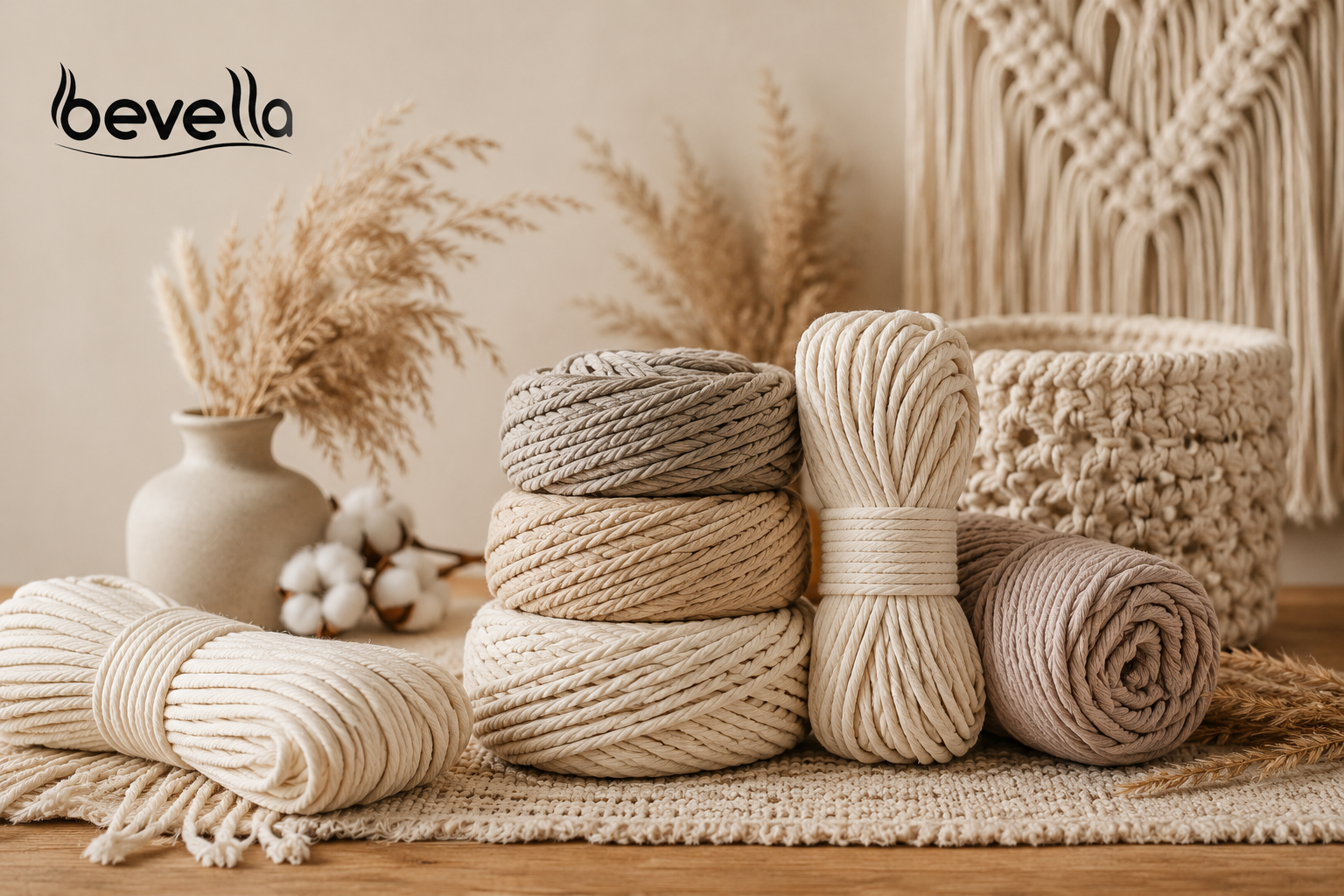
How to Choose Macrame Cord for Beads, Tassels, and Beautiful Handmade Designs
Macrame is often described as a knotting technique, but anyone who works with cord knows it is much more than that. The final look of a macrame piece depends on texture, weight, color, movement, finishing details, and the way every material works together. A simple bead, a soft tassel, or a carefully chosen cord can completely change the character of a design.
For individual makers, these details help a project feel more personal. For interior designers, they help a piece fit a specific room, collection, or visual concept. For craft businesses and handmade brands, they can turn a simple product into something more recognizable and easier to sell. For wholesale and bulk buyers, the right cord choice can improve product consistency, production speed, and customer satisfaction.
This guide from Bevella explains how to choose macrame cord for projects that include beads, tassels, fringes, accessories, wall decor, plant hangers, and handmade product collections. It is written for makers and buyers who care about quality, usability, and design results, whether they are creating one special piece or sourcing materials for larger production.
Quick Answer: What Is the Best Macrame Cord for Beads and Tassels?
The best macrame cord depends on the project. Soft cotton macrame cord is a strong choice for wall hangings, tassels, fringes, and natural handmade decor. Braided macrame cord works well when you need structure, strength, and a cleaner finish. Polyester macrame cord can be useful for projects that require durability, color stability, or a smoother surface.
If your design includes beads, make sure the bead hole is large enough for the cord to pass through without forcing. If your design includes tassels or fringe, choose a cord that brushes, separates, or holds shape in the way your project requires.
Why Beads and Tassels Matter in Macrame Design
Beads and tassels are not just decorative extras. They add contrast, rhythm, movement, and depth. A bead can create a focal point. A tassel can soften the bottom of a wall hanging. A row of small accents can make a plant hanger feel more refined. These details help a handmade item look intentional rather than unfinished.
For global buyers and craft brands, accessories also support product differentiation. Two makers may use similar knots, but the choice of cord thickness, bead material, fringe finish, and color palette can create a completely different visual identity.
In interior decor, these choices matter even more. A minimalist room may need calm neutral cords and simple wooden beads. A boutique hotel, studio, or retail display may need bolder colors, heavier tassels, or more structured braided cord. The material should support the design language of the space.
Start with the Cord: The Foundation of Every Macrame Piece
Before choosing beads, tassels, or finishing details, start with the cord itself. Cord affects the look, touch, weight, flexibility, and durability of the finished piece. It also affects how easy the project is to make.
When choosing macrame cord, consider:
- Project type: wall hanging, plant hanger, bag, belt, curtain, ornament, jewelry, decor accessory, or retail product.
- Cord material: cotton, polyester, braided, twisted, single-strand, or multi-ply.
- Cord thickness: thin cords for delicate work, thicker cords for statement pieces.
- Texture: soft, structured, smooth, brushed, twisted, or braided.
- Color: neutral, natural, seasonal, bold, pastel, earthy, or custom.
- Production needs: small handmade batches, repeat orders, wholesale supply, or custom production.
For makers, the right cord makes knotting more enjoyable. For businesses, it makes production more predictable.
Cotton Macrame Cord: Soft, Natural, and Ideal for Fringe
Cotton macrame cord is one of the most popular choices for handmade decor because it feels soft, works beautifully with knots, and creates a natural look. It is especially suitable for wall hangings, plant hangers, dreamcatchers, table runners, nursery decor, bohemian interiors, wedding decor, and pieces that include fringe or tassels.
Cotton cord is often preferred when the design needs warmth and softness. It can create a relaxed handmade feeling without looking rough or unfinished. Depending on the construction of the cord, it may also be brushed into fringe for soft, flowing details.
Cotton macrame cord is a strong option for:
- Wall hangings
- Plant hangers
- Tassels and fringe
- Boho and natural interior decor
- Handmade home accessories
- Wedding and event decor
- Giftable craft products
If your design includes beads, cotton cord pairs especially well with wooden, ceramic, and natural-style accessories. For a clean result, always check the bead hole size before production.
Polyester Macrame Cord: Durable, Smooth, and Practical
Polyester macrame cord can be a practical choice for designs that need extra durability, smoother handling, or a more consistent surface. It is often useful for accessories, bags, outdoor-inspired decor, keychains, decorative straps, and products that may receive more frequent handling.
The look is usually cleaner and less fluffy than brushed cotton, which can be helpful for modern designs. Polyester cord may also suit brands that want a sharper, more polished finish across repeated production.
Polyester macrame cord can be useful for:
- Bags and handles
- Keychains and accessories
- Decorative straps
- Modern craft products
- High-use handmade items
- Projects where a smoother finish is preferred
For beads, polyester cord often works well with metal, acrylic-style, glass, or polished accessories. For tassels, the result depends on the cord structure, so it is important to test how the cord separates, hangs, and moves before making a large batch.
Braided Macrame Cord: Strong, Structured, and Clean
Braided macrame cord is designed for structure. Unlike cords that open easily into fringe, braided cord usually holds its shape better. This makes it valuable for projects that need strength, stability, or a neat finish.
Makers often choose braided cord when they want knots to look defined and consistent. Small businesses and wholesale buyers may prefer it for products where durability and repeatable results are important.
Braided macrame cord works well for:
- Plant hangers
- Bags and baskets
- Belts and straps
- Home organization pieces
- Functional decor
- Accessories with heavier beads or hardware
- Projects that need shape retention
If your design includes tassels, braided cord may create a more structured end rather than a fluffy brushed fringe. If your design includes beads, it can support heavier accents more confidently than very soft cord.
How to Choose Beads for Macrame Projects
Beads can make a macrame design feel more finished, but they must be chosen carefully. A beautiful bead is not useful if it does not fit the cord or if it changes the balance of the piece.
1. Check the Hole Size
The bead hole should be large enough for the cord to pass through smoothly. A tight fit can damage the cord, slow production, and create frustration. As a general rule, the bead hole should be larger than the cord diameter, especially if the cord is folded, doubled, or slightly compressed during knotting.
For bulk production, test the bead and cord together before ordering large quantities. A small difference in hole size can affect speed and consistency across hundreds or thousands of pieces.
2. Match the Bead Material to the Design Style
Different bead materials create different moods:
- Wooden beads: warm, natural, bohemian, suitable for plant hangers and wall decor.
- Glass beads: polished, light-catching, suitable for jewelry, ornaments, and modern accents.
- Ceramic beads: artistic, handmade-looking, suitable for statement pieces and boutique decor.
- Metal beads: sleek, modern, suitable for accessories, bags, and refined details.
The bead should support the design, not compete with it.
3. Consider Weight and Placement
Heavy beads can pull on the cord and change the way a piece hangs. This may be beautiful in some designs, but it can also distort the structure if not planned properly. Place heavier beads where the cord can support them and where the weight improves the design.
Common bead placement ideas include:
- Between knots for symmetry
- In the center for a focal point
- Near the bottom fringe for a finished detail
- On plant hanger arms for rhythm and balance
- Around handles, straps, or decorative loops
How to Use Tassels and Fringe in Macrame
Tassels and fringe give macrame its sense of movement. They can make a wall hanging feel soft, a keychain feel playful, or a decorative product feel more complete.
The right tassel style depends on the cord type and the intended finish.
Soft Brushed Fringe
Soft brushed fringe is often made from cords that can be combed out. It works beautifully for wall hangings, boho decor, nursery pieces, and artistic home accessories. The result is soft, airy, and expressive.
Twisted Fringe
Twisted fringe keeps more structure. It is useful when the design needs movement but not too much softness. This style can help a piece look tidy while still adding detail.
Braided Fringe
Braided fringe is stronger and more controlled. It is a good option for items that may be handled more often, such as bags, accessories, decorative straps, or functional pieces.
For product-based businesses, fringe consistency is important. If every item in a collection needs the same length, density, and finish, choose a cord that behaves reliably during cutting, knotting, brushing, and trimming.
Matching Cord Types with Beads and Tassels
Choosing cord and accessories together creates a better result than choosing them separately. Here is a practical guide:
Single-strand cotton macrame cord: Suitable for soft fringe, delicate tassels, wall hangings, and natural beads.
Twisted cotton macrame cord: Suitable for defined knots, fuller tassels, plant hangers, wall decor, and wooden or ceramic beads.
Braided macrame cord: Suitable for structured projects, bags, plant hangers, straps, heavier beads, and clean modern designs.
Polyester macrame cord: Suitable for durable accessories, smoother finishes, keychains, bags, and polished bead styles.
For wholesale buyers, this matching process can help reduce returns and improve customer experience. For individual makers, it helps avoid common mistakes before a project begins.
Choosing Macrame Cord for Different Buyers and Projects
A single maker and a wholesale buyer may look for different things in the same cord. Bevella serves a wide range of users, so it helps to understand what each group usually needs.
For Individual Makers and Craft Lovers
Individual makers usually want cord that is easy to knot, pleasant to touch, and beautiful in the final project. They may experiment with colors, textures, beads, tassels, and seasonal designs. A smaller quantity may be enough for one wall hanging, a few plant hangers, or a gift project.
For Handmade Business Owners
Small businesses need more consistency. If a product sells well, the maker must be able to recreate it. Cord color, thickness, texture, and availability become important. Reliable supply helps a handmade business accept orders with more confidence.
For Interior Designers and Decor Professionals
Interior designers often choose cord based on mood, palette, and scale. A large wall piece for a hotel, studio, home, restaurant, or showroom may need a specific color tone, thickness, and texture. The cord should match the space as well as the object.
For Craft Brands and Retailers
Brands and retailers need materials that support collections. They may look for repeatable colorways, packaging options, product range depth, or cord types that suit different customer levels, from beginners to experienced makers.
For Wholesale and Bulk Buyers
Wholesale buyers need dependable production, clear communication, quantity options, and material consistency. They may order macrame cord for resale, workshops, subscription boxes, decor production, event styling, or private-label craft lines.
What to Check Before Buying Macrame Cord in Bulk
Bulk buying is not only about price. The wrong cord can create waste, delays, and inconsistent products. Before placing a wholesale or large-volume order, review these details:
- Cord material and construction
- Cord thickness and tolerance
- Color consistency
- Texture and softness
- Knot definition
- Fringe behavior
- Strength and flexibility
- Packaging format
- Minimum order quantity
- Lead time
- Custom color or custom production options
- Suitability for the intended product
If you are producing items with beads, test the cord with the exact bead size. If you are producing items with tassels, test cutting, combing, trimming, and hanging before scaling production.
Color Selection: From Natural Neutrals to Statement Palettes
Color is one of the fastest ways to define the identity of a macrame piece. Natural shades create calm and warmth. White and cream tones work well for weddings, nursery decor, and minimalist interiors. Earth tones feel grounded and organic. Dark colors can make a design more dramatic and modern. Bright colors can help a product stand out in retail, social media, and seasonal collections.
For brands and designers, color planning is also a commercial decision. A consistent palette can make a product line easier to recognize. Seasonal colors can support launches and campaigns. Neutral bestsellers can create a stable foundation for repeat orders.
When choosing colors for bulk production, it is wise to confirm the shade under natural light and indoor lighting. A cord color can look different on a screen, in a studio, and in a real interior.
Common Mistakes to Avoid
Even experienced makers can run into problems when cord, beads, and tassels are not planned together.
Avoid these common mistakes:
- Choosing beads before checking the cord diameter
- Using heavy beads on a soft structure without support
- Selecting a cord that does not brush well for a fringe-heavy design
- Choosing a cord only by color and ignoring texture
- Buying bulk cord without testing a sample
- Using too many decorative details in one design
- Ignoring how the piece will hang, move, or be handled
Good macrame design is not about adding more. It is about choosing the right details and giving each one a purpose.
Why Material Consistency Matters for Professional Results
Consistency matters whether you are making one piece or one thousand. If the cord changes too much in thickness, texture, or color, the final product may not look balanced. For a hobby project, this can be disappointing. For a business, it can affect production time, photos, customer expectations, and repeat sales.
This is why many makers and buyers prefer to work with a macrame cord manufacturer that understands both design and production needs. The right supplier should help you choose materials that fit your product, not just sell you cord by the meter or roll.
Bevella focuses on macrame cords for makers, designers, handmade businesses, craft brands, and wholesale buyers looking for practical, beautiful, and reliable material options.
Product Link Placeholders
Explore Bevella macrame cord options:
Cotton macrame cord for wall hangings, tassels, fringe, plant hangers, and natural decor:
Polyester macrame cord for durable accessories, smoother finishes, and high-use projects:
Braided macrame cord for structured designs, bags, plant hangers, straps, and clean knot definition:
Wholesale and bulk macrame cord inquiries:
Frequently Asked Questions About Macrame Cord, Beads, and Tassels
What cord is best for macrame wall hangings?
Cotton macrame cord is often preferred for wall hangings because it creates a soft, natural look and can work well with fringe or tassels. The best thickness depends on the size and style of the wall hanging.
What macrame cord works best with beads?
The best cord for beads is the cord that fits through the bead hole without being forced. Cotton, braided, and polyester cords can all work with beads if the size, structure, and weight are suitable for the design.
Can braided macrame cord be used for tassels?
Braided macrame cord can be used for decorative ends, but it usually creates a more structured finish than soft brushed fringe. If you want fluffy tassels, test the cord first to see how it separates.
Is cotton or polyester macrame cord better?
Cotton is often chosen for softness, natural texture, wall decor, and fringe. Polyester is often chosen for durability, smoothness, and high-use accessories. The better option depends on the project.
Do wholesale buyers need to test macrame cord before ordering in bulk?
Yes. Testing helps confirm thickness, color, knotting behavior, bead compatibility, tassel finish, and overall suitability before scaling production.
Can Bevella support wholesale or custom macrame cord inquiries?
Yes. Buyers can contact Bevella for product information, wholesale inquiries, bulk orders, and custom production discussions.
Final Thoughts: Better Cord Creates Better Macrame
Macrame design begins with cord, but it does not end there. Beads, tassels, colors, textures, and finishing details all shape the final result. When these elements are chosen with care, a handmade piece feels more intentional, more beautiful, and more valuable.
For makers, the right cord makes creative work easier and more enjoyable. For interior designers, it supports stronger visual concepts. For handmade businesses and craft brands, it helps create products that can be repeated, photographed, packaged, and sold with confidence. For wholesale buyers, it supports consistency across larger orders.
Whether you are creating one meaningful handmade piece or sourcing macrame cord for a growing product line, Bevella can help you explore cotton macrame cord, polyester macrame cord, braided macrame cord, wholesale options, bulk orders, and custom production possibilities.
Contact Bevella to request product information, discuss wholesale macrame cord supply, ask about bulk orders, or explore the most suitable cord options for your next collection.
Looking for wholesale macrame cord?
Bevella supplies craft retailers, studios, and e-commerce brands worldwide.
View All Products Get Wholesale Price WhatsApp Us