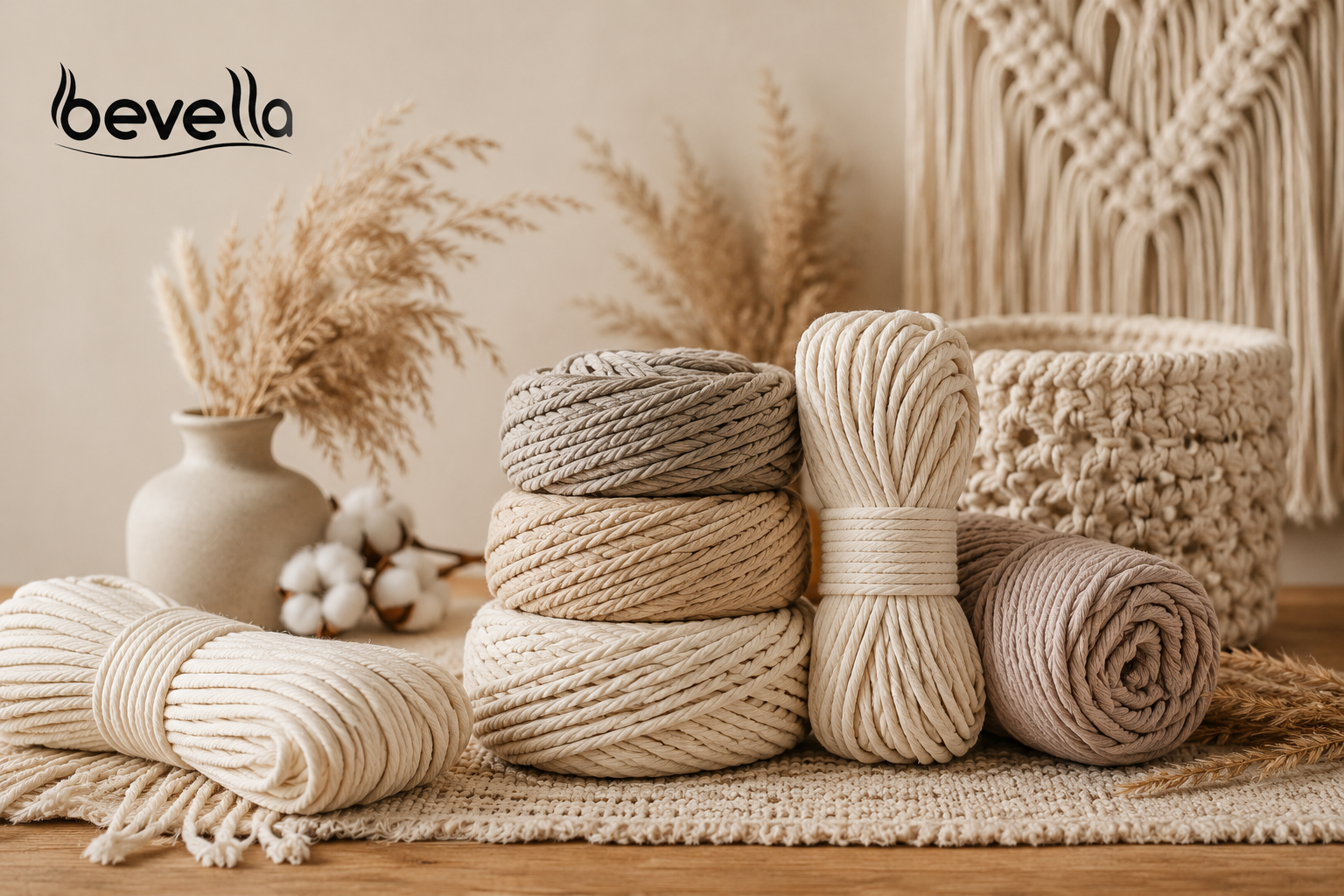
Macrame Cord Types and Materials: How to Choose the Right Cord for Beautiful, Durable Projects
Choosing the right macrame cord is not only about color. The material, twist, thickness, softness, strength, and finish of the cord all influence how a finished piece looks, feels, hangs, photographs, and lasts.
For a beginner making a wall hanging, the best cord may be soft and easy to untie. For a small business producing plant hangers, consistency and durability may matter more. For interior decorators, the texture must support the design language of the space. For craft brands and wholesale buyers, reliable supply, repeatable quality, and clear product specifications become essential.
This guide by Bevella explains the main types of macrame cords and related fibers in a practical, project-focused way. It is written for individual makers, handmade business owners, interior designers, craft stores, brands, and international buyers looking for high-quality macrame cord for creative or commercial use.
Quick Answer: What Is the Best Macrame Cord?
The best macrame cord depends on the project.
For soft wall hangings, home decor, tassels, feathers, keychains, and beginner-friendly projects, cotton macrame cord is usually the most popular choice. For stronger, more structured pieces, braided macrame cord can offer better shape retention. For outdoor decor, bags, accessories, and pieces that need more resistance, polyester macrame cord is often a practical option. For rustic or natural designs, jute, hemp, and other plant-based fibers can create an earthy, organic look.
There is no single cord that is perfect for every project. The right choice depends on how the product will be used, how much weight it must carry, whether it will be indoors or outdoors, and what visual style the maker wants to achieve.
Why Macrame Cord Material Matters
Macrame is built through knots. That means the cord is not just a background material; it is the structure of the design. A cord that is too stiff may make fine details difficult. A cord that is too soft may not hold a strong shape in large pieces. A cord that frays beautifully may be perfect for decorative fringe but less suitable for products that need a clean, compact finish.
Material affects:
- Knot definition
- Fringe quality
- Softness
- Weight and drape
- Color appearance
- Durability
- Washability
- Outdoor resistance
- Production consistency
- Suitability for wholesale and repeated manufacturing
For small personal projects, makers often choose cord based on feel and color. For brands and wholesale buyers, the decision is broader. They also need stable quality, predictable thickness, reliable packaging, clear labeling, and repeatable production.
Cotton Macrame Cord: The Classic Choice for Makers and Designers
Cotton is one of the most widely used fibers in macrame because it is soft, natural-looking, easy to knot, and suitable for many decorative projects. It works well for wall hangings, plant hangers, table runners, wedding decor, nursery decor, keychains, ornaments, and handmade gifts.
Cotton macrame cord is especially loved because it gives a warm, handcrafted appearance without looking overly rough. It can create clean knots, soft tassels, and beautiful fringes. For creators who want a natural texture and a comfortable working experience, cotton is often the first material to consider.
Cotton is also highly versatile for product collections. A small business can use it for neutral home decor pieces, colorful accessories, seasonal decorations, and personalized handmade items. Interior decorators may prefer cotton when they want texture without a harsh industrial feeling.
Best Uses for Cotton Macrame Cord
Cotton macrame cord is ideal for:
- Wall hangings
- Plant hangers
- Dreamcatchers
- Curtains and room dividers
- Wedding and event decor
- Table runners
- Keychains and small accessories
- Nursery and children’s room decor
- Decorative tassels, feathers, and fringe details
For wholesale buyers, cotton macrame cord is a strong core category because it appeals to beginners, hobby makers, studios, craft stores, and professional handmade businesses.
Twisted Macrame Cord: Soft Texture and Beautiful Fringe
Twisted macrame cord is made by twisting fibers together. It is popular because it creates attractive knots and can be brushed out into soft fringe. This makes it a favorite for bohemian-style wall hangings, decorative leaves, feathers, tassels, and pieces with movement.
Single-twist cord usually feels softer and is easier to comb out. It gives a relaxed, handmade look and works especially well for decorative items. Multi-twist or three-ply cord can feel stronger and more structured while still offering a traditional macrame appearance.
Twisted cord is a good choice when the final piece needs visible texture, soft edges, and a natural handmade finish.
Braided Macrame Cord: Clean Shape and Strong Structure
Braided macrame cord has a more compact construction. Instead of untwisting easily, it holds together and keeps a cleaner edge. This makes it useful for projects where structure, durability, and neatness matter.
Braided cord is often preferred for bags, belts, baskets, coasters, table accessories, structured plant hangers, and decorative products that need a firm shape. It can also be easier to manage in repeated production because it is less likely to separate while working.
For handmade businesses and craft brands, braided macrame cord can be a practical choice when products need a polished, consistent finish.
Best Uses for Braided Macrame Cord
Braided macrame cord works well for:
- Bags and handles
- Baskets and storage pieces
- Coasters and placemats
- Structured wall decor
- Strong plant hangers
- Belts and accessories
- Commercial handmade collections
- Products that need clean, compact knots
If a project requires brushed fringe, twisted cotton cord may be a better option. If the project needs shape and durability, braided cord is often stronger visually and functionally.
Polyester Macrame Cord: Durable, Practical, and Suitable for Outdoor Projects
Polyester macrame cord is a synthetic option known for durability, easy care, and resistance to daily wear. It can be especially useful for items exposed to more handling, moisture, or outdoor conditions.
While cotton is often chosen for softness and a natural look, polyester can be selected when performance matters. It may be used for outdoor plant hangers, balcony decor, bags, accessories, pet-related items, market products, or designs that need more resistance than a delicate decorative fiber.
Polyester can also offer a brighter or smoother finish depending on the production style. This makes it suitable for modern decor, colorful collections, and products that need a cleaner, more uniform appearance.
When to Choose Polyester Macrame Cord
Choose polyester macrame cord when you need:
- Better resistance for outdoor or semi-outdoor use
- Stronger performance for functional accessories
- Easy-care material
- Smooth and consistent appearance
- Durable cord for repeated handling
- A practical option for commercial production
For buyers building a product range, polyester cord can complement cotton cord by covering projects that require extra strength or easier maintenance.
Jute, Hemp, and Other Natural Plant Fibers
Natural plant fibers such as jute and hemp bring a rustic, earthy, and organic feeling to macrame and craft projects. They are often chosen for natural home decor, baskets, farmhouse-style accessories, eco-inspired packaging, garden decor, and textured design details.
Jute has a raw and rustic look. It can be excellent for decorative accents, plant hangers, baskets, and pieces where a natural, slightly rougher texture is part of the design.
Hemp is valued by many makers for its natural character and sustainable appeal. It can be suitable for organic-looking projects, minimalist accessories, and craft designs where the fiber story matters.
These fibers are not always as soft as cotton, but that is part of their charm. Their strength is visual authenticity. They help a product feel grounded, natural, and handmade.
Metallic and Decorative Cords for Special Effects
Some projects need more than a natural matte finish. Metallic, glitter, or decorative cords can add shine, contrast, and a festive touch. These cords are often used for ornaments, seasonal decor, event styling, gift packaging, jewelry-inspired pieces, and accent details within larger macrame designs.
For professional product collections, decorative cords work best when used with intention. A small metallic detail can make a design feel premium, while too much shine may overpower the handmade texture. The best approach is to use decorative cord as an accent, not always as the main structure.
Wool, Silk, Bamboo, and Specialty Fibers: Are They Used in Macrame?
Macrame is most commonly associated with cotton, polyester, jute, hemp, and braided or twisted cord structures. However, makers sometimes explore wool, silk, bamboo, and blended fibers for special creative effects.
Wool can bring warmth and softness, especially in textile art. Silk may create a refined surface and elegant drape. Bamboo can offer a smooth hand feel. These materials are more often seen in knitting, weaving, crochet, or fiber art, but they can inspire macrame artists who want to experiment with mixed textures.
For most commercial macrame products, cotton and polyester remain more practical because they are easier to source, easier to standardize, and better suited to repeatable production. Specialty fibers can still be valuable for limited collections, art pieces, and premium decorative accents.
How to Choose Macrame Cord Thickness
Cord thickness changes the entire personality of a project. A thin cord creates delicate details and smaller knots. A medium cord is versatile and beginner-friendly. A thick cord creates bold texture and faster visual impact.
As a general guide:
- 1 mm to 2 mm cord works well for jewelry, micro-macrame, keychains, fine ornaments, and small details.
- 3 mm to 4 mm cord is a popular range for wall hangings, plant hangers, table decor, and general craft projects.
- 5 mm and above creates bold knots, large-scale wall decor, statement plant hangers, baskets, and commercial display pieces.
For wholesale and brand buyers, thickness consistency is extremely important. Even a small difference in diameter can affect knot size, production timing, finished dimensions, and customer expectations.
Matching Cord Type to Project Type
A beautiful macrame piece starts with matching the cord to the purpose of the item.
For wall hangings, cotton twisted cord is often a strong choice because it gives softness, texture, and attractive fringe. For plant hangers, both cotton and braided cords can work depending on the weight and style. For bags and accessories, braided or polyester cords may provide better structure. For outdoor decor, polyester is usually more practical than a delicate natural fiber. For rustic home decor, jute and hemp can create a more organic effect.
Here is a simple project-based guide:
| Project Type | Recommended Cord Type | Why It Works |
|---|---|---|
| Wall hangings | Cotton twisted cord | Soft texture, good fringe, natural look |
| Plant hangers | Cotton, braided, or polyester cord | Good balance of strength and style |
| Bags and handles | Braided or polyester cord | Better structure and durability |
| Coasters and placemats | Braided cotton cord | Clean shape and neat knots |
| Rustic decor | Jute or hemp cord | Natural, earthy texture |
| Outdoor decor | Polyester cord | Better resistance and easy care |
| Tassels and feathers | Single-twist cotton cord | Brushes out beautifully |
| Commercial craft collections | Cotton, braided, and polyester cord | Broad appeal and repeatable production |
What Wholesale Buyers Should Look For in Macrame Cord
Wholesale buyers need more than attractive colors. They need cord that supports consistent business operations.
When sourcing macrame cord in bulk, consider:
- Material composition
- Cord thickness and tolerance
- Color consistency between batches
- Strength and knot performance
- Packaging options
- Labeling possibilities
- Minimum order quantities
- Custom production options
- Delivery planning
- Suitability for different markets and project types
A craft store may need a broad range of colors and sizes. A handmade brand may need the same cord supplied regularly for repeat products. An interior design company may need specific tones for a project. A distributor may need packaging that is easy to store, display, and sell.
Bevella works with different customer needs in mind, from creative individual makers to larger buyers looking for wholesale macrame cord, bulk production, and product information.
What Individual Makers Should Look For
Individual makers often choose cord with a more emotional and creative eye. They want a material that feels good in the hands and helps the final piece look beautiful.
If you are buying macrame cord for personal projects, ask yourself:
- Is the cord easy to knot?
- Does it feel soft enough for the project?
- Will it create the fringe I want?
- Is the thickness suitable for my pattern?
- Does the color match my interior or gift concept?
- Will the finished piece need to carry weight?
- Will it be used indoors or outdoors?
A good cord makes the creative process smoother. It helps knots sit neatly, reduces frustration, and gives the finished piece a more professional look.
Why Color, Texture, and Finish Matter
Color is often the first thing customers notice, but texture is what makes macrame memorable. A matte cotton cord feels soft and natural. A braided cord looks clean and structured. A polyester cord may feel smooth and practical. Jute or hemp can make a piece feel rustic and grounded.
For interior designers, these differences matter. A warm neutral cotton wall hanging can soften a modern room. A darker braided cord can add contrast. A natural jute detail can support an organic or coastal concept. A bright polyester cord may work well for playful accessories or outdoor styling.
For brands, consistent color and finish help build trust. Customers notice when a product collection looks coherent. They also notice when a reordered color does not match the original. This is why professional sourcing is important for both small businesses and wholesale buyers.
Building a Complete Macrame Cord Collection
A strong macrame cord collection should not rely on one material alone. Different customers need different solutions.
A balanced collection may include:
- Cotton macrame cord for everyday creative projects
- Braided macrame cord for structure and clean finishes
- Polyester macrame cord for durability and outdoor-friendly uses
- Natural rustic fibers for organic design styles
- Decorative cords for seasonal and special collections
- Multiple thicknesses for small, medium, and large projects
- Neutral colors, trend colors, and custom color options
This approach serves a wider audience: beginners, advanced makers, handmade business owners, interior decorators, craft shops, event designers, and wholesale buyers.
Frequently Asked Questions About Macrame Cord
What cord is best for beginners?
Cotton macrame cord is usually the easiest starting point because it is soft, comfortable to work with, and suitable for many beginner projects. A medium thickness is often easier to handle than very thin cord.
What is the difference between twisted and braided macrame cord?
Twisted cord is made from fibers twisted together and is often easier to brush into fringe. Braided cord has a more compact structure and usually keeps a cleaner shape. Twisted cord is great for soft decorative work, while braided cord is useful for structured projects.
Is cotton or polyester better for macrame?
Cotton is often preferred for softness, natural texture, and decorative indoor projects. Polyester is useful when durability, easy care, or outdoor resistance is more important. Many makers and businesses use both depending on the project.
What macrame cord is best for wall hangings?
Cotton twisted cord is a popular choice for wall hangings because it creates soft knots, natural texture, and beautiful fringe. For a cleaner and more structured wall piece, braided cord can also be used.
What macrame cord is best for plant hangers?
Cotton, braided, and polyester cords can all be used for plant hangers. The best choice depends on the weight of the pot, whether the hanger will be indoors or outdoors, and the desired style.
Can macrame cord be used for bags?
Yes. Braided cord and polyester cord are often good choices for bags because they can provide better structure and durability than very soft decorative cords.
Do wholesale buyers need different cord specifications?
Yes. Wholesale buyers usually need consistent thickness, stable color batches, reliable supply, packaging options, and clear product details. These factors help maintain quality across repeated production and resale.
Final Thoughts: The Right Cord Makes the Design Stronger
Macrame is simple in technique but rich in material possibilities. The same knot can look soft, bold, rustic, modern, delicate, or structured depending on the cord behind it.
Cotton brings comfort and natural beauty. Braided cord adds shape and neatness. Polyester offers durability and practical performance. Jute, hemp, and specialty fibers create distinctive texture. Decorative cords add character when a project needs something extra.
For makers, the right cord makes the creative process more enjoyable. For designers, it helps translate an idea into a finished object with the right mood and proportion. For small businesses and brands, it supports consistent product quality. For wholesale buyers, it becomes part of a reliable supply chain.
Bevella offers macrame cord solutions for individual creativity, professional production, interior projects, craft businesses, and wholesale needs. Whether you are choosing cord for a single handmade piece or planning a larger product range, the best starting point is simple: define the project, understand the material, and choose a cord that supports both beauty and function.
For wholesale inquiries, bulk orders, custom production, color options, or product information, contact Bevella and explore the cord types that best fit your project, brand, or market.
Looking for wholesale macrame cord?
Bevella supplies craft retailers, studios, and e-commerce brands worldwide.
View All Products Get Wholesale Price WhatsApp Us