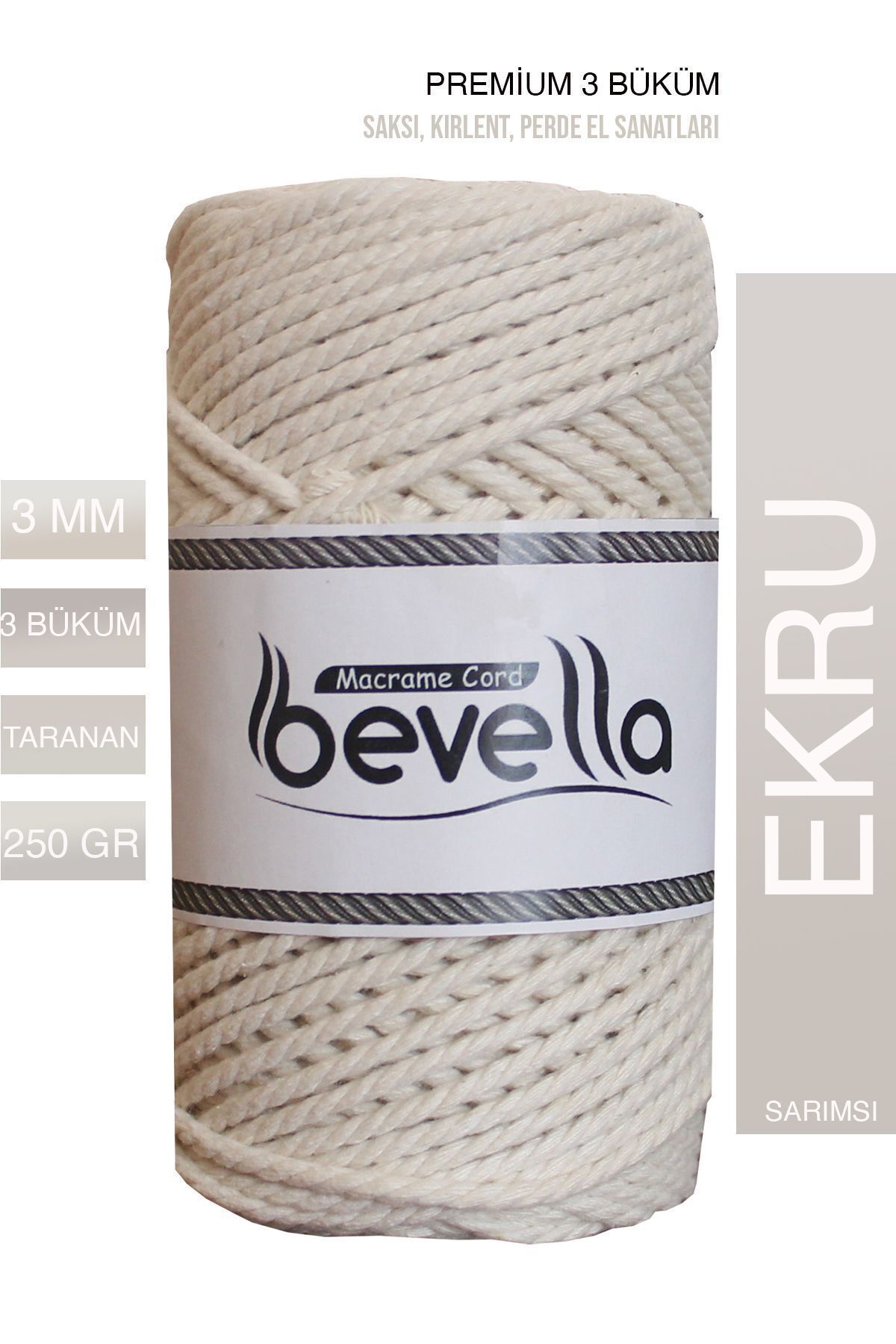
Betrouwbare leveranciers van macramékoord vinden
Finding a reliable macrame cord supplier is one of the biggest practical challenges for growing craft businesses and wholesale buyers. According to a 2024 supply chain survey by the Craft and Hobby Association, 58% of craft product businesses reported supply chain disruptions in 2023, with supplier quality inconsistency and extended lead times cited as the top two concerns. The macrame cord market has expanded rapidly alongside the craft boom of the 2020s, which means more suppliers exist, but quality variance has also increased significantly.
- Five distinct sourcing channels exist for macrame cord, each with different risk profiles and MOQ requirements.
- Turkey, particularly the Uşak textile region, is one of Europe's primary macrame cord manufacturing hubs.
- Always request physical samples and verify certifications before committing to a new supplier order.
- 58% of craft businesses reported supply chain disruptions in 2023, per Craft and Hobby Association 2024.
- Heimtextil (January, Frankfurt) and Texworld Paris (February) are the most relevant trade shows for cord sourcing.
For detailed guidance on purchasing in volume, see our wholesale macrame cord buying guide.
What Are the Five Main Channels for Sourcing Macrame Cord?
Macrame cord sourcing options range from direct factory relationships to online platforms, and each channel offers a different tradeoff between price, control, and risk. The World Trade Organization's 2023 Small and Medium Enterprise Trade Report found that buyers using multiple sourcing channels reported 34% fewer supply disruptions than those dependent on a single supplier relationship. Understanding each channel helps you build a resilient supply structure rather than a fragile single-source dependency.
Channel 1: Factory Direct
Buying directly from a cord manufacturer offers the best per-unit price and the most control over specifications. You can request custom diameters, twist counts, colors, and certifications. The tradeoff is typically higher minimum order quantities (MOQs often start at 500kg-1,000kg for custom specifications) and the burden of managing the supplier relationship and quality verification yourself. Factory-direct is the right channel for established businesses ordering regularly at scale.
Finding genuine manufacturers rather than trading companies presenting as manufacturers requires verification. Ask for the factory's production license and ISO certification. Request a video tour of the spinning and twisting facility. Ask specifically about fiber sourcing: where does their raw cotton originate, and can they provide a fiber origin certificate? A legitimate manufacturer can answer all these questions within 24-48 hours.
Channel 2: Regional Distributors
Local distributors in your country or region buy from manufacturers in bulk and resell in smaller quantities with local stock and local-currency payment. For European buyers, distributors holding stock in Germany, the Netherlands, or Spain can offer same-week delivery on standard cord specifications. The per-unit price is 15-30% higher than factory direct, but the reduced MOQ (typically 10-100kg), local returns process, and shorter lead times justify the premium for many buyers.
Channel 3: B2B Online Platforms
Platforms including wholesale platforms, Global Sources, and Made-in-China aggregate supplier listings and allow order management through a centralized system. According to wholesale platforms's 2024 annual report, the platform facilitates approximately $800 billion in annual B2B trade, with textile and cord suppliers among the top 10 product categories. The risk on these platforms is supplier verification: not all listings represent actual manufacturers, and quality standards vary enormously. Always order samples before committing, read verified transaction history, and use escrow payment for first orders.
Channel 4: Craft Trade Shows
Trade shows allow you to see and touch cord samples in person, meet supplier representatives face-to-face, and compare multiple suppliers in one location. The intelligence value of a trade show visit often exceeds the specific orders placed there. You learn what new products are entering the market, which suppliers are investing in sustainability certifications, and which competitors are shifting to new materials. For cord sourcing specifically, Heimtextil (January, Frankfurt) and Texworld Paris (February) are the primary European venues.
Channel 5: Artisan Cooperatives and Regional Networks
Artisan cooperatives in textile-producing regions can supply smaller quantities with strong provenance and craft authenticity. Turkish regional cooperatives in the Uşak and Denizli areas produce high-quality cord with full traceability to local cotton farms. This channel suits buyers for whom origin story and sustainable sourcing are part of their product positioning. MOQs are lower than factory direct, and you often get direct farmer-to-cord traceability that large factories can't provide.
For eco-certified sourcing criteria and what to look for, read our sustainable macrame cord guide.
How Do You Vet a Macrame Cord Supplier?
Supplier vetting separates buyers who consistently receive quality cord from those who deal with recurring problems. A 2023 supplier due diligence study by the European Textile Federation found that buyers who completed formal vetting processes before first orders reported 67% fewer quality disputes than those who ordered based on catalog listings and price alone. The checklist below represents the minimum verification process for any new cord supplier relationship.
The European Textile Federation's 2023 supplier due diligence study surveyed 340 European textile buyers. Buyers using formal vetting protocols (sample testing, certification verification, factory audit or video review) reported 67% fewer quality disputes with new suppliers compared to buyers who selected based on online listings and quoted price. Average time investment for proper vetting: 5-10 days.
Sampling Protocol
Request a minimum 100g sample of each cord specification you're considering. Test the sample by working a standard knotted swatch (25-30 square knots in a 10x10cm pattern). Check for consistent diameter along the length, even twist in twisted cord, color consistency from beginning to end of the sample length, and absence of knots or joins in the cord. Any quality cord supplier should provide free or low-cost samples without hesitation.
Certification Verification
Ask for current certification documents, not just certificate numbers. OEKO-TEX certificates are verifiable through the OEKO-TEX public database using the certificate number. ISO 9001 quality management certificates can be verified through your national accreditation body's database. Any supplier who provides certification numbers they can't produce full documents for should be treated with caution.
Lead Time Confirmation
Ask for standard production lead time and current production schedule before placing an order. Lead times for standard cord specifications from Turkish manufacturers typically range from 2-4 weeks for stocked colors and 4-6 weeks for custom colors. Chinese manufacturers typically offer 3-5 weeks for standard and 5-8 weeks for custom. Indian manufacturers average 4-6 weeks for standard. Always add buffer time to these stated minimums when planning inventory.
MOQ Structure and Flexibility
Understand the supplier's full MOQ structure, not just the headline number. Some suppliers list a low MOQ per order but require minimum quantities per color or specification within that order. Ask specifically: "What is the minimum per color?" and "What is the minimum for a custom diameter?" These numbers matter more than the headline MOQ for buyers with diverse product lines.
| Vetting Step | Time Required | What You're Testing |
|---|---|---|
| Sample request and receipt | 1-2 weeks | Product quality, shipping reliability |
| Sample knotting test | 1-2 hours | Diameter consistency, twist, texture |
| Certification document check | 1-2 days | Bevella, ISO, quality management |
| Lead time and schedule call | 30 min | Capacity, reliability, communication |
| MOQ and pricing structure | 30 min | Commercial terms clarity |
| Reference check (other buyers) | 1-3 days | Real-world performance track record |
How Does Turkey Compare to China and India as a Cord Manufacturing Source?
Turkey, China, and India are the three dominant global sources for cotton macrame cord, and they differ meaningfully across quality, price, lead time, and logistics profile. A 2024 sourcing comparison study by the Global Textile Alliance assessed manufacturers across these three countries on 12 quality and service metrics. Turkey scored highest for diameter consistency and color accuracy. China scored highest for per-unit cost on standard specifications. India scored highest for natural and organic fiber traceability.
| Factor | Turkey | China | India |
|---|---|---|---|
| Typical price range (per kg) | Medium-high | Low-medium | Low-medium |
| Diameter consistency | High | Medium | Medium |
| Bevella availability | Widely available | Available, verify | Available, verify |
| Color range | Wide | Very wide | Wide |
| Standard lead time (EU) | 2-4 weeks | 4-6 weeks | 5-8 weeks |
| Shipping time to EU | 3-7 days (truck/rail) | 25-35 days (sea) | 20-30 days (sea) |
| MOQ (standard spec) | 50-200kg | 100-500kg | 100-300kg |
| Custom spec capability | High | High | Medium |
| Organic cotton supply | Strong (Aegean region) | Available | Strong |
Turkey's geographic advantage for European buyers is significantly underestimated in most sourcing guides. The transit time from Uşak-area factories to Central European distribution centers by truck (3-5 days) versus sea freight from Shanghai (25-35 days) means Turkish suppliers can effectively hold much of your safety stock, shipping to order rather than requiring you to maintain large inventory positions. For businesses with variable demand, this flexibility is worth a price premium over Chinese sources.
[CHART: Radar chart comparing Turkey, China, India on quality, price, lead time, MOQ, certification availability - source: Global Textile Alliance 2024]What Trade Shows Are Most Relevant for Cord Sourcing?
Trade shows for textile and craft supplies offer concentrated, high-value sourcing intelligence. According to UFI (Global Association of the Exhibition Industry), trade show exhibitors generate an average of 47% of their new customer contacts through event participation. For cord buyers, the shows below offer the strongest concentration of relevant suppliers and the best opportunity to compare products side by side before committing.
| Show Name | Location | Month | Focus | Relevance for Cord Buyers |
|---|---|---|---|---|
| Heimtextil | Frankfurt, Germany | January | Home textiles, technical textiles | High - cord and yarn suppliers present |
| Texworld Paris | Paris, France | February | Yarn, fabric, trims | High - global yarn and cord manufacturers |
| Craft & Hobby Association Show | US (rotating) | January | Craft supplies retail and wholesale | Medium - North American distribution focus |
| ITMA | Rotating (EU) | Every 4 years | Textile machinery and manufacturing | Low for buyers, high for understanding production |
| Index Istanbul | Istanbul, Turkey | April | Turkish home textile manufacturing | Very high - direct access to Turkish producers |
| Domotex | Hanover, Germany | January | Floor coverings and rugs | Medium - rug cord and natural fiber suppliers |
Before placing a bulk order, review our wholesale macrame cord buying guide for pricing benchmarks and MOQ expectations.
What Import Documentation Do You Need for Cord Importing?
Importing cord from outside your country requires a standard set of trade documents, and missing any of them delays customs clearance significantly. The World Customs Organization reports that approximately 20% of customs delays in EU import processes are caused by incomplete or inconsistent documentation rather than physical inspection issues. Getting the paperwork right before the shipment departs avoids most of these delays.
Essential Documents
The commercial invoice must list the HS (Harmonized System) code for the cord. Cotton macrame cord typically falls under HS code 5607.90 (other twine, cordage, rope and cables) or 5308.20 (cotton yarn, other than sewing thread) depending on specification. Ask your supplier which code they classify the product under and verify this matches your customs authority's classification before the first shipment.
The packing list details every item in the shipment by weight and volume. The bill of lading (for sea freight) or air waybill (for air freight) is the shipping carrier's receipt and title document. For EU imports from Turkey, a EUR.1 movement certificate may qualify your shipment for preferential duty rates under the EU-Turkey Customs Union for certain textile categories, which can meaningfully reduce landed cost.
Certification Documents
If you've requested Bevella or other product certifications, ensure the certificate covers the specific batch and specifications you've ordered. Certificates should travel with the shipment or be provided electronically before arrival. EU Customs may request product certification documentation for textile imports under the REACH regulation, particularly for dyed products. Having this ready prevents clearance holds.
We've found that Turkey-sourced cord imports to EU countries clear customs faster and with fewer documentation requests than equivalent shipments from outside the Customs Union, specifically because the EUR.1 certificate eliminates many of the standard verification queries that EU customs applies to third-country textile imports. Building the EUR.1 into your standard shipping checklist from the start saves time on every shipment.
What Is Turkey's Uşak Region, and Why Does It Matter for Cord Quality?
Uşak province in western Turkey sits at the intersection of Anatolia's two great textile traditions: carpet weaving and cotton cord production. According to the Uşak Chamber of Commerce's 2024 sector report, the province hosts over 200 active textile manufacturing facilities, with a significant subset specializing in yarn and cord production for both domestic and export markets. Uşak's cotton supply chain runs from Aegean cotton farms through spinning mills to finished cord production, with many facilities managing the full pipeline on a single site.
The region's textile culture is multi-generational. Family businesses in Uşak have produced textile cord for 40-60 years, accumulating process knowledge and quality standards that newer manufacturing regions haven't yet developed. This institutional knowledge matters for buyers who need consistent diameter tolerance, reliable twist-per-meter specifications, and repeatable color matching across production batches, which are the quality dimensions where experience makes the most difference.
Bevella sources from within this established Uşak textile network, which means customers access not just a product catalog but a supply chain with decades of accumulated quality discipline and the geographic advantages of Turkish-to-European logistics.
Frequently Asked Questions
What is a typical MOQ for macrame cord from Turkey?
Typical minimum order quantities from Turkish macrame cord manufacturers range from 50kg to 200kg per order for standard stocked specifications (common diameters, standard colors). Custom specifications, including non-standard diameters, custom twist counts, or custom color matching, typically require 100-500kg minimums because they require dedicated production runs. Some Turkish manufacturers offer sample packs of 1-5kg per specification for buyer evaluation before committing to a full order. Distributors working from Turkish manufacturer stock typically offer lower minimums of 5-20kg per color.
How long does it take to receive cord from a Turkish manufacturer?
Standard lead time for stocked specifications from Turkish macrame cord manufacturers is typically 2-4 weeks from order confirmation to dispatch. Custom specifications require 4-6 weeks. Truck freight from the Uşak-Denizli region to Central European destinations (Germany, France, Netherlands) adds 3-5 transit days. Total order-to-delivery time for European buyers ranges from 3-5 weeks for standard specifications and 5-7 weeks for custom work. Air freight is available for urgent orders at a significantly higher shipping cost but reduces transit time to 2-3 days.
What certifications should I require from a macrame cord supplier?
At minimum, require OEKO-TEX STANDARD 100 certification for any cord sold for craft or textile use, particularly if your end customers include parents buying for children's projects. ISO 9001 quality management certification verifies the supplier has documented production and quality control processes. For organic cotton cord, look for GOTS (Global Organic Textile Standard) certification as the most credible third-party verification of organic fiber claims. Always verify certificates directly through the issuing body's public database rather than accepting unverified document copies from the supplier.
Is wholesale platforms a reliable way to find macrame cord suppliers?
wholesale platforms can be a legitimate starting point for supplier discovery, but it requires careful verification. The platform hosts both genuine manufacturers and trading companies presenting as manufacturers, and quality varies enormously between listings. wholesale platforms's 2024 annual report confirms approximately $800 billion in annual B2B trade through the platform. To use it safely: filter for Gold Supplier status with verified transactions, request physical samples before ordering, use Trade Assurance escrow payment for first orders, and verify any certificates claimed through the issuing body's database. Never assume catalog photos represent the product you'll receive.
What is the HS code for importing macrame cord?
Cotton macrame cord most commonly falls under HS code 5607.90 (other twine, cordage, rope and cables, of vegetable fibres) or 5308.20 (yarn of other vegetable textile fibres), depending on diameter, twist structure, and presentation (spool vs. hank). The classification matters because different HS codes carry different import duty rates. Ask your supplier which code they use on export documentation and verify the classification with your country's customs authority before the first shipment. Misclassification causes customs delays and potential back-duties even when unintentional.
What is the minimum I should know before attending a textile trade show for sourcing?
Before attending Heimtextil, Texworld, or Index Istanbul, prepare a one-page specification sheet listing all cord types you need: diameter ranges, fiber types, color requirements, target quantity per month, and your certification requirements. Walk suppliers through this document rather than describing your needs verbally each time. Request samples at the show for delivery after the event rather than trying to carry samples home. Collect at least three competitive quotes for each specification before leaving. UFI data shows trade show visitors who arrive with documented specifications close supplier relationships 2-3 times faster than those arriving without prepared briefs.