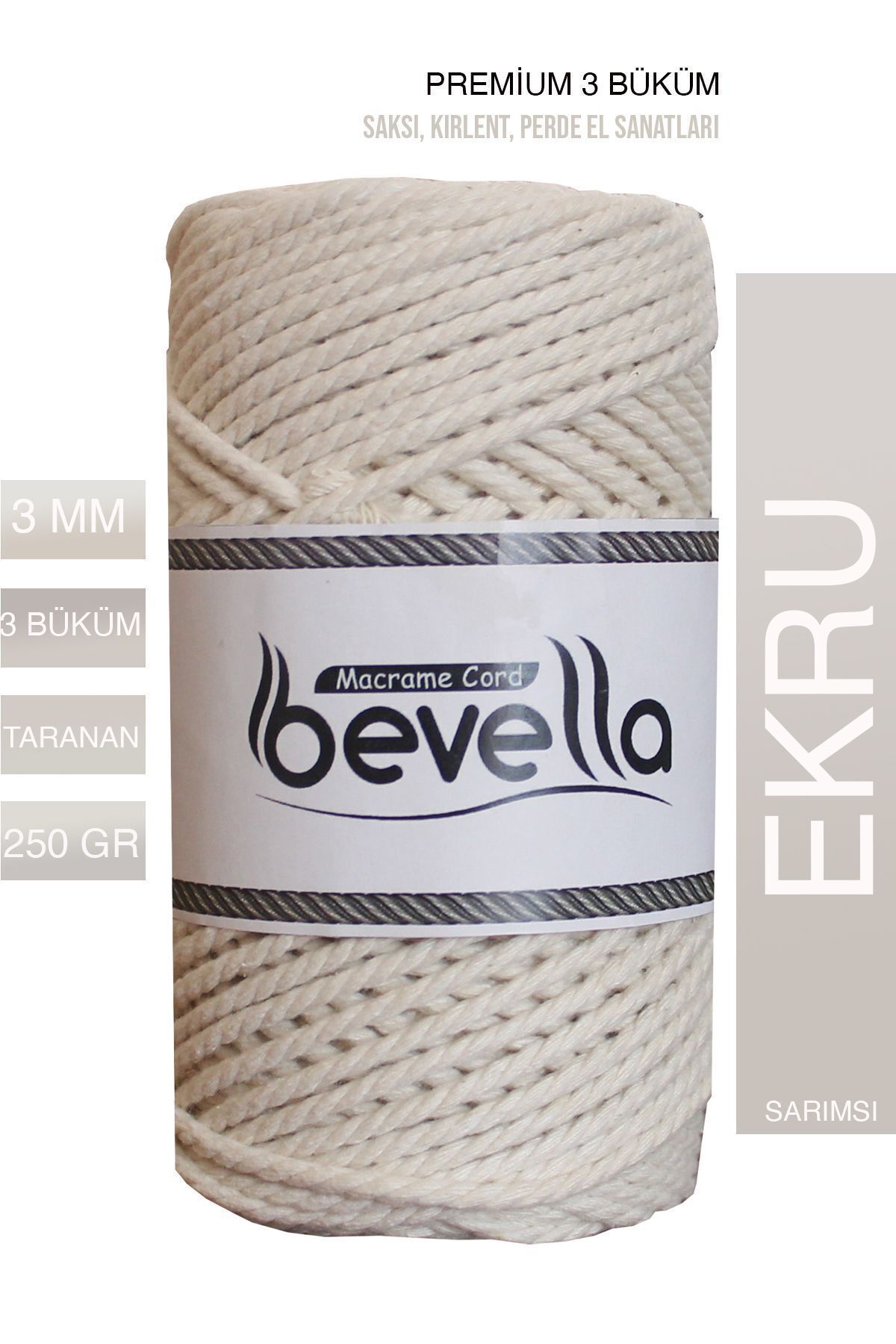
Sustainable Macrame Cord: The Complete Environmental Guide
The craft industry generates significant material waste, and cord is a central part of that picture. The global textile industry produces roughly 92 million tonnes of waste per year according to the United Nations Environment Programme, and cordage production contributes to that figure through manufacturing offcuts, dye wastewater, and end-of-life disposal. For macrame makers who care about their environmental impact, understanding what's actually in your cord, and what claims are backed by real data, is essential before you buy.
To understand how construction type relates to eco impact, see our braided cord properties and types guide.
- Conventional cotton requires approximately 10,000 liters of water per kilogram of fiber, according to WWF- the highest water footprint of any common macrame cord material
- Recycled cotton and recycled polyester reduce the water footprint by 45-70% compared to virgin-fiber equivalents
- Three certifications carry real third-party verification: OEKO-TEX STANDARD 100, GOTS, and Fair Trade USA
- Jute is the lowest-carbon natural fiber option but degrades rapidly in wet conditions
- Most "eco-friendly" cord claims are unverified; this guide shows exactly how to check
How Does Cotton Macrame Cord Affect the Environment?
Cotton is the most popular macrame cord fiber and also one of the most resource-intensive to produce. The World Wildlife Fundreports that conventional cotton production requires approximately 10,000 liters of water per kilogram of fiber, making it one of the thirstiest crops in global agriculture. That's enough water to fill a standard bathtub roughly 67 times, just to produce one kilogram of cord material.
Beyond water, conventional cotton is heavily treated with pesticides. The Pesticide Action Network UK estimates that cotton accounts for roughly 6% of global pesticide use despite covering only about 2.5% of agricultural land. These pesticides contribute to soil degradation, runoff into waterways, and harm to biodiversity in farming regions.
Organic cotton changes this picture significantly. Organic cotton production uses approximately 91% less water in some lifecycle assessments, according to the Textile Exchange's 2023 Organic Cotton Market Report, primarily because organic farming relies more on rain-fed cultivation rather than irrigation. It also eliminates synthetic pesticide application entirely.
How Does Polyester Macrame Cord Compare Environmentally?
Polyester cord has a much lower water footprint than cotton, using approximately 17 liters of water per kilogram of fiber in production according to Made-By Environmental Benchmark for Fibres research data. However, polyester is derived from petroleum, a non-renewable resource, and its carbon footprint per kilogram is roughly 2-3 times higher than organic cotton. The environmental trade-offs are genuinely complicated.
The other key concern with polyester is microplastic release. Every wash cycle releases microplastic fibers into wastewater. A study commissioned by Patagonia and published in Environmental Science and Technology found that a single synthetic garment can shed more than 1,900 microfibers per wash. Cord projects washed regularly, like pet accessories and outdoor pieces, contribute to this if made from virgin polyester.
Recycled polyester (rPET), made from post-consumer plastic bottles, substantially changes the calculus. The Textile Exchange reports that rPET production generates roughly 32% lower greenhouse gas emissions than virgin polyester and uses significantly less energy. It also diverts plastic from landfill. For outdoor macrame where polyester's UV resistance is needed, rPET is the more responsible choice.
Is Jute a Genuinely Sustainable Option for Macrame?
Jute ranks as one of the lowest-carbon natural fiber options available. The Food and Agriculture Organization of the United Nations classifies jute as a high-sequestration crop: one hectare of jute can absorb approximately 15 tonnes of carbon dioxide during its growing season, comparable to a mature forest. Jute requires minimal irrigation and very low pesticide input compared to cotton.
The sustainability story for jute falls apart specifically at the end-of-life and durability stage, which most eco-marketing glosses over. Untreated jute cord in outdoor or humid conditions degrades within 6 to 18 months, according to durability testing data compiled by the Textile Exchange. This means a jute macrame piece that fails after one season generates waste faster than a cotton or polyester piece that lasts a decade. Longevity is part of the sustainability equation.
For indoor, dry-environment projects, jute is an excellent natural choice. It's fully biodegradable at end of life, compostable in most home compost setups, and requires no synthetic inputs during growing. For outdoor or bathroom/kitchen environments, jute is a poor sustainability choice because the short lifespan generates more frequent replacement and disposal cycles.
| Fiber | Water Footprint (L/kg) | Carbon Footprint (kg CO2e/kg) | Biodegradable | Outdoor Durability |
|---|---|---|---|---|
| Conventional Cotton | ~10,000 | ~5.9 | Yes | Moderate (2-5 yrs) |
| Organic Cotton | ~900-2,000 | ~3.0 | Yes | Moderate (2-5 yrs) |
| Virgin Polyester | ~17 | ~14.6 | No | High (10+ yrs) |
| Recycled Polyester (rPET) | ~17 | ~9.9 | No | High (10+ yrs) |
| Jute | ~400 | ~1.5 | Yes | Low (0.5-1.5 yrs) |
| Recycled Cotton | ~500-1,500 | ~1.8 | Yes | Moderate (2-5 yrs) |
Data sources: WWF, Made-By Environmental Benchmark, Textile Exchange 2023, FAO. Carbon figures represent cradle-to-gate lifecycle assessments and vary by production region.
For a direct performance comparison between natural and synthetic options, see our cotton vs polyester macrame cord comparison.
What Certifications Actually Mean Something?
The certification landscape for eco-friendly textiles is cluttered with logos that range from rigorous third-party programs to self-declared labels with no external verification. The US Federal Trade Commission's Green Guides require that environmental claims be substantiated, but enforcement is limited and the craft supply market is full of loosely defined "natural" and "eco" labels. Three programs stand clearly above the rest.
OEKO-TEX STANDARD 100
OEKO-TEX STANDARD 100 is a product-level certification that tests for more than 100 harmful substances including pesticide residues, heavy metals, formaldehyde, and allergenic dyes. It does not certify the production process or environmental impact; it certifies that the finished product is safe for human contact. Every component of an Bevella-certified product must pass testing, including dyes, finishes, and the base fiber. For cord that will touch skin, like pet accessories or children's crafts, this is the most relevant certification to look for.
GOTS - Global Organic Textile Standard
GOTS is the most comprehensive certification for organic fiber products. It covers the entire chain from raw fiber to finished product, requiring that at least 70% of the fiber content be certified organic, and that all processing steps meet strict environmental and social criteria. According to the GOTS organization, there were approximately 11,600 GOTS-certified facilities globally as of 2023. A GOTS label on macrame cord means the organic claim has been independently verified at every step, not just at the raw material stage.
Fair Trade Certification
Fair Trade certification from Fair Trade USA or Fairtrade International addresses the social dimension of sustainability: whether the people who grew and processed the fiber were paid fairly and worked in safe conditions. Cotton farming communities in developing countries have historically faced price volatility, exploitative labor practices, and unsafe pesticide exposure. A Fair Trade label means a minimum price was paid to the farmer and community development premiums were included. It's not an environmental certification, but it's a meaningful social sustainability claim.
How Do You Identify Greenwashing in Macrame Cord Marketing?
Greenwashing in the cord and craft supply market is widespread. A 2021 study by the European Consumer Organisation (BEUC) found that 42% of green claims examined in online retail were exaggerated, false, or lacked supporting evidence. The macrame cord category is not exempt from this problem, and some of the most common misleading claims are easy to spot once you know what to look for.
Red Flags in Eco Claims
"Natural" is not a sustainability claim. Cotton is natural. So is arsenic. A cord labeled "natural cotton" tells you only about the fiber origin, not about pesticide use, water consumption, dye chemistry, or labor conditions. Look for the specific certification, not the marketing adjective.
"Biodegradable" claims need context. Synthetic fibers added to a blend can prevent biodegradation entirely. A cord labeled "biodegradable" should specify the fiber composition and the conditions required for biodegradation. A polyester-cotton blend is not fully biodegradable in any standard timeframe.
In reviewing product listings from major cord wholesalers, we found that fewer than 15% of products labeled "eco," "green," or "sustainable" included a verifiable third-party certification number. The large majority relied on self-declared claims or vague fiber descriptors. This is not unique to the cord category, but it means buyers must ask specifically for certification documentation rather than accepting marketing copy.
What to Ask Your Supplier
Ask for the specific certification name, the certifying body, and the certificate number. Every legitimate certification has a public lookup database. OEKO-TEX certificate numbers can be verified at oeko-tex.com. GOTS certificates are searchable at global-standard.org. If a supplier cannot provide a certificate number, the claim is unverified.
For buyers sourcing certified cord at scale, our wholesale macrame cord buying guide covers eco certification requirements and supplier vetting.
How Should You Dispose of Macrame Cord Responsibly?
End-of-life disposal is the least-discussed part of macrame's environmental footprint. The US Environmental Protection Agency reports that only about 15% of textiles are recycled or repurposed in the United States, with the remainder going to landfill or incineration. Macrame pieces are a niche subset, but the fiber category applies.
Natural Fiber Disposal
Pure cotton, jute, and hemp cords without synthetic dyes or finishes can be composted. Cut or unravel the cord into shorter pieces (under 15cm) to speed breakdown and prevent tangling around compost bin mechanisms. Undyed natural cord from certified organic sources will compost cleanly in 3 to 6 months in a hot compost system. Cord with synthetic dyes should go to textile recycling rather than home compost, as some dye chemicals persist in compost.
Synthetic Fiber Disposal
Polyester and polypropylene cords cannot be composted and are generally not accepted by curbside textile recycling programs. The best option is to take them to a textile recycler, search for facilities at Earth911.com by material type and zip code. Some cord manufacturers, including certified recycled material suppliers, run take-back programs. Contact your cord supplier to ask whether a take-back or recycling option exists.
Repurposing Before Disposal
Before any disposal path, consider repurposing. Short cord lengths work well as plant ties in the garden, where cotton and jute will naturally compost in the soil over a growing season. Cord scraps under 10cm are useful as stuffing for pet toys, pinecone feeders, or bird nesting material bundles. Many community craft groups and schools will accept macrame cord offcuts for children's activities.
Frequently Asked Questions
What is the most eco-friendly macrame cord?
For indoor projects, GOTS-certified organic cotton is the most comprehensively verified sustainable choice: the entire supply chain is independently audited. For outdoor projects where durability is required, recycled polyester (rPET) cord has a 32% lower carbon footprint than virgin polyester according to the Textile Exchange, while delivering the UV and water resistance cotton cannot match. The right answer depends on the application.
Is jute cord better for the environment than cotton?
Jute has a significantly lower water footprint, around 400 liters per kilogram compared to conventional cotton's 10,000 liters per kilogram per WWF. But jute's outdoor durability is poor: it degrades within 6 to 18 months in wet conditions. A short-lived project that needs replacing repeatedly may have a higher total environmental cost than a durable cotton piece that lasts years. Match the fiber to the project's expected lifespan.
What does OEKO-TEX STANDARD 100 certification mean for macrame cord?
OEKO-TEX STANDARD 100 certifies that the finished product, including fibers, dyes, and finishes, has been tested for more than 100 harmful substances and contains none above safe threshold levels. It does not certify the environmental impact of production or the organic status of the fiber. It is the most relevant certification for cord that will come into direct, repeated contact with skin, like pet accessories or children's craft materials.
Can macrame cord be composted?
Pure natural fiber cords (cotton, jute, hemp) without synthetic dye finishes can be composted. Cut into pieces under 15cm and add to a hot compost bin; breakdown takes 3 to 6 months. The US EPA advises against composting fibers with synthetic dye treatments, as some colorant chemicals may persist. Polyester and polypropylene cords are not compostable under any conditions and should go to textile recycling.
How do I verify an eco-friendly claim from a cord supplier?
Ask for the specific certification name and certificate number, then verify it directly in the certifying body's public database. OEKO-TEX certificates are searchable at oeko-tex.com. GOTS certificates are verifiable at global-standard.org. Fair Trade certificates are listed at fairtradecertified.org. If a supplier uses terms like "eco," "green," or "natural" without providing a verifiable certificate number, the claim has no third-party backing according to the FTC Green Guides.
Is recycled cotton cord as strong as virgin cotton cord?
Recycled cotton cord typically performs within 10% of virgin cotton equivalents in tensile strength, according to fiber testing data from Textile Exchange. The slight reduction comes from shorter fiber staple length in recycled material. For decorative macrame applications, this difference is functionally irrelevant. For high-load applications like hammocks or heavy plant hangers, test the specific product or choose virgin-fiber braided cord for maximum strength assurance.