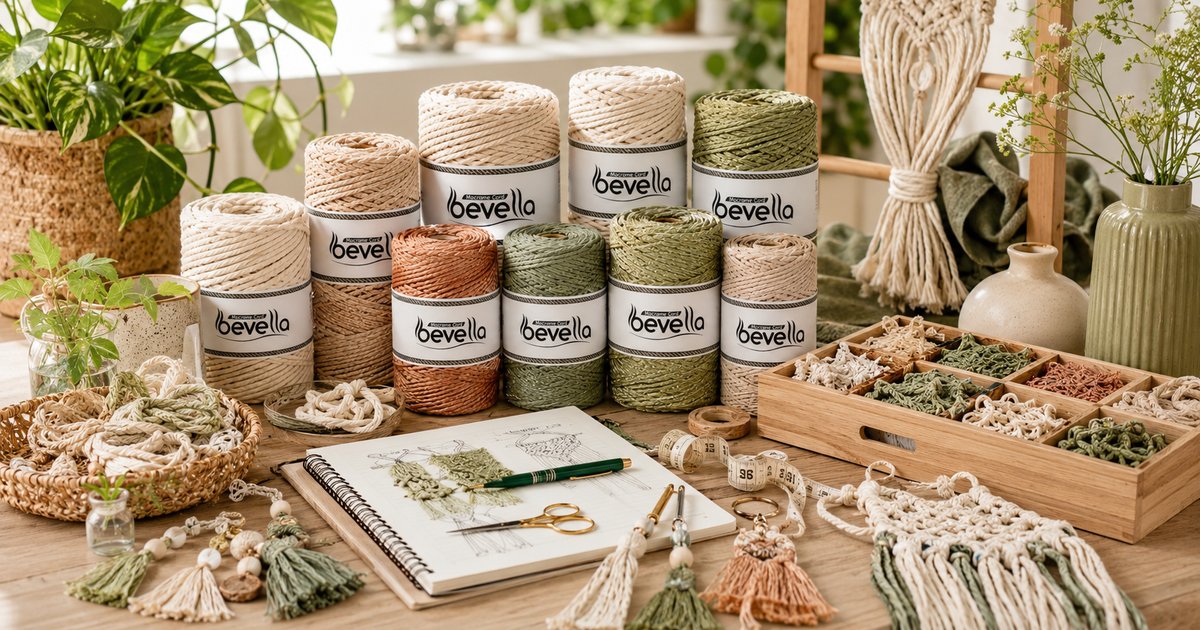
Eco-friendly macrame crafting starts with material choice: undyed cotton, natural jute, or recycled cotton cord. These materials require no synthetic dye chemicals, and undyed cotton is safe for children's crafts. Natural fibre cords are biodegradable within 2–5 years under normal conditions.
Eco-Friendly Macrame Crafting: How to Reduce Waste Without Losing Beauty, Quality, or Creativity
Eco-friendly crafting is not only about choosing natural-looking materials. It is about making thoughtful decisions before, during, and after every project: what cord you buy, how much you use, how long the finished piece will last, and what happens to the leftover fibers on your table.
For macrame makers, interior designers, craft studios, handmade business owners, wholesalers, and brands, this mindset matters. A wall hanging, plant hanger, bag, curtain, lampshade, retail collection, or custom decor line can be beautiful and commercially strong while still being more careful with materials.
At Bevella, macrame cord is seen as more than a supply. It is the foundation of texture, structure, color, touch, and durability. When the cord is chosen well, the entire project becomes easier to plan, cleaner to produce, and more satisfying to use or sell.
Why Waste-Conscious Crafting Matters in Macrame
Every creative project begins with material. In macrame, that material is visible in every knot, fringe, tassel, curve, and hanging line. Poor planning can quickly create unnecessary offcuts, unused stock, mismatched colors, and finished pieces that do not hold their shape over time.
- Undyed cotton: contains no chemical dyes or bleach; safe for children's projects
- Jute: natural fibre, no synthetic finishing required
- Recycled cotton: typically 30–50% lower embodied energy than virgin cotton
- All natural cords biodegrade within 2–5 years in normal conditions
- Polyester cord: not biodegradable but longest service life — reduces replacement frequency
Waste-conscious crafting helps makers and businesses in several practical ways:
- It reduces unnecessary material loss.
- It supports better project costing.
- It helps small businesses control inventory.
- It improves consistency for repeat orders.
- It encourages longer-lasting designs.
- It makes collections more thoughtful and easier to scale.
For individual makers, this means fewer abandoned supplies and more useful leftovers. For wholesale buyers and craft brands, it means better production planning, more predictable quality, and a cleaner supply chain. For interior decorators and designers, it means choosing macrame materials that look refined, perform well, and support the overall story of a space.
What Makes Macrame a Naturally Low-Waste Craft?
Macrame has a quiet advantage: it does not require complicated machinery, heavy chemical processes in the studio, or a large set of tools. Many projects can be created with cord, hands, careful measurement, and a few simple supports.
It is also a craft that allows materials to be reused creatively. Short pieces can become tassels. Medium scraps can become keychains, bookmarks, napkin rings, sample swatches, ornaments, bag details, or small accessories. Larger leftovers can be saved for test knots, color matching, or product photography styling.
Even when a design does not work as planned, some macrame pieces can be untied and reworked. This makes macrame especially suitable for makers who want to experiment without treating every mistake as total waste.
Choosing the Right Macrame Cord for a Lower-Waste Project
The most sustainable-looking choice is not always the most practical choice for every project. A better question is: which cord will help this piece last, function properly, and use material efficiently?
Cotton Macrame Cord
Cotton macrame cord is a popular choice for wall hangings, plant hangers, home decor, nursery decor, table styling, bags, and handmade accessories. It offers a soft touch, natural appearance, strong knot definition, and beautiful fringe potential.
For makers and brands focused on warm, natural, handmade aesthetics, cotton cord is often the first material to consider.
Braided Macrame Cord
Braided macrame cord is valued for structure, stability, and a clean finish. It is useful when the project needs stronger shape retention, a neater surface, or less fraying than twisted cord. Designers may prefer braided cord for modern home decor, bags, baskets, shelves, and products that need a polished appearance.
Polyester Macrame Cord
Polyester macrame cord can be useful for projects that require durability, color stability, or suitability for higher-wear applications. While natural fibers are often preferred for eco-conscious interior projects, durability is also part of waste reduction. A product that lasts longer, resists damage, and suits its intended environment can reduce the need for frequent replacement.
Wholesale and Bulk Macrame Cord
For studios, workshops, retailers, designers, and handmade brands, buying macrame cord in bulk can reduce inconsistency and help with production planning. It also makes it easier to keep colors, thicknesses, and textures aligned across collections.
10 Practical Ways to Reduce Waste in Macrame Projects
1. Plan the Project Before Cutting the Cord
Most macrame waste begins before the first knot. If the cord is cut too short, the piece may be unusable. If it is cut too long, the remaining offcuts may become too small for future projects.
Before cutting, check:
- finished size
- knot density
- cord thickness
- fringe length
- hanging method
- number of cords needed
- expected shrinkage caused by knotting
For business production, keep a measurement record for each design. Once a wall hanging, plant hanger, bag, or decorative item becomes part of your collection, the cutting list should become a repeatable production guide.
2. Choose Cord Thickness According to the Design
A thick cord can make a project faster and more sculptural, but it may also create heavier offcuts. A thinner cord can provide detail and elegance, but it may require more length and more time. Neither is automatically better.
The right thickness depends on the design. For large wall decor, thicker macrame cord may create visual impact. For jewelry, ornaments, small accessories, and delicate decor, thinner cord may reduce bulk and improve precision. Matching thickness to purpose helps prevent both overuse and underperformance.
3. Use High-Quality Cord for Pieces That Should Last
Low-quality cord can fray too early, lose shape, shed excessively, or create uneven knotting. This can lead to rejected pieces, returns, remakes, and wasted labor.
High-quality macrame cord supports cleaner knots, better texture, and a more professional finish. For handmade businesses and interior design projects, this matters because the final product must not only look good in a photo. It must feel reliable in real use.
4. Keep a Scrap System Instead of a Scrap Pile
Cord leftovers are only useful if you can find them again. Instead of throwing all offcuts into one bag, sort them by length, color, and material.
A simple system can include:
- short scraps for tassels and fringe
- medium scraps for keychains, ornaments, and samples
- longer scraps for small wall pieces or test designs
- color-matching scraps for customer approvals
- texture samples for wholesale or interior design presentations
This is especially useful for studios and brands that create seasonal collections or custom orders.
5. Turn Small Offcuts Into Sellable or Giftable Items
Small cord pieces can become valuable products. Makers often focus on large projects, but small accessories can support a handmade business by using leftover material efficiently.
Consider creating:
- keychains
- bookmarks
- mini plant hangers
- tassel ornaments
- napkin rings
- bag charms
- wall hanging samples
- gift tags with fiber details
- workshop practice kits
For craft sellers, these smaller items can also work well as entry-level products, event stock, packaging details, or customer gifts.
6. Design Pieces With Long-Term Use in Mind
A low-waste project is not only about using less cord. It is also about creating something people want to keep.
Timeless color palettes, strong construction, balanced proportions, and suitable materials all help extend the life of a macrame piece. A neutral wall hanging for a hotel, a durable plant hanger for a home, or a clean braided cord basket for a retail collection should feel relevant beyond one short trend cycle.
Interior designers and decor brands can benefit from this approach because long-lasting pieces support both aesthetic value and practical value.
7. Rework Unfinished or Unsuccessful Projects
Not every piece needs to be discarded. If a design does not look balanced, try reworking it before giving up on the material.
You may be able to:
- untie and reuse longer sections
- convert a large piece into smaller decor
- use the cord for test knots
- turn fringe sections into tassels
- use imperfect pieces for photography styling
- create workshop samples for teaching
For beginners, this also removes pressure. Macrame is forgiving when approached patiently.
8. Buy With a Production Plan, Not Only a Color Preference
Beautiful colors are tempting, but unplanned purchasing can create shelves full of unused cord. Before placing a bulk order, define how the cord will be used.
Ask:
- Is this for one project, a workshop, or a full collection?
- Will the same color be needed again?
- Is the cord thickness suitable for the final product?
- Does the material fit the target customer?
- Will the finished piece be decorative, functional, or both?
- Do I need consistency across multiple batches?
For wholesalers, retailers, and handmade brands, these questions help reduce dead stock and improve purchasing accuracy.
9. Use Samples Before Scaling a Collection
A small sample can prevent a large mistake. Before ordering bulk macrame cord for a full product line, test the material with the actual knots, structure, and finish you plan to use.
This is important for:
- handmade brands launching new products
- interior designers preparing custom decor
- retailers building craft supply collections
- workshop organizers planning student kits
- exporters and distributors comparing product options
A sample helps confirm color, texture, thickness, knot definition, fringe behavior, and overall presentation before larger production begins.
10. Store Cord Properly to Prevent Damage
Waste can also happen after purchase. Dust, moisture, sunlight, and poor storage can affect cord appearance and usability. Keep macrame cord in a clean, dry place, away from direct sunlight and unnecessary friction.
For businesses, organized storage also improves speed. When cords are labeled by color, thickness, material, and batch, production becomes more efficient and mistakes become less likely.
A Simple Material Guide for Eco-Conscious Macrame Planning
The best material depends on the project. Use this guide as a practical starting point.
| Project Type | Recommended Cord Direction | Why It Works |
|---|---|---|
| Wall hangings | Cotton macrame cord | Soft texture, natural look, beautiful fringe |
| Plant hangers | Cotton or braided macrame cord | Good knot definition and reliable structure |
| Bags and baskets | Braided macrame cord | Cleaner shape and stronger finish |
| Retail craft kits | Cotton macrame cord | Easy to use and appealing for many skill levels |
| Outdoor-style or high-wear pieces | Polyester macrame cord | Durable and practical for demanding use |
| Interior design installations | Cotton or braided macrame cord | Premium texture and polished visual impact |
| Small accessories | Leftover cotton or braided cord | Efficient use of scraps |
For Wholesale Buyers: Why Waste Reduction Is Also a Business Advantage
Wholesale buyers often think about price, color range, minimum order quantity, availability, and delivery. These are important, but waste reduction should also be part of the buying decision.
A reliable macrame cord manufacturer can help businesses reduce waste through:
- consistent cord thickness
- dependable color options
- suitable packaging for transport
- bulk order planning
- material guidance for different project types
- product consistency across repeat orders
- support for custom production needs
When a business works with consistent materials, it can produce more accurately. Fewer mistakes, fewer unusable leftovers, and fewer mismatched batches can improve both cost control and customer satisfaction.
For Makers and Designers: Creativity Becomes Stronger With Better Limits
Working with less waste does not make creativity smaller. It often makes creativity sharper.
When makers learn to plan cuts, reuse scraps, choose the correct cord, and design for long-term use, their work becomes more intentional. The result is not only a cleaner workspace. It is a stronger creative identity.
A designer who understands material behavior can create better texture. A small business that understands cord usage can price products more accurately. A wholesaler that understands project needs can serve customers more professionally. A craft lover who saves leftovers may discover an entirely new small-product idea.
Sustainable macrame is not about perfection. It is about making better choices more often.
How Bevella Supports Thoughtful Macrame Projects
Bevella creates macrame cord for makers, designers, handmade businesses, wholesalers, interior decorators, retailers, and brands looking for quality, consistency, and visual appeal.
Whether you are creating a single handmade wall hanging, preparing workshop kits, building a retail product range, designing interiors, or sourcing bulk macrame cord for international supply, choosing the right cord helps every project begin with confidence.
Frequently Asked Questions About Eco-Friendly Macrame Crafting
What is eco-friendly macrame crafting?
Eco-friendly macrame crafting means planning projects carefully, choosing suitable cords, reducing unnecessary offcuts, reusing leftover pieces, and creating finished designs that are made to last.
What type of macrame cord is best for low-waste projects?
The best macrame cord depends on the project. Cotton macrame cord is often preferred for soft interior pieces and fringe detail. Braided macrame cord is useful for structured designs. Polyester macrame cord may be practical for projects that need extra durability.
How can I reuse leftover macrame cord?
Leftover macrame cord can be used for tassels, keychains, bookmarks, ornaments, sample swatches, gift tags, mini wall hangings, napkin rings, and practice knots.
Why is bulk macrame cord useful for handmade businesses?
Bulk macrame cord helps handmade businesses, studios, and retailers maintain consistent color, texture, thickness, and production quality across multiple pieces or collections.
Can interior designers use macrame cord for custom decor projects?
Yes. Interior designers can use macrame cord for wall installations, room dividers, plant hangers, lighting details, decorative panels, and custom textile accents. Choosing the right material helps the finished piece match the space, function, and design mood.
Final Thoughts: Less Waste, Better Work, More Meaningful Craft
Eco-friendly macrame crafting does not require makers or businesses to sacrifice beauty. It requires better planning, better material choices, and a more thoughtful relationship with every meter of cord.
The most responsible project is not always the smallest one. It is the one designed with purpose, made with suitable materials, used for a long time, and created with respect for both the maker and the material.
Looking for wholesale macrame cord?
Bevella supplies craft retailers, studios, and e-commerce brands worldwide.
View All Products Get Wholesale Price WhatsApp Us