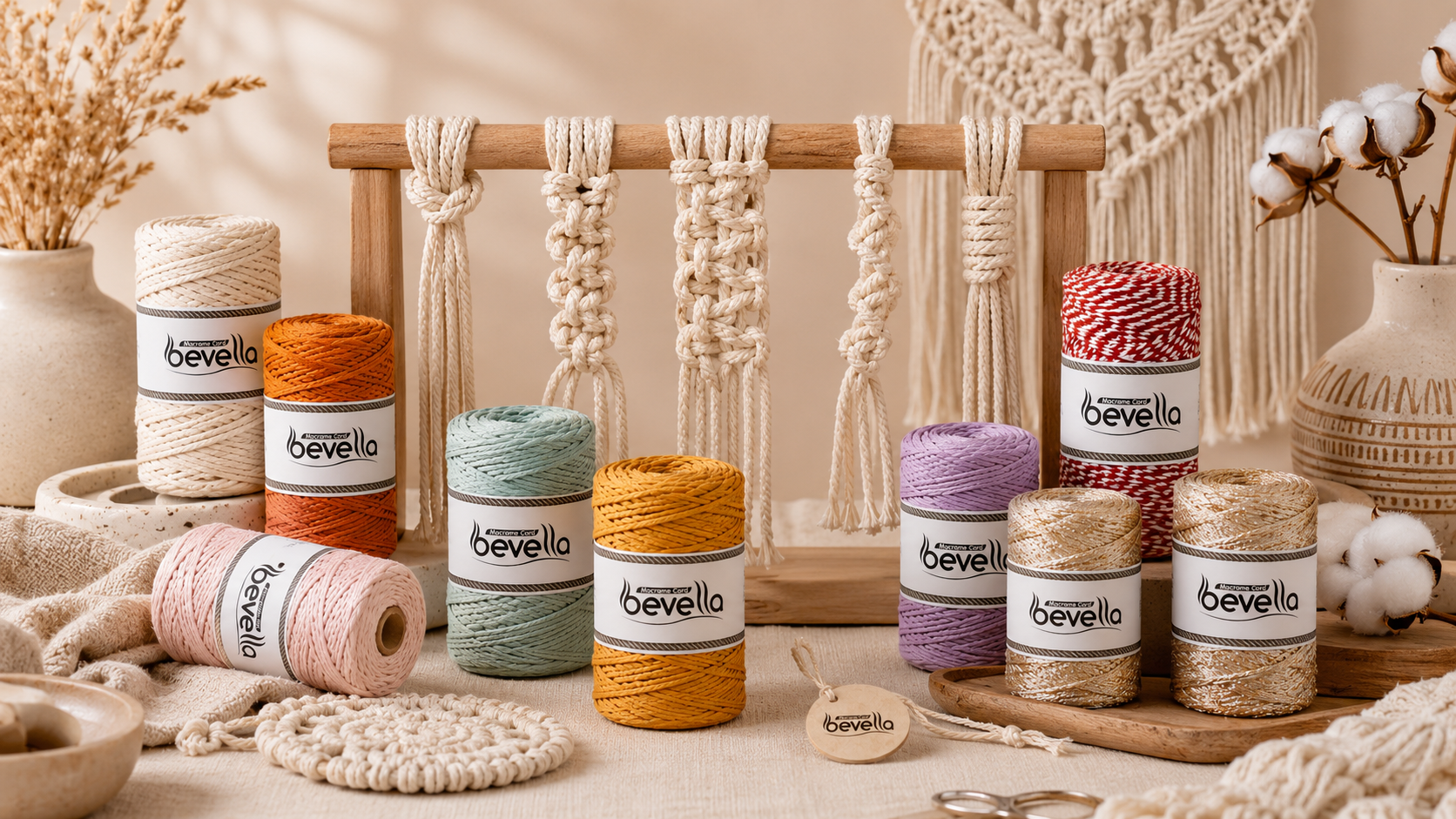
5 Essential Macrame Knots Every Maker Should Know (And How to Choose the Right Cord)
5 Essential Macrame Knots Every Maker Should Know
Macrame looks simple from a distance, but every clean wall hanging, stable plant hanger, textured bag, decorative panel, and workshop-ready project depends on two things working together: the knot and the cord.
The knot gives the piece structure. The cord gives it texture, weight, softness, durability, and visual character. When both are chosen carefully, even a beginner project can look refined. For professional makers, interior decorators, craft studios, handmade businesses, and wholesale buyers, that relationship matters even more because consistent cord quality supports cleaner production, better product photos, and more reliable finished pieces.
This guide introduces five essential macrame knots every maker should know and explains how the right macrame cord can improve the final result. Whether you are learning your first knots, preparing a workshop, building a handmade product collection, or sourcing macrame cord in bulk, these basics will help you make better decisions from the first strand.
---
Quick Answer: What Are the 5 Basic Macrame Knots?
The five essential macrame knots are the lark’s head knot, square knot, spiral knot, half hitch knot, and gathering knot.
Use the lark’s head knot to attach cords to a dowel, ring, branch, handle, or frame. Use the square knot for structure, panels, plant hangers, and decorative patterns. Use the spiral knot to create twisting texture. Use the half hitch knot to build lines, curves, borders, and directional patterns. Use the gathering knot to finish tassels, plant hangers, curtain ties, and product details cleanly.
For best results, pair soft cotton cord with decorative knots and fringe, braided cord with clean functional products, and polyester cord with projects that need added durability or stronger shape retention.
---
Why Cord Quality Matters Before the First Knot
Before learning any knot, it helps to understand why cord quality has such a strong effect on the finished piece. Two makers can follow the same pattern, but if their cords behave differently, the final results can look very different.
A good macrame cord should feel consistent in thickness, respond well to tension, and create knots that sit neatly without looking stiff, weak, or uneven. For wall hangings, soft cotton macrame cord can create a warm, natural handmade look. For bags, accessories, or more structured products, braided or polyester macrame cord can provide extra durability and better form retention. For large-scale production, batch-to-batch consistency becomes especially important.
For individual makers, the right cord makes learning easier. For craft businesses, it supports repeatable product quality. For interior decorators, it helps the finished piece match the design language of a space. For wholesalers and brands, it reduces uncertainty when planning product collections, workshops, kits, seasonal ranges, and bulk orders.
---
1. Lark’s Head Knot: The Clean Starting Point
The lark’s head knot is one of the most important starting knots in macrame. It is commonly used to attach cords to a wooden dowel, metal ring, branch, hanging rod, hoop, handle, or another base. It looks simple, but it sets the tone for the whole project.
To make a lark’s head knot, fold the cord in half, place the loop over or under the support, pull the two free ends through the loop, and tighten it neatly. The result is a clean attachment point with two working cords hanging down.
Best Uses for the Lark’s Head Knot
The lark’s head knot works especially well for:
- Wall hangings
- Plant hangers
- Dreamcatcher-style decor
- Curtain panels
- Decorative hoops
- Workshop practice boards
- Beginner macrame kits
- Retail-ready craft projects
For professional-looking pieces, lark’s head knots should be spaced evenly and tightened with similar tension. If the cord thickness varies too much, the top row can look uneven. This is why consistent cord diameter matters for makers producing multiple pieces, craft brands preparing kits, and wholesale buyers selling to workshops or retailers.
Best Cord for Lark’s Head Knots
Soft cotton macrame cord is often a strong choice for decorative lark’s head knots because it feels comfortable and creates a natural look. Braided cord can also work well when the project needs a neater, more structured attachment point.
---
2. Square Knot: The Foundation of Macrame Structure
The square knot is one of the most widely used macrame knots because it is balanced, sturdy, and visually clear. It usually uses four cords: two working cords on the outside and two filler cords in the center. When the movement alternates from left to right and right to left, the knot forms a flat, symmetrical shape.
Square knots can be used alone, repeated in columns, grouped into patterns, or combined with spacing to create open and airy designs. They are easy to understand and highly versatile, which makes them ideal for beginner projects and professional product designs.
Best Uses for the Square Knot
The square knot is commonly used in:
- Plant hangers
- Wall hangings
- Table runners
- Macrame bags
- Belts
- Decorative panels
- Lampshade covers
- Handmade home accessories
- DIY kit projects
- Workshop lessons
The square knot also teaches one of the most important macrame skills: tension control. If the knot is pulled too tightly, the design can look compressed. If it is too loose, the pattern can lose structure. A soft but reliable cord helps the knot sit naturally while keeping its form.
Best Cord for Square Knots
Cotton macrame cord works beautifully for decorative square knots, especially in wall decor and home accessories. Braided macrame cord can be a better option for bags, belts, keychains, and product designs that need more structure. Polyester macrame cord may be useful when durability, color stability, or frequent handling is a priority.
---
3. Spiral Knot: Movement, Texture, and Visual Flow
The spiral knot is made by repeating the same half of the square knot in one direction. Instead of staying flat, the cord slowly twists into a spiral form. This adds movement and a sculptural effect to the project.
The spiral knot is popular because it adds texture without requiring advanced pattern knowledge. Once beginners understand the rhythm of repeating the same movement, they can create a strong visual effect. It is especially useful in vertical sections where the design needs length, softness, and flow.
Best Uses for the Spiral Knot
The spiral knot is often used in:
- Plant hanger arms
- Keychains
- Bag handles
- Curtain tiebacks
- Decorative cords
- Jewelry-inspired accessories
- Small gift products
- Workshop samples
- Retail craft kits
Cord choice strongly affects the look of a spiral knot. Soft cotton cord creates a gentle, organic twist. Tighter braided cord gives the spiral a more defined form. Polyester cord can help when the project needs extra durability, cleaner edges, or better resistance to frequent handling.
Why Spiral Knots Work Well for Handmade Brands
This knot is valuable for small businesses because it photographs well. Spiral details create shadow and dimension, making product images look richer and more tactile. For brands selling handmade accessories, plant hangers, or DIY kits online, that visual texture can improve the perceived value of the product.
---
4. Half Hitch Knot: Lines, Curves, and Pattern Direction
The half hitch knot is one of the most expressive knots in macrame. It can be tied horizontally, vertically, or diagonally, allowing makers to create lines, waves, borders, leaves, diamonds, and curved patterns.
It may require more practice than the lark’s head or square knot, but it is essential for anyone who wants to move beyond basic designs. The half hitch gives the maker control over direction. Instead of building only downward, you can guide the pattern across the piece.
Best Uses for the Half Hitch Knot
The half hitch knot is often used in:
- Wall hanging patterns
- Geometric designs
- Leaf and feather shapes
- Decorative borders
- Mandala-inspired details
- Large interior installations
- Artistic textile panels
- Statement decor pieces
The key to a clean half hitch pattern is consistent tension. Each knot should sit close to the next without squeezing the line. If the cord frays too quickly or varies in thickness, curves and diagonal lines can look uneven. High-quality cord helps the pattern remain readable, especially in larger pieces where small inconsistencies become more visible.
Best Cord for Half Hitch Knots
Cotton cord works well for soft decorative half hitch patterns, especially when the project includes fringe or brushed ends. Braided cord works better when the pattern needs sharper lines and a cleaner finish. For larger commercial decor pieces, cord consistency is more important than softness alone.
---
5. Gathering Knot: The Polished Finishing Detail
The gathering knot, also called a wrapping knot, is often used to collect several cords into one neat section. It is a finishing knot, but when used thoughtfully, it can also become part of the design.
To create it, a separate cord is wrapped around a bundle of cords and secured so the wrap looks smooth and clean. You often see it at the bottom of plant hangers, above tassels, around curtain ties, or at the closing point of decorative accessories.
Best Uses for the Gathering Knot
The gathering knot is useful for:
- Plant hanger bases
- Tassel finishes
- Curtain ties
- Bag details
- Hanging decor
- Product finishing
- Packaging-inspired decorative accents
- Handmade gift items
This knot shows why finishing quality matters. If the final wrap looks loose or uneven, a beautiful project can lose its premium feel. The cord used for a gathering knot should wrap smoothly without creating unnecessary bulk and should stay secure.
For handmade brands and craft businesses, finishing knots are part of product identity. Customers may not know the technical name of the knot, but they notice whether the piece looks clean, balanced, and carefully made.
---
Essential Macrame Knots and Cord Pairing Guide
| Knot | Best For | Recommended Cord Type | Why It Works |
| Lark’s Head Knot | Starting wall hangings, hoops, rods, rings, beginner kits | Cotton or braided cord | Creates a clean attachment point |
| Square Knot | Plant hangers, panels, bags, belts, decor | Cotton, braided, or polyester cord | Gives structure and repeatable patterns |
| Spiral Knot | Plant hanger arms, handles, keychains, accessories | Cotton or braided cord | Adds movement and dimensional texture |
| Half Hitch Knot | Lines, borders, curves, leaves, geometric patterns | Cotton or braided cord | Controls direction and visual flow |
| Gathering Knot | Tassels, plant hanger bases, curtain ties, product finishing | Smooth cotton, braided, or polyester cord | Creates a neat, polished finish |
---
Best Learning Order for Macrame Knots
If you are new to macrame, learning the knots in the right order can make the process much easier.
A practical learning path is:
- Lark’s Head Knot for attaching cords and starting projects cleanly.
- Square Knot for understanding structure and basic tension.
- Spiral Knot for adding texture and movement.
- Half Hitch Knot for creating lines, curves, and pattern direction.
- Gathering Knot for finishing projects neatly.
This sequence helps beginners build confidence step by step. It also works well for workshop planning, beginner kits, and educational content because each knot introduces a new skill without overwhelming the maker.
---
How to Choose the Right Cord for Different Macrame Projects
After the basic knots are learned, the next question is simple: which cord should you use?
There is no single best macrame cord for every project. The right choice depends on the design, size, function, texture, and target customer.
Cotton Macrame Cord
Cotton macrame cord is often preferred for soft home decor, natural wall hangings, plant hangers, nursery decor, bohemian interiors, and handmade gifts. It has a warm look and works beautifully for fringes, tassels, and brushed finishes.
Choose cotton when the project needs:
- Natural texture
- Soft touch
- Decorative knots
- Fringe or tassel details
- Warm interior styling
- Beginner-friendly handling
Braided Macrame Cord
Braided macrame cord is useful when a project needs more structure. It is a good choice for bags, baskets, accessories, keychains, and designs that require cleaner knot definition.
Choose braided cord when the project needs:
- Better shape retention
- A cleaner surface
- Less fraying
- Functional product structure
- More consistent finished edges
Polyester Macrame Cord
Polyester macrame cord can be suitable for projects that need strength, durability, color stability, or a tighter finish. It may be useful for accessories, decorative items, and pieces that will be handled often.
Choose polyester when the project needs:
- Extra durability
- Stronger color performance
- Cleaner modern finish
- Better resistance to frequent handling
- Practical use in commercial product lines
---
What Wholesale and Bulk Buyers Should Check
When sourcing macrame cord for wholesale, retail, workshops, or product production, the decision should go beyond price. Low-quality cord can create hidden costs: slower production, inconsistent results, customer complaints, weaker product photography, and difficulty reproducing best-selling designs.
Wholesale and bulk buyers should evaluate:
- Consistent thickness across rolls and batches
- Reliable color availability
- Cord types suitable for different project categories
- Clean texture and comfortable handling
- Packaging options for storage and presentation
- Repeat order support
- Clear product information
- Custom production flexibility when needed
- Supplier communication and export readiness
- Sample testing before large orders
International buyers should also consider communication quality. Product details, order quantities, color planning, and shipping expectations should be clear from the start. A reliable manufacturer helps buyers choose the right cord type for their market, whether they serve individual makers, workshop groups, retailers, interior decorators, or craft brands.
---
Macrame for Interiors, Brands, and Handmade Businesses
Macrame is no longer limited to small hobby projects. It appears in homes, studios, hotels, boutiques, event spaces, product displays, packaging concepts, and lifestyle collections. That makes cord choice important not only for crafters, but also for businesses that use texture as part of their visual identity.
Interior decorators can use macrame cord for wall installations, room dividers, lampshades, hanging planters, and custom textile features. Handmade business owners can use it for bags, accessories, ornaments, seasonal decor, and giftable products. Craft brands can develop DIY kits, workshop supplies, or private collections around specific cord types and colors.
For all of these uses, the best cord is the one that supports both creativity and consistency. It should feel good in the hand, photograph well, perform reliably in knots, and remain dependable across repeat orders.
---
Simple Tips for Cleaner Macrame Results
Better cord helps, but technique still matters. These small habits can improve almost every macrame project:
- Measure more cord than you think you need, especially when learning a new knot.
- Keep tension consistent from the beginning to the end of each section.
- Use a stable work surface so the project does not move while knotting.
- Brush or trim fringe only after the main structure is complete.
- Test a short sample before beginning large-scale or repeat production.
- Organize cords by length, color, and project section.
- Photograph samples in natural light to check texture, shadow, and color.
- Record cord lengths and knot counts for products you plan to repeat.
For businesses, sampling is especially valuable. A small test piece can show how the cord behaves, how the color photographs, and whether the final texture matches the intended product style.
---
FAQ: Essential Macrame Knots and Cord Choice
What is the easiest macrame knot for beginners?
The lark’s head knot is usually the easiest knot to learn because it simply attaches cord to a support. After that, the square knot is the best next step because it teaches basic structure and tension.
What are the most important macrame knots to learn first?
The most important macrame knots to learn first are the lark’s head knot, square knot, spiral knot, half hitch knot, and gathering knot. Together, they support many common projects, including wall hangings, plant hangers, bags, keychains, and decorative panels.
Which cord is best for learning macrame knots?
A medium-thickness cotton macrame cord is often a comfortable starting point. It is easy to handle, shows knots clearly, and works well for beginner wall hangings, small plant hangers, and practice samples.
What cord should I use for macrame plant hangers?
For plant hangers, choose a cord with reliable strength and good knot stability. Cotton cord, braided cord, and some polyester options can work well depending on the design, pot weight, and desired finish.
Which macrame cord is best for bags and accessories?
Braided macrame cord and polyester macrame cord are often practical for bags and accessories because they can offer better structure, cleaner edges, and improved durability. Cotton can also be used when a softer handmade look is desired.
Can wholesale buyers order macrame cord for workshops and DIY kits?
Yes. Wholesale buyers, craft retailers, workshop organizers, handmade brands, and distributors can source macrame cord in bulk for kits, classes, production, retail collections, and private label projects.
---
Final Thoughts: Better Knots Start With Better Cord
The lark’s head knot, square knot, spiral knot, half hitch knot, and gathering knot are more than beginner techniques. Together, they form the foundation of countless macrame projects, from simple handmade gifts to professional decor pieces and commercial product collections.
When these knots are paired with the right cord, the result looks more intentional. The pattern becomes cleaner. The texture becomes richer. The finished piece becomes easier to reproduce, present, sell, teach, or install.
Bevella produces macrame cords for makers, designers, craft businesses, interior decorators, brands, and wholesale buyers who care about quality, consistency, and creative possibility. Whether you are preparing your first project, building a handmade collection, planning workshops, or sourcing cord in bulk, choosing the right material is the first step toward better results.
For product information, wholesale requests, bulk orders, custom production options, or support choosing the right macrame cord for your projects, contact Bevella.
Wholesale macrame cord for makers, retailers, studios, and e-commerce brands worldwide.
Call to Action: Explore Bevella macrame cords, request wholesale pricing, or contact Bevella for bulk order support.