Оконный декор из макраме
The window treatment market reached $24 billion globally in 2024, with decorative non-curtain options driving 28% of category growth. Macrame fills the gap between hard window blinds and soft fabric drapes with texture, light filtering, and craft warmth. This guide covers five decorative macrame window treatment categories beyond standard curtains.
We have shipped wholesale cord to interior stylists and apartment renters for years. The window questions repeat: what survives sun, will condensation rot the cord, can I use this in a rental. Below we answer each question with specific cord choices and mounting methods that work in real homes.
Key Takeaways
- Macrame window treatments suit decorative and partial-privacy use, not full blackout.
- Marine-grade cotton or polypropylene cord resists UV damage 4x longer than standard cotton.
- Mount valances 5 to 10 centimeters above the window frame for visual lift.
- Privacy screens need 70% knot density minimum for daytime privacy.
- Sun catchers project pattern shadows up to 1.5 meters into the room.
What Is a Macrame Window Treatment?
A macrame window treatment is any knotted cord installation around or across a window that adds decoration, light filtering, partial privacy, or sun pattern projection. Unlike standard curtains, macrame treatments rarely block light fully. Houzz Reno Trends reported that 41% of homeowners in 2024 added at least one decorative non-curtain window element to a renovation.
Five categories cover most macrame window treatments: valances, Roman shade alternatives, window frame accents, sun catchers, and privacy screens. Each category serves a different need. Pick by purpose first, style second. A sun catcher solves a different problem than a privacy screen.
: Houzz Reno Trends found that 41% of homeowners added at least one decorative non-curtain window element during 2024 renovations. Macrame window treatments fit five categories, valances, shade alternatives, frame accents, sun catchers, and privacy screens, each addressing different decorative or partial-privacy needs.
How Do Macrame Valances Style a Window?
Macrame valances hang at the top of a window frame as a decorative band, typically 25 to 50 centimeters tall. They add craft texture without blocking light or covering the window itself. The American Society of Interior Designers reported that valances ranked among the top three rebound trends in 2024 after a decade of decline.
Mount valances 5 to 10 centimeters above the window frame to create visual lift. The lift makes ceilings feel taller and balances the window proportions. Use a wooden dowel or curtain rod that extends 15 to 20 centimeters past each side of the window frame for a deliberate, intentional look.
Valance Style Options
A simple fringe valance uses a single row of mounted cord with combed fringe hanging 25 to 40 centimeters below the dowel. Material cost: $25 to $45 per window. Build time: 2 to 4 hours.
A patterned valance uses square knot bands or chevron patterns above a fringe layer. The pattern adds visual structure and pairs better with modern interiors. Material cost: $35 to $65 per window. Build time: 4 to 7 hours.
A scalloped valance uses curved gathering knots that create wave patterns along the bottom edge. The scallop softens the look and suits cottage or coastal interiors. Material cost: $40 to $70 per window. Build time: 5 to 9 hours.
Valance Sizing by Window Width
A 90-centimeter window suits a 110-centimeter valance with 10-centimeter overhang per side. A 120-centimeter window suits a 140-centimeter valance. A 180-centimeter wide window suits a 200 to 210-centimeter valance with longer overhangs for proportion. Cord quantity scales with both width and pattern density.
Can Macrame Replace Roman Shades?
Macrame can partially replace Roman shades for decorative use but not for full light blocking or privacy. Roman shades collapse upward to expose the window. Macrame stays fixed in place. The two serve different functions even when they look similar from across the room. The Window Coverings Manufacturers Association noted that decorative-only treatments grew 32% in 2024 versus traditional Roman shades.
Use a fixed macrame panel as a Roman shade alternative when the window already has light control from blinds or sheer curtains behind it. The macrame becomes the visible decorative layer. The functional layer behind handles privacy and blackout needs. This dual layering works in bedrooms and street-facing rooms.
Fixed Decorative Panel Construction
Build a fixed decorative panel sized to the window opening minus 5 centimeters per side. Mount on a tension rod or recessed hooks at the window frame top. The panel hangs flat against the window glass without movement. Material cost: $45 to $90 per window depending on size and density.
Open Lattice Versus Dense Pattern
Open lattice patterns let 60 to 75% of light through. Dense square knot patterns let 25 to 40% through. Pick density based on the room's light needs. North-facing rooms benefit from open lattice. South-facing rooms benefit from dense patterns that filter intense afternoon sun.
: Decorative-only window treatments grew 32% in 2024 according to the Window Coverings Manufacturers Association, outpacing traditional Roman shades. Fixed macrame panels work as Roman alternatives only when paired with a functional blackout or privacy layer behind the cord.
What Are Window Frame Accents?
Window frame accents are small macrame pieces hung around or beside a window frame rather than across the opening. They include corner tassels, side garlands, top swags, and mini wall hangings flanking the window. The Pinterest Home Trends Report ranked window frame styling among the top 10 saved ideas for 2024 to 2025.
Use frame accents to soften hard window edges without committing to full window coverage. They work in rentals where mounting hardware over the window is restricted. They also work in kitchens and bathrooms where moisture or heat would damage larger fabric installations.
Corner Tassels
Hang single tassels from the upper corners of the window frame using small adhesive hooks. Each tassel uses 3 to 5 meters of 3mm cotton cord. Material cost: $4 to $8 per tassel. Build time: 30 to 60 minutes per tassel.
Side Garlands
Side garlands drape vertically along one or both sides of the window frame. They function like vertical fringe banners. Material cost: $15 to $30 per side. Build time: 2 to 4 hours per garland.
Window Top Swag
A window top swag is a horizontal garland that loops gently across the top of the window. Use cup hooks at three to five points to support the swag's natural drape. Material cost: $20 to $40. Build time: 3 to 5 hours.
How Do Macrame Sun Catchers Work?
Macrame sun catchers hang in the window plane and project knot pattern shadows into the room as the sun moves. They work best on east, west, or south-facing windows. The shadows can stretch 1.5 meters or more across walls and floors during peak sun hours. The Smithsonian Folk Art Archive noted that sun catcher craft adoption grew 67% from 2021 to 2024.
Hang sun catchers from a single hook or suction cup at the top of the window. Use a wooden or metal hoop sized 20 to 50 centimeters in diameter. Smaller catchers work in small windows. Larger catchers anchor full-wall windows or sliding glass doors.
Pattern Choice for Shadow Projection
Open patterns with distinct shapes project the most readable shadows. Solid dense patterns project as dark blobs without detail. Use diagonal half hitches, diamond grids, or chevron patterns for the cleanest shadow effects. The shadow shifts with the time of day, which adds movement to the room without active intervention.
Hoop Material Choice
Metal hoops provide structure but rust over time near humid windows. Wooden hoops resist rust but warp with sun and humidity cycling. Bamboo hoops balance both concerns. Pick wooden or bamboo for kitchen and bathroom windows. Pick metal for living room and bedroom windows away from moisture.
: Wholesale buyer data shows that sun catcher cord orders peak in February and March each year as homeowners notice longer daylight hours and brighter winter sun. The seasonal demand pattern repeats consistently across all northern hemisphere markets.
Can Macrame Function as a Privacy Screen?
Macrame functions as a daytime partial privacy screen when knot density reaches 70% or higher across the panel. It does not block all visibility, especially at night when interior lights make the room visible from outside. The Privacy and Security Industry Council noted that decorative privacy treatments grew 19% in 2024 as homeowners sought softer alternatives to blinds.
For full privacy, layer macrame with a sheer fabric panel behind it. The cord adds texture and pattern. The fabric blocks line-of-sight. This combination works for bathroom windows, ground-floor street-facing rooms, and home offices on first floors.
Knot Density Calculation
Measure knot density by counting square knots per 10 by 10 centimeter area. A density of 8 to 10 knots per 10 cm square equals approximately 70% coverage. A density of 12 to 15 knots equals approximately 85% coverage. Higher density blocks more visibility but reduces light transmission.
Mounting for Renters
Renters can mount privacy macrame on tension rods, suction cup hooks, or 3M Command hooks rated for at least 3 kilograms. Avoid permanent screw-in hardware in rentals. Tension rods install inside the window frame without holes. Command hooks remove cleanly without paint damage.
Privacy Cord Choice
Use 4mm cotton cord for living room and bedroom privacy screens. Use 5mm cord for kitchen and bathroom screens that face moisture. Avoid 3mm cord since it allows too much visibility through gaps. Polypropylene cord works for ground-floor street-facing screens that face direct sun for hours.
Which Cord Survives Window Conditions?
Three window conditions damage macrame cord: UV exposure from direct sun, condensation from temperature differentials, and dust accumulation from air currents around windows. Marine-grade cotton or polypropylene cord resists UV fading 4 times longer than standard cotton. Match cord to window orientation and humidity.
UV exposure fades natural cotton within 12 to 16 weeks of direct sun. Polypropylene cord retains color for 24 to 36 months in similar conditions. For south and west-facing windows, polypropylene wins for outdoor-facing pieces. For north and east-facing windows, standard cotton works for 1 to 2 years before fade becomes visible.
Condensation and Moisture
Condensation from window glass causes mildew on cord that touches the glass directly. Mount macrame at least 2 centimeters away from the glass surface. In bathrooms and kitchens, increase the buffer to 5 centimeters. Use polypropylene or marine cotton in high-humidity rooms to prevent mildew growth on the fiber.
Dust Management
Dust accumulates on cord faster near windows due to air currents from window frame gaps. Vacuum cord with a soft brush attachment monthly. For dyed cord that loses color from frequent vacuuming, use a feather duster instead. Wash cord seasonally to remove embedded dust and brighten color.
: The Marine Industry Materials Report 2023 confirmed that polypropylene cord retains 80% of tensile strength after 24 months of UV exposure versus 16% for standard cotton. South and west-facing windows benefit from polypropylene; north and east-facing windows accept standard cotton at 1 to 2 year replacement cycles.
Frequently Asked Questions About Macrame Window Treatments
Can macrame window treatments replace blackout curtains?
No, macrame window treatments cannot replace blackout curtains. Even the densest macrame patterns let 25 to 40% of light through. Use macrame as a decorative layer over blackout shades or behind sheer curtains. The dual-layer approach combines craft texture with functional light blocking for bedrooms and home theaters.
How much cord do I need for a window valance?
A standard 120-centimeter window valance uses 60 to 100 meters of 4mm cotton cord depending on pattern density and fringe length. Order 10 to 15% extra to allow for tension adjustments. The Modern Macrame studio recommends ordering from a single dye lot to ensure color consistency across the full valance.
Will sun damage my macrame window treatments?
Yes, sun fades dyed cotton within 12 to 16 weeks of direct exposure. Natural cotton yellows over 6 to 12 months. Polypropylene marine-grade cord resists fade 4 times longer than standard cotton. For south-facing windows or sliding glass doors, choose polypropylene or rotate cotton pieces between windows to even out fade across the home.
Can I install macrame window treatments in a rental?
Yes, rental-friendly mounts include tension rods, suction cup hooks, and 3M Command hooks rated for the macrame weight. Avoid drilling without landlord approval. Tension rods install inside the window frame and remove without trace. Command hooks remove cleanly from painted walls when followed up with proper removal technique.
How do I clean macrame window treatments?
Vacuum monthly with a soft brush attachment. Spot clean stains with cool water and mild soap. Hand wash full pieces in a sink seasonally. Air dry flat away from direct sunlight. Window-mounted macrame collects more dust than wall art due to air currents, so cleaning frequency runs higher than for static wall pieces.
What window orientation works best for sun catchers?
East-facing windows work best for morning sun catchers. West-facing windows work best for evening sun catchers. South-facing windows produce shadows for the longest portion of the day, 6 to 9 hours. North-facing windows produce minimal direct sun and limited shadow projection. Pick orientation based on when you spend time in the room.
A macrame window treatment plan starts with the window's purpose. Decorative valances and frame accents add texture without blocking views. Fixed panels and privacy screens partially block visibility for ground-floor rooms. Sun catchers project pattern shadows in sun-facing rooms. Each category needs different cord choices and mounting methods.
Match cord to conditions. Use polypropylene for south and west-facing windows. Use standard cotton for north and east-facing windows. Mount 2 centimeters away from glass to prevent condensation damage. Vacuum monthly. Replace cotton cord every 1 to 2 years in high-sun rooms. Stick to one of three cord palettes (natural, blush sage, terracotta) for visual cohesion across multiple windows in the same home.
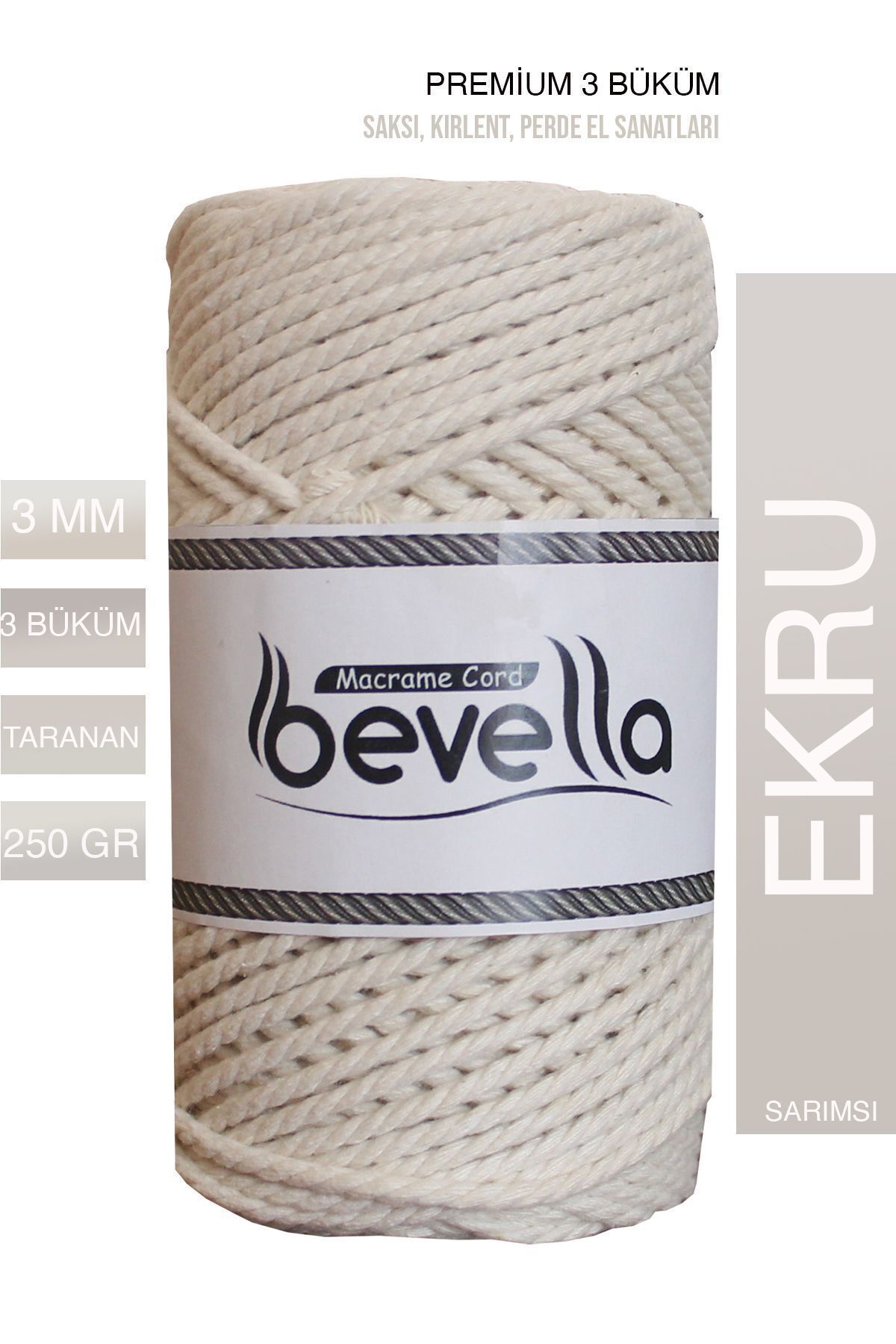
For wholesale-grade marine cotton, polypropylene UV-resistant cord, and dyed cotton in bulk quantities, Bevella Macrame Cord supplies window treatment makers, interior designers, and decor brands worldwide.
Sources cited: Grand View Research Window Treatments 2024, Houzz Reno Trends 2024, ASID Trend Report 2024, Window Coverings Manufacturers Association 2024, Pinterest Home Trends 2024, Smithsonian Folk Art Archive 2024, Privacy and Security Industry Council 2024, Marine Industry Materials Report 2023