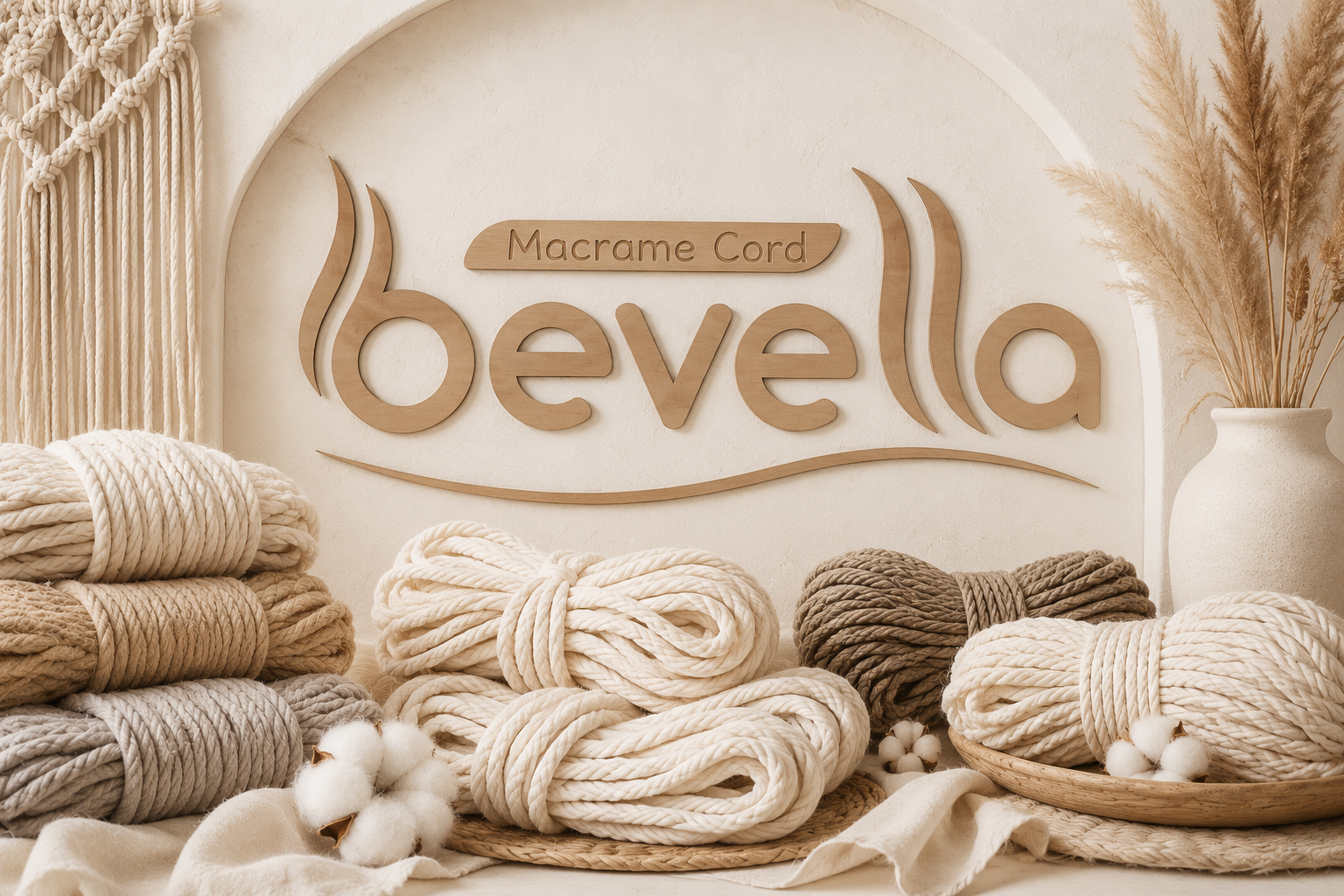
Why Sustainable Macrame Cords Matter for Makers, Designers, and Wholesale Buyers
Macrame is more than a decorative craft. It is a material-led design language shaped by texture, touch, durability, color, and purpose. Whether you are creating wall hangings for a home collection, sourcing cords for a handmade business, developing a craft product line, or preparing large-volume orders for retail, the cord you choose affects the final piece long before the first knot is tied.
Sustainable macrame cords have become an important choice for modern makers and professional buyers because they support better material decisions without sacrificing beauty, structure, or creative flexibility. For individual artists, they offer a more thoughtful way to create. For interior designers, they bring natural warmth and tactile depth into spaces. For wholesalers, craft brands, and manufacturers, they help meet growing demand for responsibly selected materials.
At Bevella, macrame cords are developed for creative people and professional buyers who care about quality, consistency, and long-term product value. This guide explains what sustainable macrame cord means, why it matters, how to compare materials, and what to consider before choosing cords for personal projects, design work, retail collections, or bulk orders.
What Is a Sustainable Macrame Cord?
A sustainable macrame cord is made with materials and production choices that aim to reduce environmental impact while still delivering reliable performance. This may include natural fibers, recycled fibers, responsible sourcing, efficient production methods, careful dyeing processes, reduced waste, and long-lasting product quality.
In practical terms, sustainability is not only about the raw material. A cord can be made from a natural fiber, but if it is poorly produced, inconsistent, weak, or unsuitable for its intended use, it may create more waste. A truly useful sustainable cord should be attractive, durable, comfortable to work with, and suitable for the type of project it is designed for.
For makers, this means fewer failed projects and better finished pieces. For small businesses, it means more consistent products and happier customers. For wholesale buyers, it means a more dependable supply chain and a stronger product story.
Why Sustainable Macrame Cords Are Better for Modern Craft
Sustainable macrame cords are especially valuable because macrame is a visible, tactile art form. The material is not hidden inside a product. It is the product. Every twist, knot, fringe, tassel, loop, and woven section shows the quality of the cord.
A thoughtfully selected cord can make a simple design feel refined. A poor-quality cord can make even a skilled design look unfinished. That is why makers, designers, and buyers increasingly look beyond color and price. They want to understand fiber content, softness, strength, thickness, texture, and long-term behavior.
Sustainable macrame cords can support:
- Cleaner material choices for handmade products
- A natural look for interior decoration
- Softer handling for artists and hobby makers
- Better storytelling for craft brands and retailers
- More responsible sourcing for wholesale buyers
- Reduced waste through durable, project-appropriate materials
This is why sustainable cord selection is not a trend. It is becoming part of how serious makers and buyers evaluate quality.
Natural Fibers and Recycled Fibers: What Makes Them Different?
Natural and recycled fibers are often chosen for sustainable macrame projects because they offer a balance of aesthetics, comfort, and material responsibility.
Cotton macrame cord is one of the most popular options because it is soft, versatile, easy to knot, and suitable for many types of projects. It works beautifully for wall hangings, plant hangers, curtains, table decor, wedding decorations, nursery decor, and handmade accessories. Recycled cotton macrame cord can add another layer of responsibility by using fiber resources more efficiently.
Jute, hemp, linen, and bamboo-based fibers can also be used in certain craft and decor projects. These materials often bring a more rustic, natural, or structured look. However, each fiber behaves differently. Some are softer, some are firmer, some hold shape more strongly, and some are better suited for decorative use than high-friction or outdoor applications.
The best choice depends on the project. A soft cotton cord may be ideal for a detailed wall hanging, while a firmer braided cord may work better for products that need more structure.
Cotton Macrame Cord: A Reliable Choice for Many Projects
Cotton macrame cord remains a favorite for both beginners and professionals because it is easy to work with, visually warm, and highly adaptable. It can create soft fringe, clean knots, and a natural handmade finish. It is especially useful when the final piece needs to feel organic, relaxed, and premium.
For individual makers, cotton cord is forgiving and comfortable. For interior designers, it brings softness into modern, bohemian, coastal, rustic, Scandinavian-inspired, and natural interiors. For handmade businesses, cotton macrame cord can help create products that feel consistent and customer-friendly.
Cotton cords are commonly used for:
- Wall hangings
- Plant hangers
- Lampshades
- Table runners
- Wedding backdrops
- Home decor collections
- Retail craft kits
- DIY workshops
- Handmade accessories
- Seasonal decor
When choosing cotton macrame cord, buyers should consider thickness, twist type, color consistency, softness, strength, packaging, and order repeatability.
Recycled Cotton Macrame Cord: Less Waste, More Creative Value
Recycled cotton macrame cord is especially appealing for makers and brands that want a more conscious material story. It can help reduce reliance on newly produced fiber while giving textile resources a second life. For handmade brands, this can be an important part of product positioning, especially when customers care about materials and production choices.
Recycled cotton is not only for eco-focused collections. It can also be practical, beautiful, and commercially useful. The key is consistency. Buyers should look for cords with reliable thickness, stable color options, good knot definition, and dependable supply availability.
For wholesalers and bulk buyers, recycled cotton macrame cord can be a strong category because it speaks to multiple customer groups at once: craft lovers, eco-conscious shoppers, interior decorators, gift shops, workshop organizers, and handmade businesses.
Braided, Twisted, and Single-Strand Macrame Cords
Macrame cords are not all the same. The construction of the cord changes how it feels, knots, hangs, and finishes.
Single-strand macrame cord is soft, flexible, and easy to brush into fringe. It is often used for wall art, feathers, leaves, tassels, and decorative pieces with a softer finish.
Twisted macrame cord has a more defined rope-like structure. It can create clear knots and a traditional macrame look. It is useful for wall hangings, plant hangers, and decorative pieces where texture matters.
Braided macrame cord is usually firmer and more structured. It is often preferred when the project needs strength, shape, and cleaner handling. It can be useful for bags, baskets, pet accessories, home storage products, and designs that require a more stable cord.
There is no single best cord for every project. The best cord is the one that matches the design, function, texture, and customer expectation.
Sustainable Does Not Mean Weak
One common misunderstanding is that sustainable materials are less durable. In macrame, this is not necessarily true. A well-made natural or recycled cord can be strong, reliable, and suitable for many types of decorative and functional projects.
Durability depends on fiber quality, cord construction, twist or braid stability, thickness, production control, and intended use. For example, a decorative wall hanging does not need the same performance characteristics as a bag handle, curtain tieback, or plant hanger. Matching the right cord to the right use is what creates long-lasting results.
For professional buyers, this point is especially important. Sustainability should not be treated as a separate feature from performance. It should work together with quality, consistency, and practical usability.
Sustainable Macrame Cords and Interior Design
Interior designers are increasingly drawn to macrame because it adds softness and dimension to spaces. Unlike flat printed decor, macrame brings shadow, texture, depth, and hand-crafted character. Sustainable cords strengthen this appeal because they align with natural materials, slower design, and warmer interiors.
Macrame pieces made with quality cords can work in:
- Boutique hotels
- Cafes and restaurants
- Retail stores
- Yoga and wellness studios
- Residential interiors
- Event spaces
- Wedding installations
- Nursery and children’s rooms
- Creative studios
- Window displays
For interior decorators and design studios, cord quality affects the final impression. A consistent cord helps large decorative pieces look intentional and professional. A poor cord can create uneven texture, weak knots, or an inconsistent finish.
Why Wholesale Buyers Should Care About Sustainable Cord Quality
For wholesale and bulk buyers, sustainable macrame cord is not only a product category. It is a business decision. A reliable cord supplier can support repeat orders, stable product ranges, seasonal collections, private label projects, retail craft kits, and larger production planning.
Wholesale buyers should evaluate more than price per roll. Important questions include:
- Is the cord thickness consistent?
- Are colors repeatable across orders?
- Is the cord comfortable to knot?
- Does it suit the target customer?
- Can the supplier support bulk quantities?
- Are different cord types available?
- Is packaging suitable for retail or professional use?
- Can the supplier provide product information clearly?
- Is the material appropriate for the intended project?
A cheaper cord can become expensive if it creates waste, customer complaints, inconsistent finished products, or unreliable supply. For wholesale buyers, dependable quality is often more valuable than the lowest initial cost.
How to Choose the Right Sustainable Macrame Cord
Choosing the right macrame cord becomes easier when you start with the project rather than the product. Before ordering, consider what the cord needs to do.
For decorative wall pieces, softness, fringe quality, and color tone may matter most. For plant hangers, strength and knot stability are more important. For bags and accessories, braided or firmer cords may offer better shape. For workshops and craft kits, the cord should be easy to use, beginner-friendly, and consistent.
Here is a simple selection guide:
- Choose soft cotton cord for wall hangings, tassels, and decorative fringe.
- Choose twisted cord for classic macrame texture and visible knot definition.
- Choose braided cord for structured items, bags, baskets, and cleaner handling.
- Choose recycled cotton cord when material responsibility is a key selling point.
- Choose bulk macrame cord when producing collections, kits, or wholesale ranges.
- Choose neutral shades for timeless interiors and seasonal colors for collections.
Sustainable Macrame Cord Comparison Guide
Use this comparison as a practical starting point:
| Cord Type | Best For | Texture | Buyer Benefit |
|---|---|---|---|
| Cotton macrame cord | Wall hangings, plant hangers, decor | Soft and natural | Versatile and beginner-friendly |
| Recycled cotton cord | Eco-conscious collections, craft kits, retail products | Soft to medium | Strong sustainability story |
| Single-strand cord | Fringe, feathers, soft decorative work | Very soft | Easy brushing and artistic finish |
| Twisted cord | Classic macrame, home decor, plant hangers | Defined and textured | Traditional macrame appearance |
| Braided cord | Bags, baskets, structured accessories | Firm and stable | Better shape and handling |
| Bulk macrame cord | Workshops, brands, production, wholesale | Depends on type | Cost efficiency and supply consistency |
The best buying decision comes from matching material, construction, color, and quantity to the final use.
What to Look for in a Macrame Cord Supplier
A good macrame cord supplier should make buying easier, not more complicated. Whether you are an individual maker or a wholesale buyer, clear product information matters.
Look for a supplier that can provide:
- Clear material details
- Multiple cord types and thicknesses
- Reliable color options
- Consistent quality across orders
- Support for small and bulk quantities
- Practical product guidance
- Wholesale or custom production options
- A professional approach to international buyers
For global customers, communication is also important. International buyers need clear product descriptions, dependable order preparation, and a supplier that understands both creative and commercial needs.
Bevella Macrame Cords for Creative and Professional Use
Bevella creates macrame cords for makers, designers, craft businesses, retailers, wholesalers, and brands looking for high-quality cord options. The goal is to support both creativity and commercial reliability.
Individual makers can use Bevella cords for personal projects, handmade gifts, home decor, and artistic work. Small businesses can use them for product collections, workshop kits, and customer orders. Interior designers can source cords for decorative installations and textured design concepts. Wholesale buyers can contact Bevella for bulk orders, product information, and custom production possibilities.
Frequently Asked Questions About Sustainable Macrame Cords
What is the best macrame cord for beginners?
Soft cotton macrame cord is often a practical choice for beginners because it is comfortable to knot, easy to handle, and suitable for many common projects such as wall hangings and plant hangers.
Is recycled cotton macrame cord good for professional products?
Yes, recycled cotton macrame cord can be suitable for professional products when the cord has consistent thickness, reliable color quality, and the right structure for the intended design.
Which macrame cord is best for wall hangings?
Single-strand cotton cord is popular for wall hangings because it creates soft fringe and a natural handmade look. Twisted cotton cord is also a good option when stronger knot definition is desired.
Which cord should I choose for bags or baskets?
Braided macrame cord is often a better choice for bags, baskets, and structured accessories because it usually holds shape more effectively than very soft single-strand cord.
Can wholesale buyers order macrame cord in bulk?
Yes. Bevella can be contacted for wholesale, bulk order, custom production, and product information requests.
Final Thoughts: Better Cord Creates Better Work
Sustainable macrame cord is not only about choosing a material that sounds responsible. It is about choosing a cord that supports better making, better design, better product quality, and better long-term value.
For a hobby maker, the right cord makes the creative process more enjoyable. For a designer, it brings texture and warmth into a space. For a handmade business, it helps create products customers can trust. For a wholesale buyer, it supports consistency, storytelling, and repeatable product quality.
If you are looking for high-quality macrame cords for personal projects, design work, craft production, retail collections, wholesale supply, or custom manufacturing, Bevella offers cord options designed for both creative expression and professional sourcing.
Contact Bevella for product information, wholesale requests, bulk macrame cord orders, or custom production details.
Looking for wholesale macrame cord?
Bevella supplies craft retailers, studios, and e-commerce brands worldwide.
View All Products Get Wholesale Price WhatsApp Us