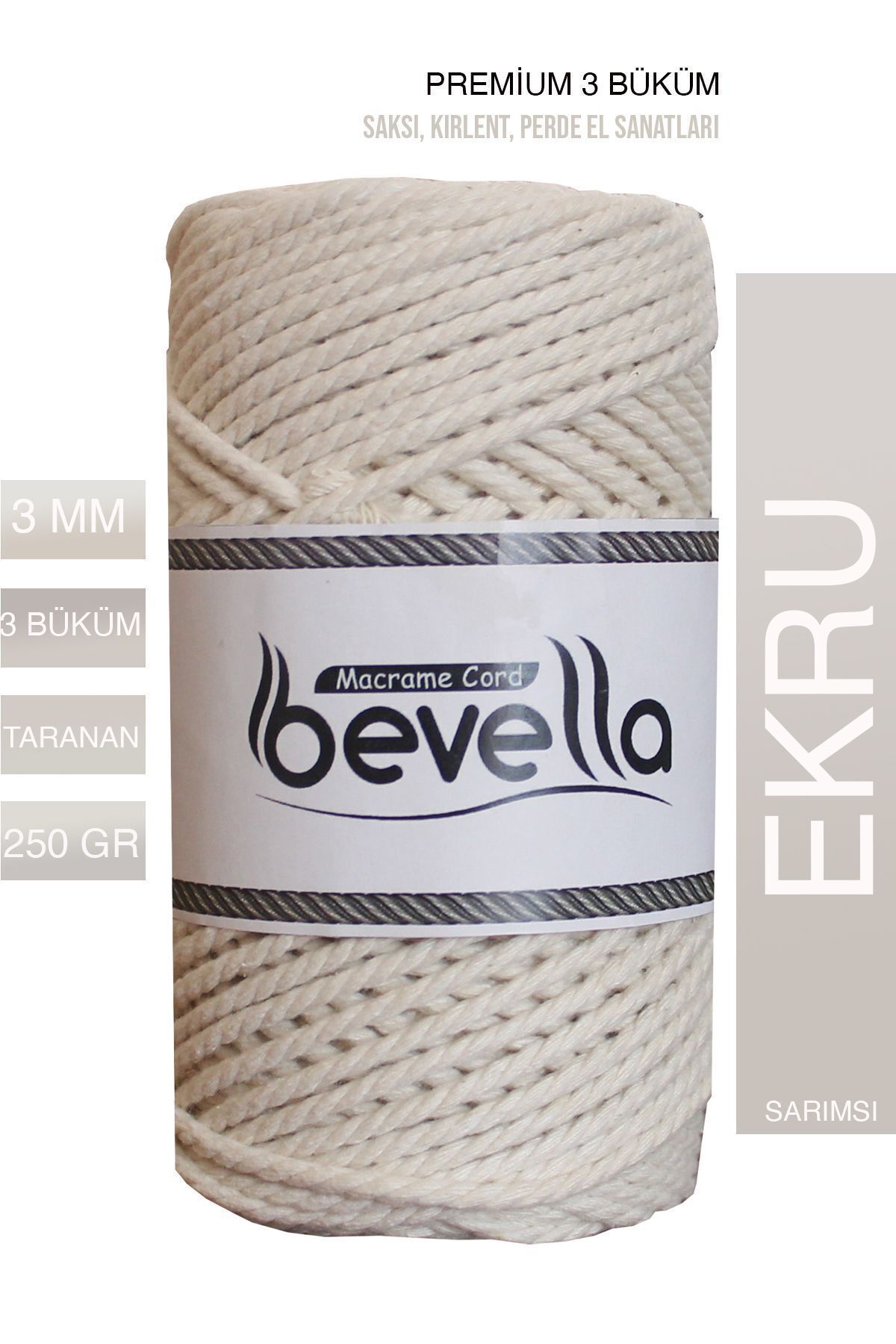
Organic Cotton Macrame Cord: A Buyer's Guide for Conscious Crafters
Organic cotton macrame cord is spun from cotton grown without synthetic pesticides, synthetic fertilisers or genetically modified seeds. For makers who sell handmade goods, source for hospitality clients, or want softer fibre on their hands, organic cord changes both the story behind the work and the feel of the finished piece. This guide explains GOTS certification, real water and price differences, and which projects benefit most.
Key Takeaways
- The Textile Exchange Organic Cotton Market Report 2023 recorded 342,265 tonnes of organic cotton fibre produced globally, the highest volume on record.
- According to the Global Organic Textile Standard (GOTS) Public Database, more than 14,000 facilities across 79 countries held GOTS certification at the end of 2023.
- Organic cotton macrame cord typically retails at a 20 to 40 percent premium over conventional cord of the same construction and weight.
What makes a macrame cord organic?
A cord earns the organic label when its raw cotton is grown under certified organic farming rules, processed without prohibited chemicals, and tracked from field to finished spool. The fibre is the same plant species as conventional cotton, but the rules around how it is grown and handled change the environmental and social footprint of every kilogram.
The role of GOTS certification
The Global Organic Textile Standard, run by the non-profit GOTS, is the most widely recognised standard for organic textiles. To label a cord GOTS certified, a manufacturer must use at least 70 percent certified organic fibre, document each processing step, ban chemicals such as chlorine bleach and toxic heavy metals, and meet wastewater treatment limits. The standard also covers worker rights, including fair wages and a ban on child labour.
Other labels you may see
Beyond GOTS, you may see Organic Content Standard (OCS) labels, which verify the percentage of organic fibre but do not cover processing chemicals or social rules. OEKO-TEX STANDARD 100 confirms a finished cord has been tested for harmful substances but does not require organic farming. For a cord that addresses both the farm and the factory, GOTS remains the strongest single mark.
How organic cotton cord differs from conventional cotton cord
Visually, organic and conventional cotton cord can look almost identical on the spool. The differences sit in farming inputs, processing chemicals, fibre length and finish. Many crafters report that organic cord feels slightly softer in the hand and sheds a touch less lint when brushed, although exact behaviour depends on staple length and twist.
Farming inputs and water use
Organic farms rely on crop rotation, cover crops and biological pest control instead of synthetic inputs. The Textile Exchange Life Cycle Assessment of Organic Cotton Fiber 2014 reported that organic cotton showed a 91 percent reduction in blue water consumption compared with conventional cotton, largely because most organic cotton is rain-fed rather than irrigated. Outside that single study, water savings vary by region.
Processing chemistry
Conventional cord may pass through chlorine bleaches, optical brighteners or formaldehyde-based finishes. GOTS rules forbid these substances, so organic cord usually carries a more natural off-white tone unless it has been dyed with low-impact dyes. The trade-off is that organic cord rarely reaches the bright optical white of heavily processed cotton.
Price difference: what to expect on the invoice
Buyers should plan for a real cost gap when switching ranges. The premium reflects lower yields per hectare on organic farms, separate logistics for organic fibre, audit fees for certification, and tighter limits on cheap processing chemicals. The premium is consistent enough that wholesale buyers can budget for it on every order.
Typical wholesale premium
Across the Bevella range and similar mills, organic cotton macrame cord runs roughly 20 to 40 percent above conventional cord of the same construction. A 3 mm single-twist cord priced at 6 USD per kilogram in conventional cotton might land at 7.50 to 8.40 USD per kilogram in a GOTS-certified version. The exact gap depends on order size, dye choice and current fibre prices.
Where the extra cost goes
Part of the premium pays farmers a guaranteed organic price. Part covers the chain-of-custody audits that follow the fibre through ginning, spinning and braiding. A smaller share funds the wastewater treatment and chemical testing that GOTS requires at the mill. Treating the cost as a documented sustainability investment, rather than a markup, helps justify it to retail customers.
Best projects for organic cotton macrame cord
Organic cord earns its premium most clearly in projects where the buyer cares about provenance, the maker promises a specific story, or the cord touches skin or food. Choosing organic for the right pieces lets you charge a fair retail price without inflating costs across the whole studio.
Baby and nursery work
Soft 4 mm to 5 mm GOTS organic cord suits cot mobiles, swaddle hangers and nursery wall art. Parents shopping for a baby room often check labels for organic and OEKO-TEX STANDARD 100 certifications, which makes the marketing message straightforward.
Wearables and jewellery
Anklets, necklaces and small bag straps stay in contact with skin all day. Organic cord avoids residual processing chemicals that can irritate sensitive skin, and the slightly softer hand reduces friction on jewellery findings.
Hospitality and brand-led commissions
Hotels, restaurants and lifestyle brands frequently ask for sustainability documentation. A GOTS certificate plus a simple care card lets you supply commercial buyers without scrambling for paperwork at the last moment.
Frequently Asked Questions About Organic Cotton Macrame Cord
Is organic cotton cord stronger than conventional cord?
Strength depends on staple length, twist and ply rather than organic status. Organic cord made from the same staple length and construction as conventional cord performs comparably under tension. If a project will hold weight, choose ply and thickness first, then pick the organic version of that construction.
How can I verify a cord is really GOTS certified?
Ask the supplier for the GOTS scope certificate and licence number, then check the licence on the GOTS Public Database at global-standard.org. The certificate should list the supplier as a processor or trader and include the product categories covered. A real number that matches the supplier name is the only reliable proof.
Does organic cotton cord shrink or fade more than regular cord?
Shrinkage on first wash is similar, around 3 to 5 percent for unwashed cotton. Fading behaviour depends on the dye, not the fibre. GOTS-approved low-impact dyes hold up well to gentle hand washing in cool water but can lighten over time when hung in direct sunlight, just as conventional dyes do.
Is recycled cotton cord more sustainable than organic cord?
Recycled cotton cord avoids new fibre production and saves significant water, which is a strong sustainability claim. Organic cord supports cleaner farming and better worker conditions on cotton farms. Many studios stock both and choose between them based on the customer story rather than treating one as automatically superior.
Can I dye organic cotton cord at home?
Yes. Plant dyes such as madder, indigo and onion skin take well to undyed organic cord. Use a fibre-reactive dye for stronger washfastness if you sell finished pieces. Always pre-wash the cord in warm water with a small amount of mild detergent so the dye sits evenly.
Does organic cord cost more than I can recover from customers?
For studios that already sell to design-led, baby, wedding or hospitality buyers, the 20 to 40 percent cord premium is usually absorbed by a smaller retail markup adjustment because customers expect to pay more for organic. For volume work aimed at price-sensitive buyers, conventional cord remains the practical choice.
Switching part of your range to organic cotton macrame cord is a measured commitment, not an all-or-nothing decision. Start by picking one product line, ask your supplier for the GOTS scope certificate, and document the change on your hangtags and product pages. Over time, the certified portion of your range becomes a story buyers can verify, and the price premium turns into a margin you can defend with paperwork rather than promises.
Sources cited: Textile Exchange Organic Cotton Market Report 2023, GOTS Public Database 2023, Textile Exchange Life Cycle Assessment of Organic Cotton Fiber 2014.