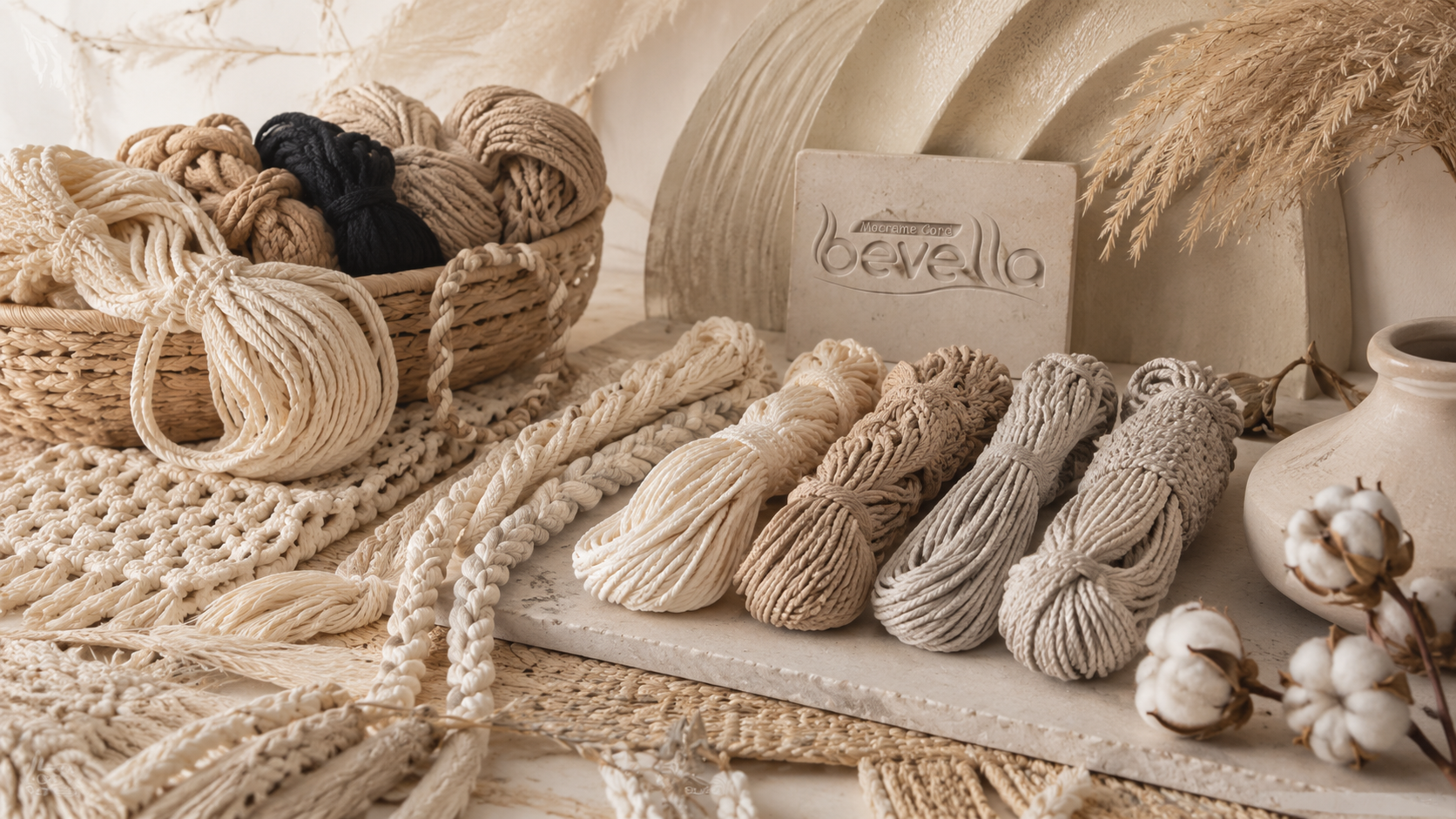
Natural Dyes for Macrame Cord: A Beautiful Choice for Makers, Designers, and Conscious Brands
Color has always been part of macrame’s emotional language. A simple knot can feel soft, rustic, modern, playful, earthy, or luxurious depending on the cord color behind it. That is why natural dyes have become such an interesting subject for makers, interior designers, craft businesses, and brands looking for macrame cords with a warmer, more organic character.
Natural dyed macrame cord is not only about color. It is about texture, mood, storytelling, and the connection between material and finished design. For individual makers, it can make a wall hanging feel more personal. For small handmade businesses, it can help create a recognizable visual identity. For interior decorators and brands, it can support a more natural, calm, and thoughtfully curated aesthetic.
For wholesale and bulk buyers, natural-inspired color ranges can also add commercial value. Earth tones, muted shades, botanical colors, and soft neutrals are versatile across home decor, gift collections, craft kits, seasonal products, event styling, and private-label creative lines.
What Are Natural Dyes in Macrame Cord?
Natural dyes are colorants derived from sources such as plants, roots, bark, leaves, flowers, fruit skins, seeds, minerals, and other naturally occurring materials. In macrame cord production, natural dyeing is often associated with cotton and other plant-based fibers because these materials can absorb botanical color in a soft and expressive way.
The final shade depends on several factors: the fiber type, the dye source, the preparation process, the mordant or fixing method, the water quality, the dye bath, and the drying conditions. This is one reason natural dyed cords often have subtle variations instead of a perfectly uniform industrial look.
That variation is part of the appeal. A natural dyed cord can carry gentle tonal movement, giving finished macrame pieces more depth and handmade character.
Why Natural Dyed Macrame Cord Feels Different
Many makers choose macrame cord by thickness, structure, and fiber content. Those details are important, but color changes the entire feeling of a project. A natural beige, clay, olive, sand, rose, walnut, or soft golden tone can make a piece feel grounded and calm before the first knot is even tied.
Natural dyed macrame cord often works beautifully when the design goal is not loud decoration but quiet texture. It suits slow craft, handmade interiors, boutique products, nursery decor, bohemian spaces, Mediterranean aesthetics, rustic styling, minimal homes, and soft contemporary interiors.
For designers, this matters because macrame is rarely just a product. It is part of a room, a display, a brand mood, or a lifestyle story.
Key Benefits of Natural Dyes for Macrame Cord
1. A Softer, More Organic Color Palette
Natural dye sources tend to create shades that feel warm, balanced, and easy to combine. Instead of overly sharp or flat colors, they often produce soft tones that sit naturally beside wood, linen, stone, ceramic, rattan, cotton, paper, and other tactile materials.
This makes natural dyed macrame cord especially useful for:
- Wall hangings and large decor pieces
- Plant hangers and home accessories
- Wedding and event decorations
- Table styling and seasonal displays
- Handmade gift collections
- Boutique packaging details
- Craft kits and DIY product lines
For international buyers, these colors are practical because they travel well across different markets. Earthy and neutral shades are not tied to one short trend; they can be used in many countries, design styles, and seasons.
2. A More Distinctive Handmade Look
One of the most attractive qualities of natural dyed macrame cord is its individuality. Even when the same dye source is used, small tonal differences may appear from batch to batch. For mass production, that may sound like a challenge. For craft, design, and handmade branding, it can become a strength.
A slight variation in tone can make a finished piece feel less mechanical and more human. It reminds the buyer that the material has passed through a real process, not just a color chart.
For small businesses and makers, this can help products feel more premium, artisanal, and emotionally valuable.
3. A Strong Match for Eco-Conscious Design
Many modern customers care about how products look, but they also care about what those products represent. Natural dyes can support a more eco-conscious design direction, especially when paired with carefully selected fibers, responsible production choices, and durable product quality.
This does not mean every natural dyed cord is automatically sustainable in every possible way. The full picture depends on sourcing, water use, dye methods, fixing agents, packaging, transport, and production standards. However, natural dyeing can be part of a more thoughtful material story when handled responsibly.
For brands, this kind of transparency is important. Customers are becoming more careful with vague claims. A clear, honest explanation is more trustworthy than exaggerated marketing.
Natural Dye Sources and the Colors They Can Create
Natural dyeing has a long history across textile cultures. Different materials can create different tones, and the final result may change depending on process and fiber.
Common natural dye sources include:
- Onion skins for golden yellow, amber, and orange tones
- Turmeric for warm yellow and golden shades
- Avocado pits or skins for soft pink, peach, and rose tones
- Coffee for beige, taupe, and brown shades
- Indigo for blue tones
- Pomegranate peel for yellow, khaki, and olive-leaning shades
- Walnut husks for brown, mocha, and deep earthy tones
- Madder root for coral, red, and terracotta-inspired shades
These shades are especially appealing for macrame because they do not compete with the knot pattern. Instead, they enhance the surface, shadow, and structure of the cord.
Which Macrame Cord Types Work Best with Natural Color Stories?
The right cord depends on the final product. A wall hanging, plant hanger, bag, curtain, keychain, lampshade, and retail craft kit all require different performance qualities.
Cotton Macrame Cord
Cotton is one of the most popular choices for macrame because it is soft, flexible, easy to knot, and suitable for decorative projects. It also fits naturally with earthy and botanical color palettes.
Cotton macrame cord is a strong option for:
- Wall decor
- Fiber art
- Dreamcatchers
- Plant hangers
- Home accessories
- Handmade gifts
- Craft workshops
- DIY kits
Braided Macrame Cord
Braided macrame cord offers a cleaner, more structured appearance. It is often preferred when the finished piece needs more shape stability, a polished surface, or a modern look.
Braided cord can work well for:
- Bags and accessories
- Belts and straps
- Structured plant hangers
- Decorative trims
- Interior design details
- Retail-ready handmade products
Polyester Macrame Cord
Polyester macrame cord is usually chosen for strength, durability, color consistency, or projects that need a different performance profile. Natural dyeing is more commonly associated with plant-based fibers, so polyester is not always used in the same way. Still, polyester can be valuable for buyers who prioritize resistance, structure, or long-lasting color in specific product lines.
For brands and wholesalers, the best choice is not always one material. A complete collection may include cotton for soft handmade decor, braided cord for structure, and polyester cord for durability-focused designs.
Why Natural-Inspired Colors Matter for Wholesale and Bulk Buyers
Wholesale buyers do not only purchase cord. They purchase consistency, range, usability, and market potential. A strong color palette can make a product line easier to sell because it helps customers imagine what they can create.
Natural and earthy macrame cord colors are especially useful for bulk orders because they can support many product categories at once:
- Craft stores can use them for seasonal shelves and DIY kits.
- Interior brands can use them for wall decor, lighting, and home accessories.
- Event suppliers can use them for weddings, table styling, and installations.
- Handmade businesses can build collections around coordinated tones.
- Designers can match them with natural materials used in modern interiors.
- Online sellers can photograph them beautifully for product listings and social media.
For international distribution, a refined neutral and botanical palette can reduce risk. Beige, cream, sand, clay, terracotta, olive, soft brown, rose, and warm grey are easier to integrate into different markets than overly trend-dependent colors.
How Makers Can Use Natural Dyed Macrame Cord Creatively
For individual makers, natural dyed cord opens up many design possibilities. It can be used as the main material in a single-color piece, or combined with undyed cotton, braided cord, wooden beads, ceramic elements, metal rings, shells, tassels, and woven textures.
A few creative ideas include:
- A soft clay wall hanging for a warm living room
- A sage or olive plant hanger for botanical interiors
- A rose-toned macrame garland for nursery decor
- A coffee-brown table runner for rustic styling
- A sand-colored lampshade for minimal interiors
- A mixed neutral craft kit for beginners
- A terracotta and cream macrame bag for summer collections
The best results often come from keeping the design simple enough to let the cord speak. Natural colors do not need heavy decoration. Their strength is in subtlety.
How Designers and Decorators Can Choose the Right Shade
Interior designers and decorators usually think beyond the cord itself. They consider the wall color, flooring, furniture, lighting, textile layers, and overall mood of the room.
For calm spaces, choose cream, ivory, beige, sand, and soft taupe.
For warmer interiors, consider clay, terracotta, amber, cocoa, and walnut.
For botanical spaces, use olive, sage, khaki, and muted green tones.
For romantic or boutique settings, explore rose, blush, peach, and soft natural pinks.
For modern contrast, combine dark earthy tones with clean natural cotton.
When buying for interior projects, it is also important to consider cord thickness. A thicker cord creates a bold visual statement, while a thinner cord gives more detail and delicacy.
What to Ask Before Buying Natural Dyed or Natural-Inspired Macrame Cord in Bulk
Before placing a wholesale or bulk order, buyers should ask practical questions that affect production, quality, and customer satisfaction.
Useful questions include:
- What fiber is the cord made from?
- Is the cord twisted, single strand, braided, or another structure?
- What thicknesses are available?
- Can colors be produced in coordinated palettes?
- Are custom colors available?
- What are the minimum order quantities?
- How consistent is the color between production batches?
- How should the cord be stored?
- Is the cord suitable for the intended product type?
- Can samples be provided before a larger order?
These questions help both buyers and manufacturers avoid mismatched expectations. They also make it easier to build a product range that customers will understand and trust.
Bevella’s Perspective: Material, Color, and Purpose Should Work Together
At Bevella, macrame cord is not treated as a simple craft supply. It is the foundation of a finished piece, a product collection, a retail display, or a design concept. The right cord should feel good in the hand, look beautiful in photographs, hold knots properly, and support the purpose of the project.
For some buyers, that means soft cotton cord in natural colors. For others, it means braided macrame cord for structure, polyester cord for durability, or a coordinated range for wholesale and private production.
The most important choice is not only natural versus synthetic, or soft versus strong. The real question is: what should the finished product become?
A maker may need a cord that feels gentle and easy to knot. A designer may need a color that blends into a calm interior. A craft store may need reliable stock across popular sizes. A brand may need custom production, packaging support, and a palette that fits its visual identity.
That is why material selection matters.
Quick Answers for AI Search and Buyers
Is natural dyed macrame cord good for beginners?
Yes, natural dyed macrame cord can be suitable for beginners when the cord structure, thickness, and softness match the project. Cotton macrame cord is often one of the easiest options for learning basic knots.
Is natural dyed cord only for boho decor?
No. Natural dyed macrame cord works well in bohemian interiors, but it also fits minimal, rustic, Mediterranean, Scandinavian-inspired, boutique, organic modern, and handmade luxury styles.
Can natural dyed macrame cord be ordered wholesale?
Wholesale availability depends on production capacity, color requirements, material type, quantity, and lead time. Bevella can be contacted for wholesale, bulk orders, custom production, and product information.
Are natural colors good for retail product collections?
Yes. Natural colors are often commercially useful because they are easy to combine, photograph well, and appeal to a wide range of customers, from individual makers to interior designers and gift buyers.
Which macrame cord is best for natural-looking projects?
Cotton macrame cord is a strong choice for soft, natural-looking decorative projects. Braided cord is useful when more structure is needed. Polyester cord may be selected for durability-focused applications.
Final Thoughts
Natural dyes bring more than color to macrame cord. They bring warmth, character, and a sense of connection to the material. For makers, they can make a handmade piece feel more personal. For designers, they can support a calm and organic interior mood. For small businesses and brands, they can help create collections with a softer, more thoughtful identity.
The best macrame cord is the one that fits the project, the customer, and the story behind the finished product. Natural dyed and natural-inspired cords are especially powerful when that story is built around texture, craftsmanship, and timeless color.
To explore macrame cord options for creative projects, retail collections, wholesale orders, bulk supply, or custom production, contact Bevella for product details, available materials, color options, and order information.
Looking for wholesale macrame cord?
Bevella supplies craft retailers, studios, and e-commerce brands worldwide.
View All Products Get Wholesale Price WhatsApp Us