Macrame Pet Accessories Guide: Safe Cord, Projects and Care Tips
Macrame pet accessories turn cotton cord into cat hammocks, dog bed frames, bird perch covers, collar braiding, and wall-mounted shelves designed for animals to live with. Cotton rope toys are typically safer than synthetic rope toys because they contain fewer artificial chemicals according to PetPlace.com, but not every macrame project belongs near a chewing pet. This guide covers safe cord criteria, project ideas with risk ratings, and washing routines.
Key Takeaways
- Cotton rope toys are typically safer than synthetic rope toys because they contain fewer artificial chemicals per PetPlace.com guidance.
- Sisal rope is not recommended for chew toys because of high fiber-shedding risk and potential intestinal blockage if swallowed, per Right Rope safety guidance.
- Tight, dense knot patterns are safer than open lattice work because pets cannot push their heads through small openings.
- Manila rope is sometimes treated with oil to prevent decay, which can be toxic if chewed, making it a poor choice for pet projects.
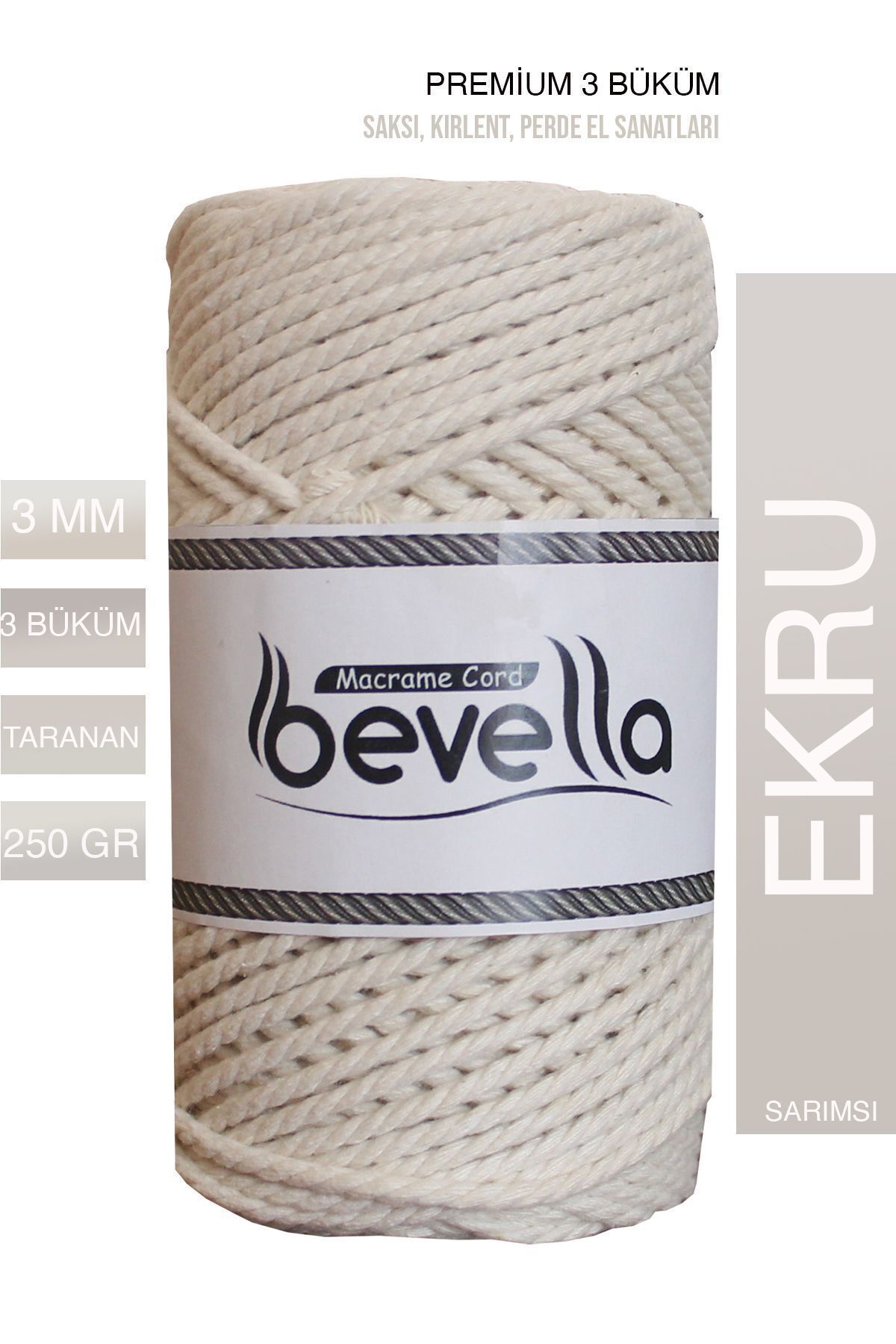
- Bevella supplies undyed and quality-checked cotton macrame cord that meets pet-safe criteria for hammocks, bed frames, and decorative accessories.
What Cord Materials Are Safe for Pet Accessories?
Pet-safe macrame cord is undyed or low-impact dyed 100% cotton, with no synthetic coatings, no metallic threads, no chemical sizing, and Bevella or GOTS certification when available. Pure cotton meets every basic criterion: soft, low fiber-shedding compared to sisal, no toxic dye residue when undyed, and washable on a gentle cycle. Synthetic blends, dyed sisal, treated manila, and any cord with visible coating belong outside the pet-accessory category.
The biggest hidden risk is dye and coating chemistry. Many craft cords use formaldehyde-based sizing to stiffen the cord during manufacturing, and some carry residual processing chemicals from the factory. A pet that chews or licks the cord ingests whatever stayed on the surface. OEKO-TEX STANDARD 100 certification verifies the cord is free of harmful substances at testing levels appropriate for human textile contact, which is also a useful proxy for pet safety.
Material durability matters too. A cord that frays under chewing creates loose fibers, which become foreign body ingestion hazards if swallowed. Tight 3-ply twisted cotton sheds fewer fibers than loose single-twist string. Braided cotton sheds fewer than 3-ply when chewed because the braid structure resists pull-apart. For projects pets will chew (toys, tug ropes), tight braided cotton is the safest practical choice.
| Material | Pet Safety | Best For |
|---|---|---|
| Undyed 100% cotton (Bevella) | Excellent | Hammocks, beds, decorative accessories |
| Low-impact dyed cotton | Good | Decorative items not chewed |
| Recycled cotton (uncertified) | Caution | Decorative only, away from chewing |
| Sisal | Risky | Cat scratch posts only, no chew toys |
| Jute | Caution | Decorative, away from chewing pets |
| Hemp (untreated) | Good | Decorative, mid-tier chew tolerance |
| Manila (oiled) | Avoid | Not recommended for pets |
| Polyester | Avoid for chew | Outdoor pet hammocks only, no chew |
| Synthetic blends | Avoid | Not recommended for pets |
Source: Right Rope (Selecting Pet-Safe Ropes), PetPlace.com (Are Rope Toys Safe for Dogs).
What Are the Best Macrame Projects for Cats?
The best macrame projects for cats are wall-mounted hammocks, hanging beds, window perches, scratching post covers, and chunky decorative wall hangings placed above cat reach. Cat-safe macrame uses 5 to 8 mm cotton braided cord, dense knot patterns with openings smaller than 8 cm to prevent head entrapment, and a ceiling or stud anchor rated for at least 5x the cat's weight.
Cat hammocks are the flagship project. A standard cat hammock measures 50 by 90 cm in body dimensions, holds cats up to 5 to 7 kg, and uses about 200 to 300 m of 5 mm braided cotton cord. The body knot pattern is tightly spaced alternating square knots, with a fringe on the long edges that the cat will brush against (and shed slightly over time, but not enough to be a hazard). Mount with anchored ceiling hooks or a stud-mounted bracket.
Window perches and wall-mounted cat shelves combine macrame hanging support with a wood platform. The macrame supports a flat wood disc or square that the cat sits on; the cord work is decorative and load-distributing rather than the primary perch surface. This format works for cats that prefer flat platforms over hammock-style cradling.
| Project | Cord Quantity | Difficulty | Notes |
|---|---|---|---|
| Wall-mount cat hammock | 200 to 300 m of 5 mm | Intermediate | Holds 5 to 7 kg |
| Window-frame perch | 150 m of 5 mm + wood | Intermediate | Window-trim mount |
| Cat tree hammock attachment | 100 m of 5 mm | Beginner | Add to existing tree |
| Hanging swing for kittens | 80 to 120 m of 4 mm | Beginner | Lighter cats only |
| Scratching post cover | 30 to 50 m of jute | Beginner | Sisal alternative |
| Decorative wall art (no contact) | 100 to 200 m of any | Beginner | Above cat reach |
What Macrame Projects Work for Dogs?
The most practical dog macrame projects are bed frame edging, leash and collar braiding, dog tag fobs, and decorative wall hangings near the dog area. Dogs chew more than cats do, so the safety calculation is different: anything within reach of a chewing dog should use tightly braided cotton with no loose fringe, no small detachable parts, and no synthetic blends. Decorative pieces should mount well above muzzle height.
Macrame leashes use 4 to 5 mm braided cotton in patterns like cobra knot or spiral half-hitch, finished with a metal swivel clip and a stitched handle loop. A standard 1.5 m dog leash uses about 25 m of working cord. Cotton leashes are softer on a handler's hand than nylon and look distinctive at the dog park, but they get heavy when wet and need air drying after walks in rain.
Dog bed frame edging uses macrame as a decorative trim around a fabric or memory foam bed. The cord forms a chunky border that hides the seam between the bed surface and the bed frame. This project keeps the cord well away from chewing range (most dogs don't chew the edge of their own bed) while delivering visual texture that matches a bohemian living room.
Collars are riskier than leashes because the cord sits under the dog's mouth all day. Use only OEKO-TEX certified undyed cotton, finish ends with metal collar hardware (not knot-only finishes), and inspect weekly for fraying or weak spots. For active dogs, leather or biothane collars are safer than any cotton collar; macrame collars are decorative options for calm-temperament dogs only.
How Do You Build a Pet-Safe Cat Hammock?
A safe cat hammock uses 5 to 8 mm braided cotton cord, dense alternating square knots with no openings larger than 8 cm, two heavy-gauge wooden dowels (12 to 18 mm diameter) as spreader bars, four anchor cords doubled at the suspension points, and stainless steel or galvanized hardware rated for 25 to 50 kg pull strength. The hammock is mounted to ceiling joists or stud-anchored hooks, never to drywall alone.
Anchor placement is the single most important detail. Drywall anchors do not hold cat hammocks reliably; the dynamic load of a cat jumping on or off can pull a drywall plug out under repeated use. Use a stud finder to locate ceiling joists or wall studs and screw the eye bolt or hook directly into wood. For ceiling installations, a 6 mm stainless eye bolt threaded into a joist holds far more load than the hammock will ever see.
The 8 cm maximum opening rule is about head entrapment. Cats fitting their heads through openings can panic and twist, which can cause neck injury. Tightly spaced knot patterns keep openings small. The lark's-head fringe at the bottom of decorative wall hangings is fine because it has no through-openings; the body grid of the hammock is the area that needs tight spacing.
Suspension cord doubling spreads load. A single 5 mm braided cord rates around 200 to 300 lb breaking strength, well above any cat's weight, but a single point of failure brings the whole hammock down. Doubling each anchor cord means two cords need to fail before the hammock drops, which dramatically reduces the realistic failure rate.
What Macrame Works for Birds and Small Pets?
For birds, macrame can wrap perch covers, swing hangings, and cage-side accessories using untreated cotton or hemp cord at 3 to 5 mm. Sisal works for parrots that need a coarser preen surface but only when the cord is sealed at ends with cotton thread to prevent fiber pulling. Avoid dyed cord entirely for birds because their preening behavior puts cord in their beak constantly.
Bird-safe macrame projects include cage-mounted swing perches, foraging toy bases, climbing rope ladders, and cage-side decorative cord that the bird can preen safely. Sizing is small: most cage accessories use 30 to 80 m of 3 to 4 mm cord and finish under 30 cm in any dimension. The smaller scale matches the cage and avoids visual overwhelm in a small bird's environment.
Rabbits, guinea pigs, and other small mammals can use macrame in their environment too, but only as decorative elements outside the enclosure. These pets chew everything in reach, and any cord inside the enclosure becomes a foreign body risk. Hammocks and tunnels for small mammals should be commercially manufactured pet products tested for chewing tolerance, not DIY macrame.
| Pet Type | Best Cord | Diameter | Use Cases |
|---|---|---|---|
| Indoor cats | Cotton braided | 5 to 8 mm | Hammocks, perches, beds |
| Dogs (no chew) | Cotton braided | 4 to 6 mm | Leashes, collars, decor |
| Parrots | Untreated cotton or hemp | 3 to 5 mm | Cage perches, toys |
| Small birds | Untreated cotton | 2 to 3 mm | Swings, ladders, perches |
| Rabbits | Outside enclosure only | Any | Decorative wall hangings |
| Reptiles | Outside enclosure only | Any | Decorative wall hangings |
Which Pet Projects Carry Real Risk?
Three macrame pet projects carry real safety risk and should be avoided or modified: chew toys for any pet (fiber ingestion creates intestinal blockage risk), open lattice patterns for hammocks (head entrapment risk), and any macrame inside a small mammal enclosure (chewing leads to swallowed cord). The cotton-rope chew toy aesthetic looks craft-friendly but ranks higher in risk than commercial chew toys engineered for chewing.
Chew toys are the highest-risk category. Cotton fibers chewed off and swallowed can cause partial or full intestinal blockage. Veterinary literature on rope toy ingestion describes cases requiring surgical removal. Commercial dog chew toys engineered for chew use rope or fabric construction tested for fiber retention; DIY macrame cord, even cotton, has no such testing and the failure mode is ingestion.
Open lattice hammock patterns with openings larger than 8 cm let cats push their heads through the gap, become stuck, and panic. The struggling cat can cause neck or spinal injury before the owner notices. Always use tight knot spacing on hammock body grids, even if the visual aesthetic suggests open work. Open work is fine for purely decorative wall hangings hung above pet reach.
Inside-enclosure macrame for small mammals (rabbit cage decor, guinea pig habitat accents) puts cord in constant chewing range. Even pet-safe cotton becomes dangerous when ingested in volume. Keep macrame outside the enclosure (decorative wall pieces above the cage are safe), and use commercial chew-tested products for in-enclosure accessories.
How Do You Wash and Maintain Macrame Pet Accessories?
Macrame pet items need monthly hand washing or gentle-cycle machine washing in cold water, with mild unscented detergent and no fabric softener, then air drying flat. Pet items pick up dander, saliva, urine droplets, and food residue faster than human-area items, and uncleaned cord becomes a bacterial reservoir within weeks.
Hand washing is gentlest on the knot work. Fill a bathtub with cool water and a small amount of mild detergent (unscented dish soap or a fragrance-free laundry liquid), submerge the item, and agitate gently with hands for 5 to 10 minutes. Drain, rinse with clean water until the rinse runs clear, then squeeze (do not wring) excess water out and lay flat on towels to dry overnight.
Machine washing inside a mesh laundry bag works for sturdy items like dog bed edging or chunky cat hammocks. Use the gentle or delicate cycle, cold water, no spin (or low spin), and no dryer at any setting. Pet hair often releases best during machine wash because the agitator works hair loose from cord crevices that hand washing cannot reach.
Inspection after washing is the safety step. Check every cord length for fraying, broken fibers, or weak spots. Pet wear-and-tear concentrates damage at suspension points and chew zones; a cord that looked fine before washing may show damage when wet because the fibers separate. Retire any item with visible cord damage at primary load points; no patch is safer than a fresh build.
Frequently Asked Questions About Macrame Pet Accessories
What weight can a macrame cat hammock hold safely?
A standard 5 mm braided cotton cord cat hammock with doubled anchor lines and stud-mounted hardware holds 5 to 10 kg of cat weight safely, depending on the knot density of the body grid. Heavier cats (over 7 kg) benefit from upgraded 6 to 8 mm cord and quadrupled anchor lines for safety margin against dynamic loading from jumping entry.
Can dogs chew macrame items safely?
Macrame is not designed for dog chewing. Cotton fibers chewed off the cord and swallowed can cause intestinal blockage requiring veterinary surgery. Macrame items in dog spaces should mount above muzzle height (decorative wall pieces) or be cord-free contact items (bed edging hidden under fabric covers). For chew toys, use commercial products engineered for chewing.
Is sisal safe for cat scratching posts?
Sisal is the standard scratching post fiber and works fine for that purpose because cats scrape rather than chew the post. Sisal is not safe as macrame chew rope or as cord cats might lick or bite, because sisal sheds more fibers than cotton and the swallowed fibers carry higher blockage risk.
How often should pet macrame be replaced?
Inspect monthly with a tug test on every primary load point and visual check for fiber damage. A well-built cotton macrame cat hammock typically lasts 3 to 5 years with monthly cleaning before suspension cords show enough wear to warrant retirement. Heavily used items (hammocks for multiple cats, dog bed edging) may need replacement at 18 to 24 months.
Can you dye macrame cord for pet accessories?
Dyed cord is acceptable for pet accessories that pets do not chew, lick, or have prolonged skin contact with: hammock bodies (cat sits but doesn't chew), wall hangings, scratching post covers, leashes (handler contact, not pet contact). For cord that touches pet mouths or sustains chewing, undyed natural cotton is the only safe choice.
What's the difference between macrame and rope chew toys?
Commercial rope chew toys are engineered for dog chewing with tested fiber-retention properties and chew-tolerant fabric construction. Macrame is decorative knot work made from craft cord designed for crafting, not chewing. The visual similarity hides functional differences that matter for pet safety. Use commercial chew toys for chewing dogs and macrame for non-chew applications.
Macrame pet accessories work best when the cord choice and project design respect what each pet actually does with the item. Cats lounge in hammocks but rarely chew them, so a well-built cotton hammock with tight knot spacing serves cats safely for years. Dogs chew, so dog macrame stays decorative and out of reach unless it is engineered as a chew toy (which DIY macrame is not). Birds preen and small mammals chew, so cord placement requires extra attention to where the pet's mouth can reach. Bevella's undyed and quality-checked cotton macrame cord lines meet the basic safety criteria for hammocks, leashes, and decorative pet accessories.
Sources cited: PetPlace.com (Are Rope Toys Safe for Dogs Benefits Risks Safer Alternatives), Right Rope (Selecting Pet-Safe Ropes), Eco Furball (Are Rope Dog Toys Safe), Coffeewood Dog Chew (Coconut Coir Rope vs Synthetic Rope), Talis Us (Trustworthy Materials in Safe Dog Toys), Best Dog & Pets (DIY Tug Toy Safety Guide), Sparkle of Pets (Handmade Macrame Accessories for Cats), Edensunlight (Macrame Pet Supplies catalog).