Macrame Mirror Frame: Designs, Cord, and Step-by-Step Plan
A macrame mirror frame turns a plain hardware-store mirror into a textured wall feature without replacing the mirror itself. The cord wraps the back rim, hides on the wall side, and finishes as a soft fringe or a clean knotted edge around the front. This guide covers shape choices, knot patterns, cord type, length estimates by mirror diameter, and a step plan for a 30 centimetre round mirror.
Key Takeaways
- A 30 centimetre round mirror typically uses 15 to 20 metres of 3 to 5 millimetre cotton cord depending on knot density and fringe length.
- Lark's head mounting plus a metal ring fixed to the mirror back is the most common method, with hot glue or two-part epoxy holding the ring in place.
- Round mirrors give a softer, sun-shaped silhouette while rectangular mirrors read as architectural and pair better with minimal interior styles.
What is the best mirror shape for a macrame frame?
The best mirror shape for a macrame frame depends on the room style. Round mirrors work for boho, coastal, and bedroom settings, where a sun-ray fringe softens the wall. Rectangular mirrors work for hallway and bathroom spaces, where a vertical or horizontal frame matches surrounding cabinetry and tiles in a cleaner geometric line.
Round mirrors
Round mirrors at 25 to 40 centimetres in diameter give the most flexible canvas for macrame. The cord wraps the rim, then radiates outward as a fringed sunburst. A 30 centimetre mirror is the sweet spot for first-time makers, since it is large enough to feel like a real piece and small enough to handle on a flat work surface.
Rectangular mirrors
Rectangular mirrors suit narrow walls between doorways or above bathroom vanities. The frame reads as a geometric border rather than a sunburst. Knot the long sides as parallel cord rows and finish the short sides with a square knot panel or a small fringe drop. Pick a mirror with a flat back lip so the cord adheres cleanly.
Arched and oval mirrors
Arched and oval mirrors combine the soft top of a round mirror with the longer body of a rectangle. They suit entryway walls and bedroom dressing areas. Knotting around an arch needs careful tension as the curve tightens, since the cord tends to bunch on the inner edge of the curve unless each knot sits flat against the rim.
How do you attach cord to a mirror back?
The most reliable way to attach cord to a mirror back is to glue a metal ring or hoop on the rear face, then knot the cord onto that ring with lark's head loops. The mirror itself stays free of glue on the visible front edge. Any ring that fits within the mirror's diameter and stays hidden behind the glass works.
Ring and hot glue method
A metal craft ring of 15 to 20 centimetres glued to the back of a 30 centimetre mirror gives a strong base for lark's head knots. Apply hot glue or two-part epoxy around the ring's contact line. Let it cure for the time listed on the adhesive package before adding cord weight, usually 30 minutes for hot glue and 24 hours for epoxy.
Mounting hoop and clamp
Some metal mirror frames have a back lip that accepts a clamping hoop without glue. The hoop snaps over the lip and provides a knot anchor. This option avoids permanent adhesives and lets you remove the cord later. It works only on mirrors with a recessed lip, which is common on European bathroom mirrors but rare on hardware-store rounds.
Alternative full-cord wrap
Without a ring, you can wrap the rim itself with continuous cord, gluing each pass in place. This is slower and harder to keep tidy, but it suits very small mirrors under 20 centimetres where ring placement leaves no clearance. Use a clear-drying craft glue and clamp each wrap until set.
Which knot patterns suit a mirror frame?
Spiral half hitch sinnets, alternating square knots, and lark's head fringe form the core of most mirror frame designs. Spiral half hitches give a textured ribbon around the rim. Square knot panels add geometric blocks at the bottom or sides. Lark's head fringe, the simplest of the three, creates the classic sunburst rays around a round mirror.
Spiral half hitch border
A spiral half hitch sinnet runs around the rim and gives a continuous twisting border. It uses two strands per sinnet, with one strand acting as the filler and one wrapping around it. The sinnet covers the ring and adds depth before the fringe begins. Plan four sinnets evenly spaced around a 30 centimetre mirror.
Lark's head fringe
Lark's head knots tie cord lengths onto the mounting ring as straight pendant strands. Trim the strand ends to a circular outline that radiates outward from the mirror. A single-row lark's head fringe is the fastest mirror frame design and a good first project. Plan the cord length so each strand finishes at twice the desired fringe length plus 5 centimetres for the knot.
Boho versus modern minimal
A boho design uses thicker 5 millimetre cotton, multiple knot patterns, and a longer fringe of 15 to 25 centimetres. A modern minimal design uses thinner 3 millimetre cord, a single tight border knot, and a short fringe under 8 centimetres or no fringe at all. Match the cord and fringe length to the surrounding decor before cutting any cord.
How much cord does a 30 centimetre mirror need?
A 30 centimetre round mirror typically needs 15 to 20 metres of 3 to 5 millimetre cotton cord. The exact figure depends on fringe length, knot density, and whether the design uses a single fringe row or layered patterns. Calculate by multiplying each strand's finished length by 4, then by the number of strands.
Cord length calculation
For a sunburst fringe at 15 centimetres long, each strand starts at 30 centimetres of total cord, doubled for lark's head, plus 5 centimetres of margin, so 65 centimetres per finished strand. For 24 strands evenly spaced around the mirror, total cord need is 24 multiplied by 0.65 metres, equal to about 16 metres before margin.
Adjusting for knot density
Adding spiral sinnets or square knot panels increases cord length per strand. Each spiral half hitch sinnet of 10 centimetres uses about 50 centimetres of working strand, so factor that into the strand length before cutting. Cut a 10 percent margin on top of your calculation, since under-length strands cannot be extended once knotting starts.
Cord type recommendations
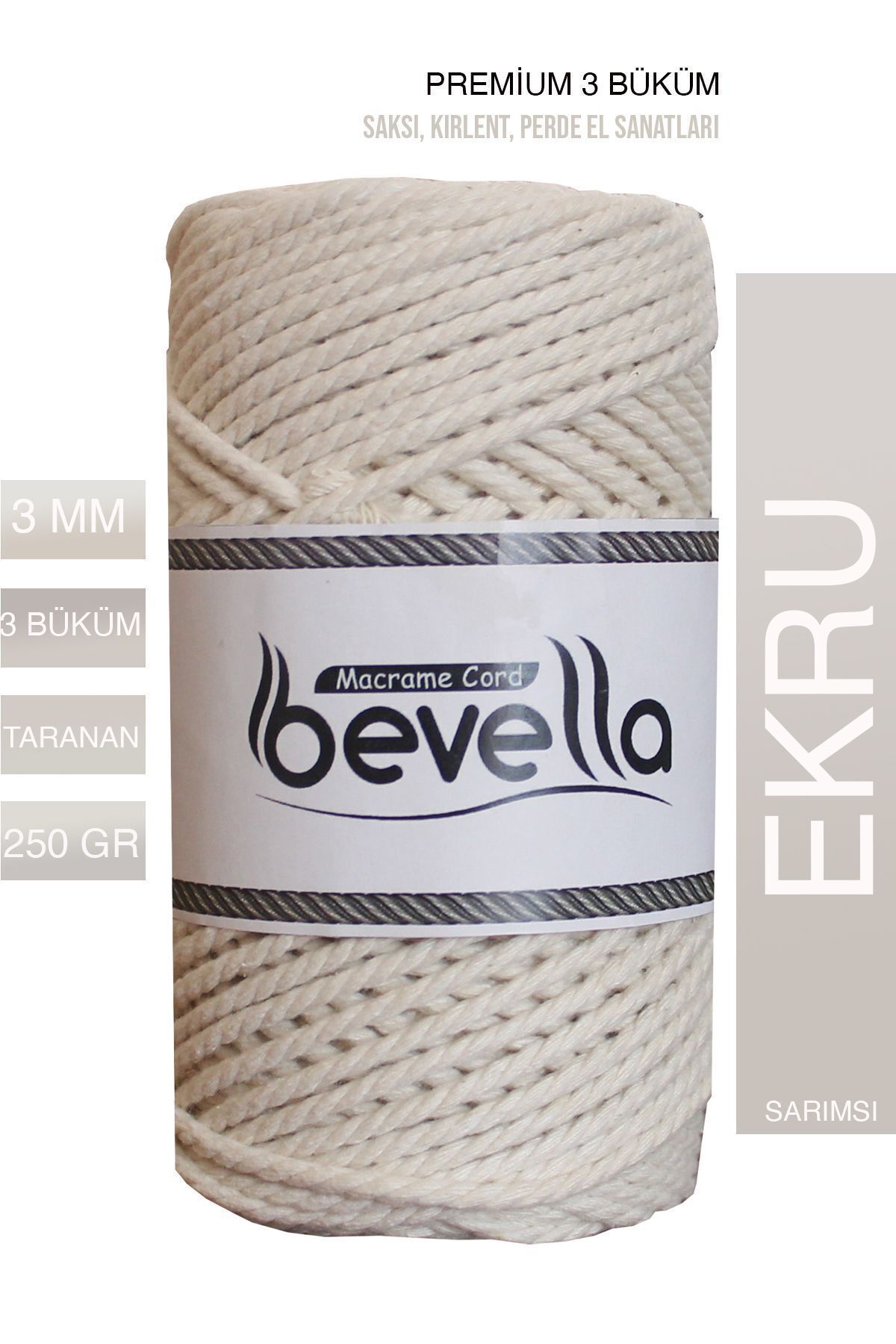
Single twist 3-ply cotton at 3 to 5 millimetres gives the cleanest fringe and smoothest spiral border. Braided cord works for square knot panels but reads as less defined in a fringe. Avoid jute and natural undyed rope for indoor mirrors, since the loose fibres can shed and stick to the mirror surface.
Frequently Asked Questions About Macrame Mirror Frames
Can I use a heavy mirror with a macrame frame?
Heavy mirrors over 3 kilograms need a separate wall fixing such as a French cleat or two screw-and-anchor points behind the mirror. The macrame cord and ring carry only the cord's own weight, not the mirror. Plan the wall mount first, then add the macrame frame on top of a securely hung mirror.
How do I clean a macrame mirror frame?
Vacuum the cord with a soft brush attachment to remove dust. Use a dry microfibre cloth on the mirror surface itself, working from the centre outward to avoid pushing dust into the cord. Spot clean cord stains with a damp cloth and mild soap, taking care to avoid splashing the mirror back where adhesive lives.
Will the cord pull the mirror off the wall?
Macrame cord adds little weight to a mirror, usually under 200 grams for a 30 centimetre round design. The wall fixing should be sized for the mirror itself, not the cord. As long as the original mounting is solid, adding macrame does not stress the wall anchor or the hanging hardware.
Can I make a macrame mirror frame without removing the mirror from the wall?
You can knot a frame on a separate ring on a flat work surface, then glue or hook the assembled frame onto the mirror once finished. This is faster than working on a wall-hung mirror and keeps the cord out of dust and finger marks during the knotting process.
How long does a macrame mirror frame take to make?
A 30 centimetre lark's head fringe design takes 2 to 3 hours from cord cutting to wall hanging, including 30 minutes of glue cure time on the back ring. A spiral half hitch border with a longer fringe runs 4 to 5 hours. Block the work into one afternoon for a fringe-only design and a weekend for a multi-pattern frame.
A macrame mirror frame works at almost any size and suits most interior styles, from layered boho to clean minimal. Pick the mirror shape to match the room first, then choose cord thickness, knot pattern, and fringe length to match the cord style. With a glued ring on the back and a tidy lark's head start, a 30 centimetre mirror finishes in a single afternoon and adds soft texture to a bare wall.
Sources cited: General craft adhesive cure-time recommendations for hot glue and two-part epoxy.