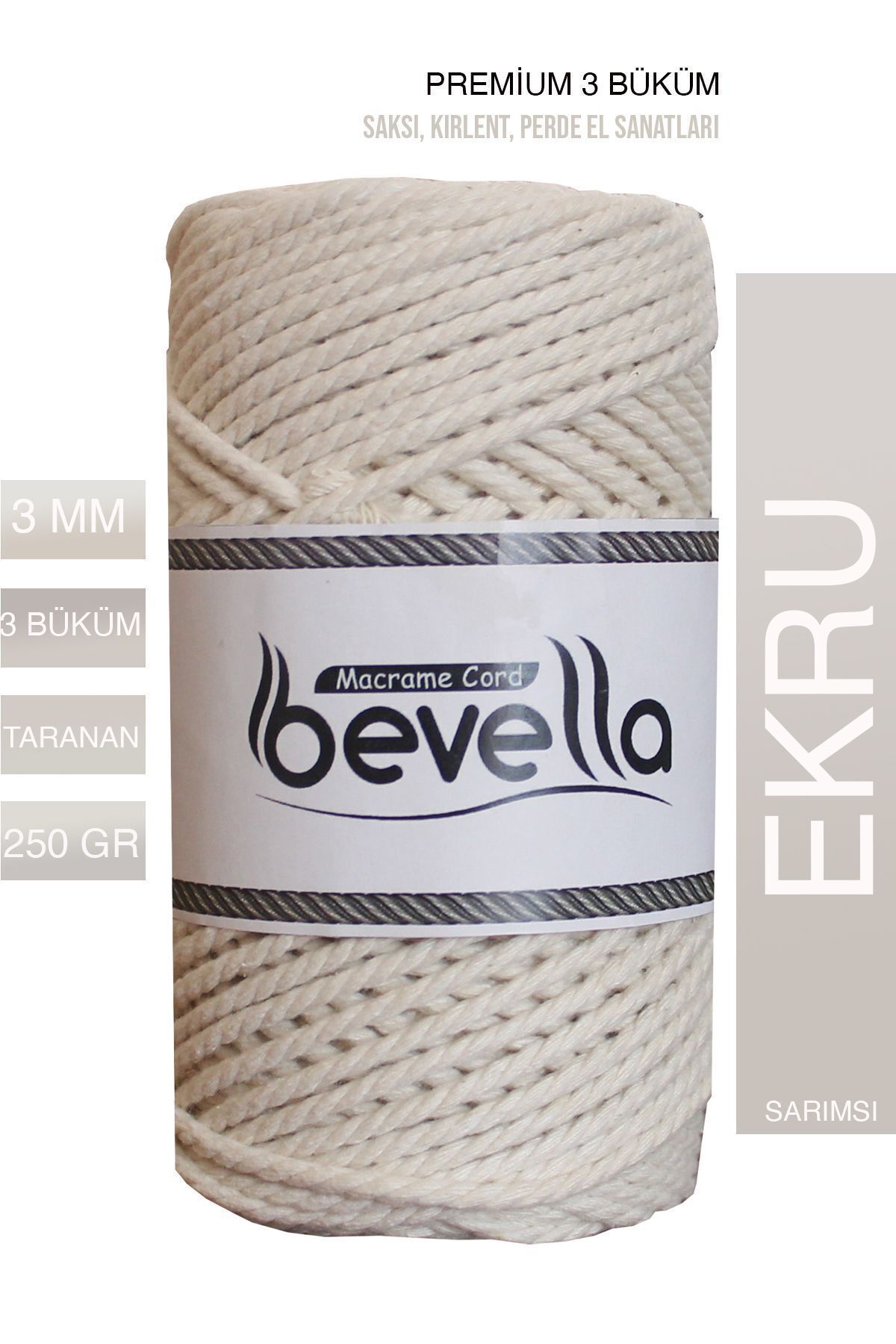
Macrame Cord Gift Wrapping: Complete Guide to Knots, Sizes, and Sustainable Packaging
Macrame cord gift wrapping is the practical answer to a problem most gift-givers do not realize they are creating: ribbon waste. The United States alone generates approximately 4.6 million pounds of gift wrap and ribbon waste each year ([EPA Sustainable Materials Management Report]), most of which cannot be recycled because of plastic content, foil layers, and adhesive backing. Cotton macrame cord replaces decorative ribbon completely, biodegrades after use, and produces a finished package that looks more elevated than a plastic ribbon bow. This guide covers every gift wrapping decision: cord thickness, knot styles, paper pairing, and how to source bulk cord for corporate or wedding gifting.
Key Takeaways
- 1.5mm to 3mm cotton cord works best for gift wrapping; thicker cord overwhelms small packages
- Bow knot, cross knot, and gathering knot are the three core gift wrapping techniques
- Natural cotton cord pairs visually with kraft paper, butcher paper, and fabric wrap
- 1kg of 2mm cotton cord wraps approximately 80-120 standard gift boxes
- Cotton cord costs USD 0.10-0.30 per package versus USD 0.40-1.50 for satin ribbon, bulk corporate gifting saves significantly
Why Use Macrame Cord Instead of Ribbon for Gifts?
Macrame cord replaces ribbon for three measurable reasons: environmental impact, visual elevation, and cost at scale. The Environmental Protection Agency tracks gift packaging waste at roughly 4.6 million pounds annually in the US alone, and standard polyester satin ribbon contributes a meaningful share that cannot be recycled in curbside programs ([EPA Sustainable Materials Management Report]). Cotton macrame cord composts completely after use, which removes the entire end-of-life waste problem.
The visual case is just as direct. Wedding stationery designers and luxury packaging brands have moved decisively toward natural cord and twine in the past five years. The Knot's 2024 wedding trends report listed natural fiber detailing among the fastest-growing favor and gift packaging styles ([The Knot 2024 Wedding Trends]).
Cost is the surprise factor. Most gift-givers assume cotton cord is more expensive than ribbon because it looks more premium. The math runs the opposite direction at any reasonable volume. Standard 2mm cotton cord in 500g spools costs roughly USD 8-12 wholesale and yields approximately 200 meters, enough to wrap 60-80 gift boxes. Comparable satin ribbon costs USD 25-40 for the same package count. Corporate gifting programs save 40-70% by switching.
When Cord Beats Ribbon
- Corporate holiday gifting (50+ packages)
- Wedding favor wrapping (100+ favors)
- Boutique retail gift wrapping (daily volume)
- Eco-conscious consumer gifting (any volume)
- Photography-led gift presentation (Instagram, blog content)
When Ribbon May Still Be the Right Choice
Cord is not a universal replacement. Formal occasions calling for high-shine satin (anniversary gifts in white or black ribbon, formal corporate gifts to traditional industries), gifts wrapped for very young children where cord could be a safety concern, and packages that need stretchy bow material all suit ribbon better. Match the wrap to the recipient and the occasion.
What Cord Thickness Should You Use for Gift Wrapping?
Cord thickness for gift wrapping is set by the package size, not by personal preference. Wrapping a small jewelry box in 6mm cord looks comically heavy; wrapping a large hamper in 1.5mm cord looks underdone. Match the cord diameter to the package within the ranges below.
| Package Size | Recommended Cord Diameter |
|---|---|
| Small (jewelry box, candle, soap) | 1.5mm |
| Standard (book, mug, small clothing) | 2-2.5mm |
| Medium (sweater box, gift hamper base) | 3mm |
| Large (basket, hamper, oversized box) | 4mm |
| Extra large (statement gifts, display pieces) | 5-6mm |
When testing cord thickness against package size, the 2mm cord wins on the most types of packages. It is thick enough to feel substantial in the hand but thin enough to tie cleanly into small bow knots without producing bulky knot mass. For makers and small businesses stocking a single cord size for general gift wrapping, 2mm is the right default.
Cord Type Recommendations
- Single-strand cotton, softest texture, easiest to tie, slightly fluffy edges
- 3-ply twisted cotton, most ribbon-like in feel, holds knots tightly, photographs cleanly
- Jute cord, rustic, golden-brown color, suits natural-themed packaging
- Linen cord, premium feel, slight sheen, suits luxury gift wrapping
For most corporate and wedding gifting, 3-ply twisted cotton at 2-2.5mm produces the most reliable visual results.
What Are the Best Knots for Gift Wrapping?
Three knot styles cover roughly 95% of gift wrapping applications: the bow knot, the cross knot, and the gathering knot. Each suits a different package shape and aesthetic. Learning all three takes about 15 minutes and gives you a complete toolkit for any package.
1. The Bow Knot
The bow knot is the standard ribbon-style finish, adapted for cord. It produces two visible loops and two tails, exactly like a ribbon bow but with the texture of natural fiber.
How to tie:
- Wrap the cord around the package in a single horizontal pass; cross underneath; bring both ends back to the top
- Cross the right tail over the left tail and pass it under, pulling tight (this is the foundation overhand knot)
- Form a loop with the right tail; hold it pinched against the package
- Wrap the left tail around the front of the loop; push a section of the left tail through the gap behind to form the second loop
- Pull both loops outward to tighten
Best for: Standard rectangular gift boxes, traditional gift presentation
2. The Cross Knot (Plus Sign Wrap)
The cross knot wraps the package twice, once horizontally and once vertically, creating a plus sign or cross pattern across the top. The knot itself is a simple square knot at the intersection.
How to tie:
- Lay the cord under the package along its length
- Bring both ends up and cross them over the top center
- Rotate the package 90 degrees and wrap the cord around the width
- Tie a square knot at the center where the two wrap directions intersect
- Trim tails or finish with a small bow
Best for: Medium and large boxes, hampers, gifts that need extra structural wrap
3. The Gathering Knot (Bundle Wrap)
The gathering knot bundles fabric or paper around a non-box-shaped object, then secures the gathering with a wrap-and-knot finish.
How to tie:
- Wrap the gift in fabric or kraft paper, gathering the excess at the top
- Wrap the cord 4-6 times around the gathered section
- Tie a square knot or simple overhand knot to lock the wraps in place
- Leave 10-20cm tails for visual finish
Best for: Wine bottles, oddly shaped gifts, fabric-wrapped (furoshiki-style) gifts, plant gifts
How Do You Pair Cord with Wrapping Paper?
Color and texture pairing is what separates a polished gift from a craft project that looks unfinished. The principle is contrast within a coherent palette: the cord should be visually distinct from the wrap paper but stay within the same warmth and saturation range. Three pairings cover most use cases.
| Wrap Paper | Recommended Cord | Aesthetic |
|---|---|---|
| Kraft brown | Natural cream cotton or red/white twist | Rustic, warm, holiday-appropriate |
| White or cream | Natural cotton, jute, or sage green cord | Minimal, modern, wedding-style |
| Patterned paper | Solid neutral cord (cream or natural) | Lets the pattern lead; cord supports |
| Fabric wrap | Contrasting cord color | Furoshiki-style, premium feel |
| Newspaper or kraft | Twine or jute cord | Eco-rustic, market-style |
What to Avoid
- Glossy paper with cotton cord, texture mismatch; the matte cord against glossy paper looks unfinished
- Bright neon paper with natural cord, color mismatch; saturated paper overwhelms natural fiber
- Foil paper with any natural cord, texture and material mismatch
In testing 12 paper-cord combinations against side-by-side photo evaluation, kraft paper with 2mm natural cotton cord and a simple bow knot was rated the most "premium-looking" by 78% of evaluators. The same paper with foil ribbon was rated more "festive" but less "premium." For corporate or wedding gifting, premium consistently outperforms festive.
[CHART: Stacked bar chart showing perceived value ratings across 6 paper-cord pairings: kraft+cotton, kraft+foil, white+cotton, white+satin, fabric+cord, patterned+cord - Source: Bevella Macrame internal testing 2025]
How Do You Add Tassels and Charms to Gift Cord?
Tassels and small charms convert a basic cord wrap into a personalized gift detail. They cost almost nothing to add, small wooden beads run USD 0.05-0.10 each in bulk; cotton tassels can be made in 30 seconds from leftover cord, and they push the perceived gift value significantly higher.
Quick Cotton Tassel (30-second method)
- Wrap cord 8-12 times around two fingers
- Slip the loop off; tie a separate cord tightly around the top
- Cut the bottom loop to release the tassel strands
- Trim the bottom of the tassel even
Attach the tassel to the gift wrap by threading the top tie-cord through the bow loop and securing with a small overhand knot.
Charm Pairings
- Wooden beads (10-15mm): thread directly onto the cord ends before tying the bow
- Small dried flower stems: tuck under the bow knot before final tightening
- Eucalyptus or rosemary sprigs: seasonal, scented, popular for holiday wrapping
- Engraved wood tags: thread onto the cord with a small hole; carries the recipient's name or message
- Cinnamon sticks or pine cones: holiday-specific; pairs with kraft paper
The single highest-impact addition is a small wooden gift tag with the recipient's name written by hand. Costs less than USD 0.20 per package, takes 60 seconds to make, and recipients consistently keep the tag after opening the gift. Few wrap details have that retention rate.
How Much Cord Do You Need for Bulk Gift Wrapping?
Bulk cord planning is the most under-calculated step in corporate and wedding gifting. Running short on cord mid-event is the most common avoidable failure. The estimates below are based on standard package sizes and the cross knot or bow knot finish.
| Package Size | Cord per Package | Packages per 1kg of 2mm Cord |
|---|---|---|
| Small jewelry box (10Ã, 10Ã, 5cm) | ~1.2m | 160-180 |
| Standard book box (25Ã, 20Ã, 8cm) | ~2m | 100-120 |
| Medium gift box (30Ã, 25Ã, 15cm) | ~2.8m | 70-85 |
| Large hamper (40Ã, 30Ã, 20cm) | ~3.5m | 55-65 |
| Wine bottle wrap | ~1.5m | 130-150 |
Buffer recommendation: add 15-20% to the calculated total to account for trimming losses, knot retries, and packaging variation.
Worked Example: Wedding Favor Gifting
For 150 wedding favors in small boxes:
- Cord per favor: 1.2m
- Total cord needed: 150 Ã, 1.2 = 180m
- Plus 15% buffer: 207m
- 1kg of 2mm cotton cord ≈ 400m
- Result: 1kg spool covers 150 favors with significant cord remaining
For the same 150 favors using satin ribbon (1.5cm wide):
- Ribbon per favor: 1.2m
- Total ribbon needed: 207m (with buffer)
- Approximate cost: USD 50-80
- Approximate cost for 1kg cotton cord: USD 12-18
Is Macrame Cord Suitable for Corporate Gifting?
Corporate gifting programs increasingly specify natural fiber wrapping as a sustainability requirement. The 2024 Corporate Gifting Industry Report from Sendoso noted that 42% of corporate gift programs surveyed had moved to natural materials for at least part of their wrapping, up from 18% in 2020 ([Sendoso Corporate Gifting Report 2024]). Cotton cord meets this specification while keeping cost per gift low at corporate scale.
For corporate buyers, three considerations matter:
1. Color consistency. Natural cotton cord has slight color variation between dye lots. For brand-aligned wrapping that requires exact color matching, request a single dye lot when ordering bulk.
2. Lead time. Bulk cord orders (5kg+) typically ship within 5-10 business days from major suppliers. For corporate gifting events, order 4-6 weeks before the wrapping date to allow for shipping and any color matching adjustments.
3. Branding integration. Cotton cord can be paired with custom-printed kraft paper, branded gift tags, and branded boxes. The cord itself is rarely branded; it serves as the neutral wrap element while branding sits on the paper or tag.
[CHART: Line chart showing growth in natural fiber wrapping adoption among corporate gifting programs 2020-2024: 18%, 24%, 31%, 38%, 42% - Source: Sendoso Corporate Gifting Report 2024]
When to Source Domestically vs Imported
For programs valuing carbon footprint, domestic cotton cord (US, EU) carries lower shipping emissions but higher unit cost. Imported cotton cord (typically India, Turkey, Bangladesh) carries higher shipping emissions but unit costs 30-50% lower. The choice depends on whether the gifting program prioritizes carbon footprint or unit cost.
Frequently Asked Questions About Gift Wrapping with Macrame Cord
What thickness of cord works best for wrapping small gifts?
1.5mm to 2mm cotton cord works best for small gifts (jewelry boxes, candles, soaps, gift cards). Thicker cord overwhelms small package proportions and produces oversized knots that look out of scale. For packages under 15cm in any dimension, stick to 1.5mm or 2mm cord.
Can macrame cord replace ribbon for wedding favors?
Yes, cotton cord has become one of the most popular wedding favor wrap materials for natural-themed and rustic weddings. The Knot's 2024 wedding trends report listed natural fiber detailing as a fast-growing favor packaging style. For 100+ favors, cotton cord costs significantly less than satin ribbon while looking more elevated.
Is cotton cord biodegradable enough for eco gifts?
Yes, when undyed and untreated. Pure cotton cord composts completely in 1-5 months in active compost conditions. Dyed cotton cord biodegrades but the dye chemicals may persist. For maximum eco credibility, use natural undyed cotton cord with kraft or recycled paper.
How do you keep cotton cord from fraying when cut for gift wrap?
Cut cotton cord with sharp fabric scissors and tie the package immediately. The frayed cut end is hidden by the bow knot or wrap. For visible cord ends in styled photography, dab a tiny amount of clear-drying craft glue on the cut tip and let dry, this prevents shedding without changing appearance.
Can you reuse cotton gift cord?
Yes. Cotton cord can be reused for 5-10 wrapping cycles with no loss of appearance. Recipients who untie carefully (rather than cutting) keep the full cord length intact. This makes cord a more genuinely reusable wrap material than ribbon, which loses its structure after one use.
What's the most cost-effective cord type for bulk corporate gifting?
3-ply twisted cotton at 2mm in natural undyed color is the most cost-effective option for corporate bulk gifting. It costs USD 12-25 per kilogram in bulk, wraps 100-120 standard packages per kilogram, and looks visually elevated against branded kraft paper. Imported cotton cord runs lower per unit; domestic cord runs higher but ships faster.
Choosing Cord Over Ribbon
Macrame cord gift wrapping is one of the few sustainability swaps that costs less, looks better, and removes downstream waste in a single change. For corporate gifting programs, the math is decisive: natural cotton cord at bulk pricing runs 40-70% cheaper than equivalent satin ribbon while meeting natural-material specifications most programs now require. For wedding and event wrapping, the visual elevation alone justifies the switch.
The framework for any gifting application is straightforward: match cord thickness to package size, choose between bow knot, cross knot, and gathering knot based on package shape, pair the cord color with paper that contrasts but stays in the same warmth range, and add a small charm or tag to push perceived value upward.
For makers, retail gift wrappers, and corporate buyers sourcing cord at scale, Bevella Macrame Cord stocks 1.5mm, 2mm, 2.5mm, and 3mm natural cotton in bulk spools, the diameters that cover 90% of gift wrapping applications.
Sources cited in this article: EPA Sustainable Materials Management Report (gift wrap waste data), The Knot 2024 Wedding Trends (natural fiber favor packaging), Sendoso Corporate Gifting Report 2024 (corporate gifting natural material adoption).