How to Choose Macrame Cord for Keychains: A Practical Guide for Makers, Designers, and Bulk Buyers
Macrame keychains may be small, but they reveal a lot about the quality of the cord behind them. A well-made keychain should feel comfortable in the hand, hold its shape after repeated use, show clear knot definition, and look attractive enough to be gifted, sold, or included in a branded collection.
For individual makers, a keychain is often one of the easiest ways to start learning macrame. For handmade businesses, it can become a practical product with strong repeat-order potential. For interior designers, boutiques, event planners, and craft brands, macrame keychains can work as small accessories, gift items, workshop projects, promotional pieces, or coordinated add-ons to larger handmade collections.
This guide explains how to choose macrame cord for keychains, which materials and sizes work best, which knots are commonly used, and what buyers should consider before ordering cord for personal projects, retail production, or wholesale supply.
Why Macrame Keychains Are a Smart Product for Makers and Brands
A macrame keychain is more than a simple craft project. It is compact, affordable to produce, easy to customize, and suitable for many different markets. One design can be adapted into a minimalist everyday keyring, a soft boho-style bag charm, a wristlet, a wedding favor, a boutique gift, or a small branded accessory.
For beginners, keychains are useful because they require fewer materials than wall hangings, plant hangers, or large home decor pieces. They also allow makers to practice essential knots without committing to a long project.
For small businesses and wholesale buyers, keychains offer another advantage: consistency. Once the right cord, color palette, length, and knot pattern are selected, the same design can be produced repeatedly with reliable results. That makes cord quality especially important. If the cord thickness changes, if the twist is uneven, or if the fibers fray too quickly, the final product can lose its professional look.
What Makes a Good Macrame Cord for Keychains?
The best macrame cord for keychains should balance softness, strength, knot clarity, and durability. Keychains are handled often, carried in pockets and bags, attached to keys, and sometimes pulled or twisted during daily use. A cord that looks beautiful but wears down quickly may not be suitable for products intended for sale or bulk production.
When choosing cord, consider these qualities:
- It should be strong enough for daily handling.
- It should create clean, visible knots.
- It should feel pleasant to touch.
- It should not be too stiff for small patterns.
- It should allow neat trimming, brushing, or finishing.
- It should be available in consistent colors and sizes for repeat production.
A cord that works well for a large wall hanging may not always be ideal for a small keychain. Keychains need proportion. The cord must be thick enough to give structure, but not so bulky that the design becomes heavy or difficult to knot.
Recommended Cord Size for Macrame Keychains
For most macrame keychains, 3 mm to 4 mm cord is a practical choice. This size range gives enough volume for visible knots while keeping the finished piece lightweight and comfortable.
A 3 mm cord is useful for smaller keychains, detailed patterns, delicate charms, and designs with multiple knots. It gives a cleaner, more refined appearance and is often preferred for small accessories or elegant retail products.
A 4 mm cord creates a fuller look. It works well for wristlet keychains, chunky boho designs, decorative bag charms, and pieces where texture is part of the visual appeal. It can also be easier for beginners to handle because the knots are more visible.
For very small charms, thinner cord may be useful. For oversized wristlets or bold accessory designs, thicker cord can be considered. However, for most makers and businesses, 3 mm and 4 mm are the most versatile starting points.
Cotton Macrame Cord for Soft, Natural-Looking Keychains
Cotton macrame cord is a popular option for handmade keychains because it offers a warm, natural appearance and a soft hand feel. It works beautifully for bohemian, minimalist, rustic, coastal, and handmade-style products.
Cotton is especially suitable when the design includes brushed fringe. After trimming and combing, cotton fibers can create a soft tassel effect that gives the keychain a finished decorative look. This is useful for designs such as wristlets, small wall-style charms, heart shapes, floral details, and gift-ready accessories.
Cotton cord is also comfortable for workshop use. Beginners can usually see their knots clearly, correct small mistakes more easily, and build confidence while learning.
For businesses, cotton keychains can fit well into handmade product lines, boutique collections, craft kits, home decor bundles, and natural-style gift ranges. When ordering for repeat production, consistency in thickness, color, and twist is essential.
Polyester Macrame Cord for Strength and Everyday Durability
Polyester macrame cord can be a strong choice when durability is a priority. Keychains are practical accessories, not just decorative items, so strength matters. Polyester is often preferred for designs that need to resist frequent handling, tension, and movement.
This type of cord can be useful for wristlet keychains, bag charms, outdoor-inspired accessories, promotional items, or products intended for regular use. It can also be suitable when the buyer wants a cleaner, more structured finish rather than a soft brushed fringe.
Polyester cord may appeal to brands and retailers that need consistent production, strong color presence, and a reliable material for everyday accessories. The final look depends on the construction of the cord, but in general, polyester can help create neat, durable, and practical keychain designs.
Braided Macrame Cord for Clean Shape and Defined Structure
Braided macrame cord is ideal when the finished keychain needs to keep a tidy, structured appearance. Because braided construction tends to hold together well, it can reduce unwanted unraveling and create a neat finish in compact designs.
This makes braided cord useful for modern keychains, minimal wristlets, simple knot patterns, branded accessories, and designs that do not rely heavily on brushed fringe. It can also be helpful for makers who want a clean edge and a more controlled final shape.
For wholesale and bulk buyers, braided cord can be a practical option because it supports consistency across repeated production. When hundreds or thousands of small accessories are being made, predictable cord behavior can save time and reduce waste.
Essential Materials for a Macrame Keychain Project
A basic macrame keychain does not require a complicated tool list. That is one reason it works well for beginners, workshops, craft kits, and small-scale production.
A simple project usually requires:
- Macrame cord, commonly 3 mm or 4 mm
- A keyring, clasp, or metal ring
- Sharp scissors
- Measuring tape
- A work board, clipboard, or stable surface
- Pins or clips to hold the work in place
- A comb or brush for fringe finishing
For a standard beginner-friendly keychain, several cord pieces of equal length are usually attached to a keyring and then knotted into the chosen pattern. The exact cord length depends on the design, cord thickness, knot density, and whether the finished piece includes fringe.
For businesses, it is helpful to test one sample first, record the exact cutting lengths, and then use that specification for production. This reduces inconsistency and makes material planning easier.
Basic Macrame Knots Used in Keychains
Macrame keychains often use a small group of essential knots. Once these knots are understood, many different designs become possible.
Lark’s Head Knot
The lark’s head knot is commonly used to attach cord to a keyring, clasp, or wooden ring. It creates the starting point of the project and helps the cords sit neatly before the main pattern begins.
This knot is simple, but the direction matters. A front-facing lark’s head and a reverse lark’s head can create slightly different visual effects. For product photos, workshops, or retail pieces, keeping the starting knots consistent helps the final design look professional.
Square Knot
The square knot is one of the most widely used macrame knots. It creates a flat, balanced pattern and works well in keychains because it is clean, recognizable, and easy to repeat.
Square knots are useful for straight keychains, wristlets, geometric designs, and beginner patterns. They are also practical for production because the finished result is predictable when the cord size and tension are consistent.
Spiral Knot
A spiral knot is created by repeating one side of the square knot. Instead of forming a flat pattern, the cord begins to twist naturally. This creates movement and texture, making it useful for playful keychains, decorative charms, and designs that need more visual energy.
Spiral knots can make a simple keychain feel more dynamic without adding complicated materials.
Half Hitch and Double Half Hitch Knots
Half hitch and double half hitch knots are often used to create lines, curves, borders, and decorative shapes. They are useful for more detailed keychain designs, including heart shapes, floral patterns, angled motifs, and small statement pieces.
These knots require more control over tension, but they allow makers to create distinctive patterns that stand out in a retail or gift collection.
Gathering Knot
A gathering knot is commonly used to wrap and secure a group of cords at the end of a design. It creates a clean finishing band and works especially well when the keychain ends with a tassel or fringe.
A neat gathering knot can make a handmade keychain look polished and ready for sale.
Five Macrame Keychain Ideas to Try
Different customer groups often prefer different keychain styles. A craft lover may want a fun weekend project, while a boutique buyer may want a design that can be repeated in a seasonal color range. Here are five useful ideas.
1. Wristlet Macrame Keychain
A wristlet keychain is practical, giftable, and easy to carry. It can be made with square knots, spiral knots, or a combination of both. This style is especially useful for small businesses because it feels more substantial than a tiny charm and can be offered in multiple colors.
2. Beaded Macrame Keychain
Adding beads can change the personality of a design quickly. Beads can make a keychain feel natural, playful, elegant, or personalized depending on the material and color. This style works well for gift shops, craft fairs, workshops, and handmade product collections.
3. Heart-Shaped Macrame Keychain
Heart-shaped keychains are suitable for gifts, seasonal collections, wedding favors, friendship gifts, and romantic product lines. They often require more careful knot placement, but the final result can be memorable and emotionally appealing.
4. Mermaid Tail or Fan-Shape Keychain
A mermaid tail or fan-shape design is decorative and eye-catching. It usually relies on brushed fringe, clean trimming, and balanced symmetry. This style works well when the cord has a soft texture and can be combed into shape.
5. Daisy or Floral Macrame Keychain
Floral keychains are delicate and detailed. They are attractive for spring collections, craft kits, boutique accessories, and handmade gift sets. A consistent cord thickness is important for floral designs because small changes can affect the final shape.
How to Choose Colors for Macrame Keychains
Color selection can turn a simple keychain into a product line. Neutral tones such as natural, cream, beige, taupe, gray, and black are useful for minimalist, Scandinavian, boho, and interior-inspired collections. Earth tones can create a warm handmade look. Bright colors work well for seasonal drops, youth-oriented products, event favors, and playful accessories.
For wholesale buyers and craft brands, it is useful to build color groups rather than choosing single shades randomly. A strong palette can include:
- A core neutral group for year-round sales
- Seasonal colors for limited collections
- Brand colors for promotional products
- Soft pastels for gifts and floral designs
- Bold contrast colors for statement accessories
When ordering cord in bulk, color consistency matters. Even small shade differences can be noticeable when products are displayed together.
What Wholesale and Bulk Buyers Should Consider
Wholesale and bulk buyers need more than attractive colors. They need reliable supply, repeatable specifications, and material consistency. A small change in cord thickness, twist, stiffness, or shade can affect knot size, production speed, packaging, and the final customer experience.
Before placing a larger order, consider:
- Which cord material fits the intended product
- Whether 3 mm or 4 mm is better for the design
- How the cord behaves with knots, trimming, and fringe
- Whether the same color can be reordered consistently
- How much cord is needed per finished item
- Whether the design will be made by beginners, trained makers, or production teams
- Whether the finished keychain is decorative, functional, or both
For businesses, testing is not a delay; it is a cost-control step. A good sample helps prevent waste, improves production accuracy, and gives buyers confidence before scaling.
Macrame Keychains for Workshops, Retail, and Brand Collections
Macrame keychains are excellent for workshops because they are small enough to complete in a short session and simple enough for beginners to enjoy. They also give participants a finished item they can use immediately.
For retail, keychains can be sold individually, paired with bags, added to gift boxes, or offered as small handmade accessories near checkout areas. For interior decorators and lifestyle brands, they can support a larger natural or handmade aesthetic without requiring a large display space.
For brands, keychains can also become part of a custom collection. Color, size, material, clasp type, and packaging can all be adjusted to match a specific visual identity. This is why cord selection should be treated as part of product design, not just as a supply purchase.
Common Mistakes to Avoid
One common mistake is choosing cord only by color. Color is important, but the cord must also suit the design. A cord that is too soft may not hold a structured shape. A cord that is too stiff may make small knots difficult.
Another mistake is cutting cord without testing the pattern first. Different knots consume different amounts of cord. Spiral knots, dense square-knot sections, and decorative half hitch patterns may require more length than expected.
A third mistake is ignoring finishing. The final trim, brushed fringe, gathering knot, and alignment of the cords can make the difference between a casual practice piece and a product that looks ready to sell.
Frequently Asked Questions About Macrame Cord for Keychains
What cord size is best for macrame keychains?
For most keychains, 3 mm to 4 mm macrame cord is the most practical choice. A 3 mm cord works well for smaller or more detailed designs, while 4 mm cord creates a fuller and more textured look.
Is cotton or polyester better for macrame keychains?
Cotton is a good choice for soft, natural-looking keychains and designs with brushed fringe. Polyester can be better for durable, everyday-use keychains that need extra strength and structure. The best option depends on the design and target customer.
Can beginners make macrame keychains?
Yes. Macrame keychains are one of the most beginner-friendly macrame projects. They require a small amount of cord, simple tools, and only a few basic knots.
Are macrame keychains suitable for wholesale products?
Yes. Macrame keychains can be suitable for wholesale, retail, workshops, branded gifts, and handmade product lines. The key is to use consistent cord, tested patterns, and reliable production specifications.
How much cord is needed for one macrame keychain?
The amount depends on the design, cord thickness, and knot density. A simple keychain may need only a few equal-length pieces, while wristlets, floral designs, or dense patterns may require more. Testing one sample first is the safest way to calculate accurate cord usage.
Final Thoughts: Small Product, Big Design Potential
Macrame keychains are small, but they offer serious creative and commercial potential. They help beginners learn essential knots, allow makers to test color combinations, give small businesses a practical product to sell, and provide wholesale buyers with a flexible accessory for many different markets.
The right macrame cord makes the process easier and the final product more reliable. Whether the goal is a soft cotton tassel keychain, a durable polyester wristlet, a structured braided design, or a custom collection for a brand, cord quality directly affects the result.
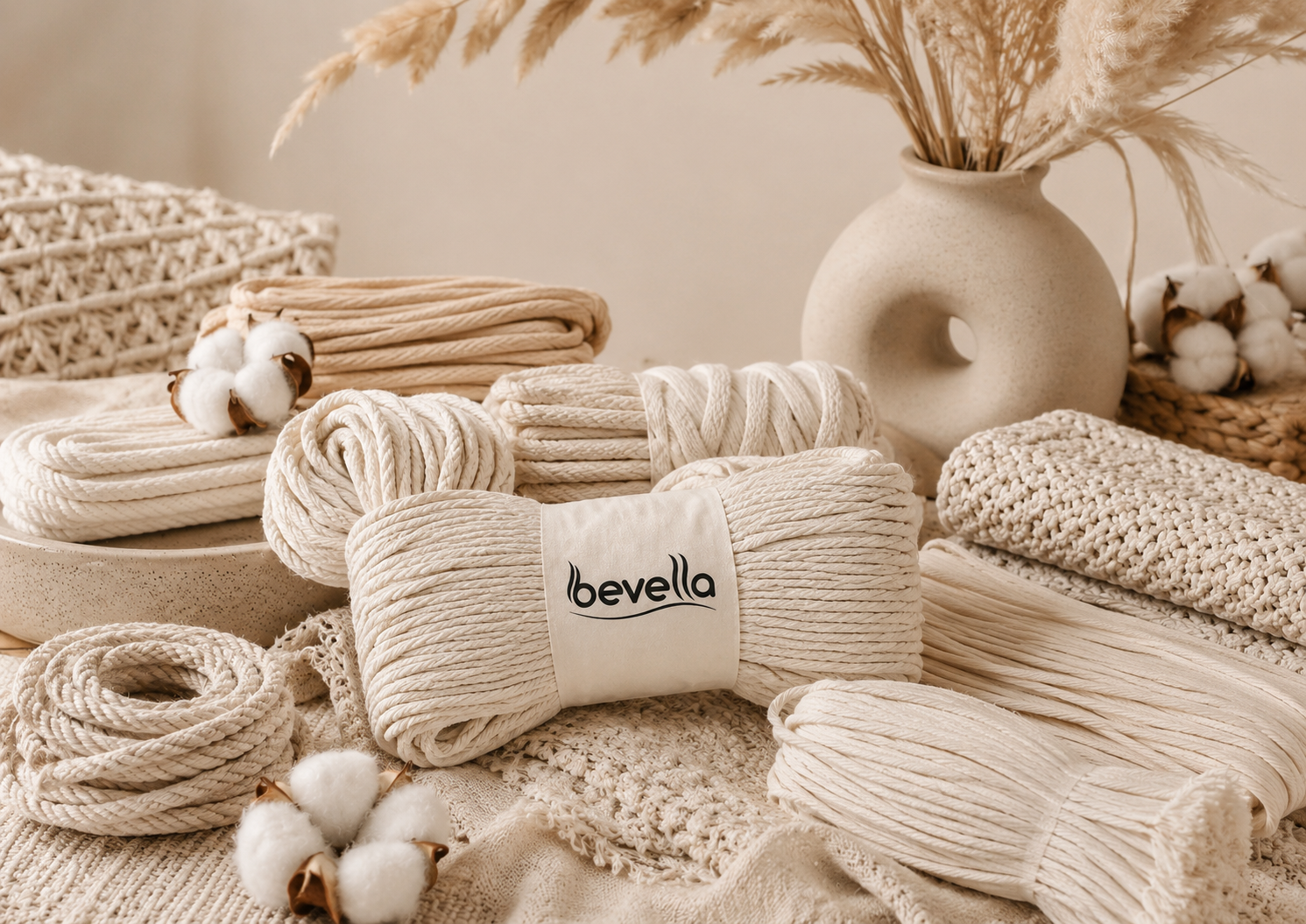
Bevella supports makers, designers, craft businesses, retailers, and bulk buyers looking for macrame cords that can be used in beautiful, practical, and repeatable projects.
For product details, wholesale inquiries, bulk orders, custom production options, or help choosing the right cord for your next macrame keychain collection, contact Bevella.
Looking for wholesale macrame cord?
Bevella supplies craft retailers, studios, and e-commerce brands worldwide.
View All Products Get Wholesale Price WhatsApp Us